English

Earth
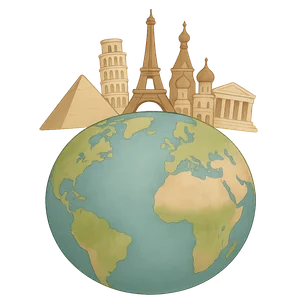
The third planet from the Sun, Earth is the only astronomical object known to harbor life.
Reads at Grades 6–8 Listens at Grades 4–8
Print & create
Answer keys·No prep·Free with an account
28 worksheets · answer keys · full story · quiz · Ages 10-12 · CEFR B2
Plus adds 208,000+ more stories in 27 languages, audio for every one, and printables for all of them.
Just want Earth?
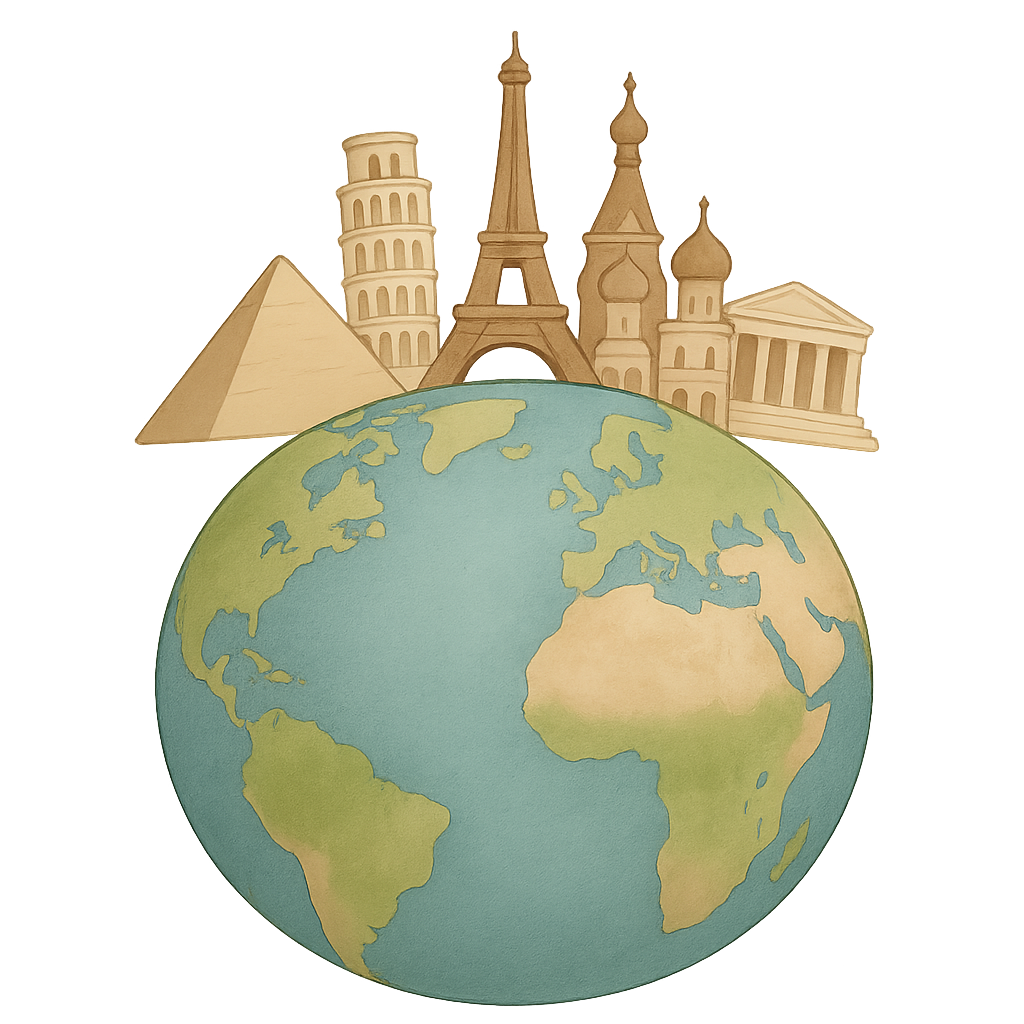
I spin silently through the vast, dark quiet of space, a swirl of brilliant blue and dazzling white against a backdrop of distant, glittering stars. One side of me is always warmed by the light of my very own star, a gentle heat that fuels the life dancing across my surface. The other side rests in cool darkness, lit only by the soft glow of my moon and the faraway twinkle of galaxies. From here, you cannot hear the buzz of a bee or the roar of a lion. You cannot see the rustling of leaves in a forest or the ripple of waves upon a shore. All you can see are the grand patterns: the endless blue of my oceans, the shifting continents of brown and green, and the delicate, swirling ribbons of clouds that drift through my atmosphere. For billions of years, I have been home to a grand and complex story, a tale of fire, ice, life, and discovery. I am your home. I am planet Earth.
My story began a very, very long time ago, around 4.54 billion years in the past. I wasn't the calm, blue world you know today. I was born from a swirling cloud of cosmic dust and gas left over from the birth of the Sun. Gravity pulled these bits and pieces together, and I grew larger and larger, a glowing, molten ball of rock. My surface was a fiery ocean of lava, constantly churning and bubbling under a sky thick with volcanic gases. It was a violent and chaotic time. But then, something wonderful happened. Over millions of years, icy comets and asteroids, travelers from the outer solar system, crashed into me. They delivered a precious gift: water. This water turned to steam in the intense heat, forming thick clouds that shrouded me completely. As my surface slowly began to cool, this steam condensed and fell as rain—a rainstorm that lasted for centuries, filling the basins and craters to form my first oceans. It was in these warm, chemical-rich waters that the first spark of life appeared around 3.7 billion years ago. These were not animals or plants, but tiny, simple organisms that began a monumental task: slowly, patiently, they started producing oxygen, forever changing my atmosphere and paving the way for all the life that was to come.
A Story of Planet Earth
I spin silently through the vast, dark quiet of space, a swirl of brilliant blue and dazzling white against a backdrop of distant, glittering stars. One side of me is always warmed by the light of my very own star, a gentle heat that fuels the life dancing across my surface. The other side rests in cool darkness, lit only by the soft glow of my moon and the faraway twinkle of galaxies. From here, you cannot hear the buzz of a bee or the roar of a lion. You cannot see the rustling of leaves in a forest or the ripple of waves upon a shore. All you can see are the grand patterns: the endless blue of my oceans, the shifting continents of brown and green, and the delicate, swirling ribbons of clouds that drift through my atmosphere. For billions of years, I have been home to a grand and complex story, a tale of fire, ice, life, and discovery. I am your home. I am planet Earth.
My story began a very, very long time ago, around 4.54 billion years in the past. I wasn't the calm, blue world you know today. I was born from a swirling cloud of cosmic dust and gas left over from the birth of the Sun. Gravity pulled these bits and pieces together, and I grew larger and larger, a glowing, molten ball of rock. My surface was a fiery ocean of lava, constantly churning and bubbling under a sky thick with volcanic gases. It was a violent and chaotic time. But then, something wonderful happened. Over millions of years, icy comets and asteroids, travelers from the outer solar system, crashed into me. They delivered a precious gift: water. This water turned to steam in the intense heat, forming thick clouds that shrouded me completely. As my surface slowly began to cool, this steam condensed and fell as rain—a rainstorm that lasted for centuries, filling the basins and craters to form my first oceans. It was in these warm, chemical-rich waters that the first spark of life appeared around 3.7 billion years ago. These were not animals or plants, but tiny, simple organisms that began a monumental task: slowly, patiently, they started producing oxygen, forever changing my atmosphere and paving the way for all the life that was to come.
For billions of years, life remained simple. But then, around 541 million years ago, something incredible happened in my oceans. It is called the Cambrian Explosion, a time when life suddenly became wonderfully complex and diverse. My waters filled with strange and fascinating creatures, the ancestors of nearly all animal life that exists today. Slowly, life began its journey onto my land. First came the hardy plants, which formed vast, green forests. They were followed by insects, then amphibians, and eventually, a group of magnificent creatures that would dominate my surface for over 150 million years. The dinosaurs first appeared around 230 million years ago, ranging from small, speedy hunters to the largest land animals that have ever lived. They were masters of my continents, but their reign came to an end around 66 million years ago when a great catastrophe changed my climate, and they disappeared. Their departure made room for new forms of life to flourish, including the mammals. And from this group, much, much later, a new kind of being emerged. Around 300,000 years ago, in the grasslands of Africa, the first modern humans, Homo sapiens, walked upon my surface. They were not the strongest or the fastest, but they were curious, clever, and full of potential.
This human curiosity became a powerful force that reshaped my world. They spread from Africa, crossing continents and oceans, adapting to every environment from frozen tundras to scorching deserts. They built villages that grew into cities, and cities that became the hearts of vast civilizations. They looked at the stars and mapped their movements; they looked at me and wondered about my true shape. For centuries, they believed I was flat, the center of everything. But during the Age of Exploration in the 15th and 16th centuries, brave sailors circumnavigated my globe, proving I was a sphere. It was a profound discovery, but an even greater one was yet to come. On October 4th, 1957, humanity sent its first satellite, Sputnik 1, into orbit. For the first time, something made by human hands was looking down on me. Then, on April 12th, 1961, a man named Yuri Gagarin became the first person to see me with his own eyes from space. He saw my beautiful curve, my swirling clouds. The view changed everything. On July 20th, 1969, the crew of Apollo 11 looked back at me from the Moon, a fragile, beautiful oasis of life in the blackness. This perspective was captured most poignantly on February 14th, 1990, when the Voyager 1 spacecraft took a picture of me from billions of miles away. In that image, I am just a tiny, pale blue dot, a humbling reminder of your place in the universe.
Today, you live in a world of incredible connection. You can speak to someone on the other side of my globe in an instant and travel from one continent to another in a matter of hours. This ingenuity has created wonders, but it has also created challenges. My climate is warming, my oceans are feeling the strain of pollution, and many of my delicate ecosystems are at risk. But I am not worried. I have watched life on my surface for billions of years, and I have seen its resilience and creativity. I see these challenges not as signs of an ending, but as puzzles for my most intelligent inhabitants to solve together. I have watched you grow from curious wanderers to builders of civilizations and explorers of space. Now, you are my caretakers. My story is now your story, and I trust you to write the next chapter with wisdom, kindness, and courage. So go out, explore my wonders, learn my secrets, and work together to protect this beautiful, shared home. Our shared future is bright.
Wow facts
About
The third planet from the Sun, Earth is the only astronomical object known to harbor life. It is a complex, dynamic system with oceans, an atmosphere, and diverse ecosystems.
Take a Quiz
Question 1 of 5
Retell the story of Earth's formation and the beginning of life in your own words, including at least two major stages.
Explore next





Want to do even more?
Go beyond exploring. Unlock tools that turn every story into real learning.

Storypie Plus for families
Full stories, quizzes, and printables. Nights and car rides, sorted.
- Unlimited audio stories
- Create Mode: your child stars in the story
- Offline downloads
- Printable worksheets & coloring pages

Why Storypie for Schools
Students engaged. Prep in seconds. Evenings back to you.
- Worksheets & Quizzes
- Classroom Management
- Formative Assessment
- Custom Curriculum & Lesson Plans
- 27 Languages

Why Storypie for Homeschool
Curriculum done. They'll ask for more. Hours back in your day.
- Worksheet Generator
- First-Person Audio Stories
- Built-in Comprehension Quizzes
- Custom Curriculum & Lesson Plans
- Print & Go Activities