English

Globe Theatre
A famous Elizabethan playhouse in London, England, associated with William Shakespeare.
Reads at Grades 3–5 Listens at Grades 1–5
Print & create
Answer keys·No prep·Free with an account
28 worksheets · answer keys · full story · quiz · Ages 8-10 · CEFR B1
Plus adds 164,000+ more stories in 27 languages, audio for every one, and printables for all of them.
Just want Globe Theatre?
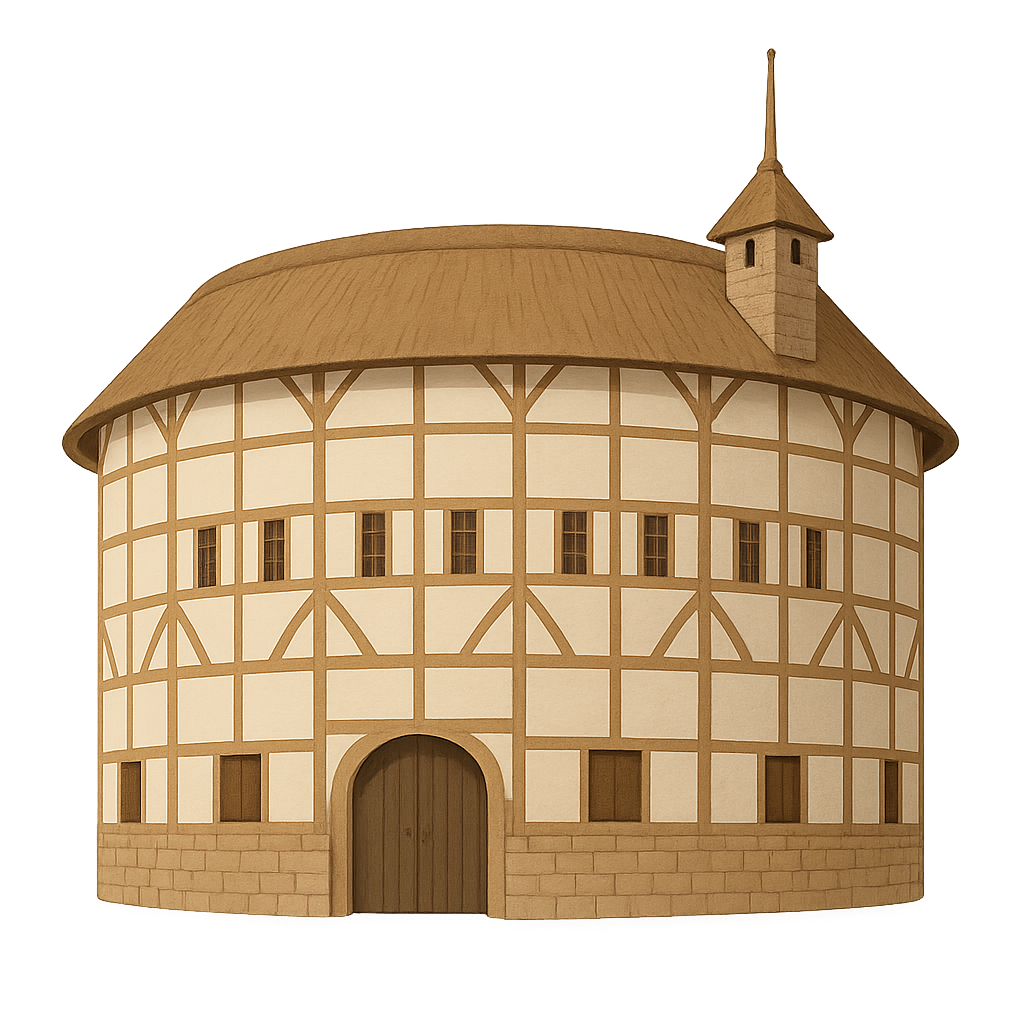
If you stand near the River Thames in London, you might hear a special kind of buzz in the air. It’s the sound of excitement, of hundreds of people gathering, their chatter mixing with the gentle lapping of the water. Imagine leaning forward with the crowd inside a large, round building made of bright white walls and dark wooden beams, feeling the floorboards vibrate as actors stomp and dance. Sunlight streams down from the open sky above, acting as my very own spotlight. For centuries, I have been a home for heroes, villains, lovers, and clowns. I am a circle of stories, where a simple wooden stage can become a battlefield, a castle, or a magical forest. I am the Globe Theatre.
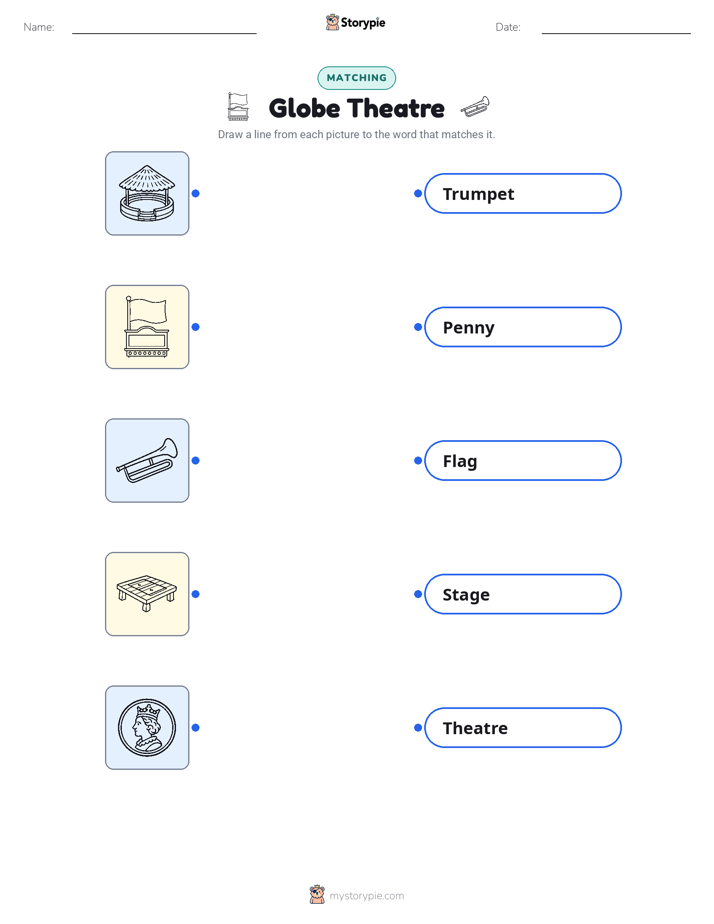
My story began a very long time ago, in the year 1599. I wasn't built by kings or queens, but by a team of actors who needed a home for their plays. They were called the Lord Chamberlain’s Men, and their most famous member was a writer named William Shakespeare. He wrote plays that made people laugh, cry, and think. To build me, they did something clever. They took the giant timber beams from their old playhouse, called 'The Theatre,' and carried them across the river to my new spot. They pieced me together to form a great wooden 'O,' a circle with three levels of covered galleries for seating. But my favorite part was the open yard in the middle. Here, for just a penny, anyone could stand and watch a show. They were called 'groundlings,' and they were often the loudest and most excited audience members. Rich or poor, everyone was welcome under my roof, or rather, under my open sky.
The Globe Theatre: A Circle of Stories
If you stand near the River Thames in London, you might hear a special kind of buzz in the air. It’s the sound of excitement, of hundreds of people gathering, their chatter mixing with the gentle lapping of the water. Imagine leaning forward with the crowd inside a large, round building made of bright white walls and dark wooden beams, feeling the floorboards vibrate as actors stomp and dance. Sunlight streams down from the open sky above, acting as my very own spotlight. For centuries, I have been a home for heroes, villains, lovers, and clowns. I am a circle of stories, where a simple wooden stage can become a battlefield, a castle, or a magical forest. I am the Globe Theatre.
My story began a very long time ago, in the year 1599. I wasn't built by kings or queens, but by a team of actors who needed a home for their plays. They were called the Lord Chamberlain’s Men, and their most famous member was a writer named William Shakespeare. He wrote plays that made people laugh, cry, and think. To build me, they did something clever. They took the giant timber beams from their old playhouse, called 'The Theatre,' and carried them across the river to my new spot. They pieced me together to form a great wooden 'O,' a circle with three levels of covered galleries for seating. But my favorite part was the open yard in the middle. Here, for just a penny, anyone could stand and watch a show. They were called 'groundlings,' and they were often the loudest and most excited audience members. Rich or poor, everyone was welcome under my roof, or rather, under my open sky.
Life on the stage is full of drama, and my own life was no different. My most dramatic moment happened on June 29th, 1613. A play called 'Henry VIII' was being performed, and it was full of royal pageantry. For one scene, the actors fired a real theatrical cannon for a special effect. But a tiny spark flew from the cannon and landed right on my thatched straw roof. In moments, the straw was ablaze. People gasped and scrambled for the exits, but everyone worked together. Amazingly, not a single person was seriously hurt. My beautiful wooden frame burned to the ground that day. It was a fiery, shocking intermission in my story. But my acting company didn't give up. They rebuilt me right away, and by 1614, I stood tall again, this time with a much safer roof made of tiles.
I enjoyed many more years of plays and applause, but times in England began to change. In 1642, a new government came to power that didn't approve of plays. They thought theatres were noisy and distracted people from more serious matters. So, they ordered all of London's theatres to close. My stage, once filled with booming voices and music, fell silent. The laughter and gasps of the audience faded into memory. Two years later, in 1644, workers arrived and took me down, beam by beam. It was as if I had fallen into a long, quiet sleep, and for more than 300 years, the incredible stories of Shakespeare just waited patiently to be heard on my stage again.
Centuries passed. The world changed. Cars replaced carriages, and electric lights replaced candlelight. Then, in the middle of the 20th century, an American actor and director named Sam Wanamaker came to London looking for me. He was a huge fan of Shakespeare and wanted to see the famous theatre where his plays first came to life. All he found was a small, lonely plaque on a wall. He was shocked. Right then, he made a promise. He would bring me back. Starting in the 1970s, he began a project that seemed almost impossible. He and a team of experts studied old drawings and dug for clues about my original design. They insisted on using the same materials and building methods from Shakespeare’s time. After many years of hard work, very close to my original home, my grand encore finally happened. In 1997, I opened my doors once more to the world.
Today, I stand proudly once again on the bank of the River Thames. The sounds of applause and laughter fill my wooden circle, just as they did over 400 years ago. People come from all over the world to see the timeless tales of love, jealousy, and adventure that William Shakespeare wrote for my very first stage. When the sun shines down on the actors and the groundlings cheer from the yard, it feels like no time has passed at all. I am a bridge to the past and a home for stories that never grow old. My stage is a reminder that a great story, shared together, is one of the most powerful and lasting things in the world.
Wow facts
About
A famous Elizabethan playhouse in London, England, associated with William Shakespeare. The original theatre was built in 1599, destroyed by fire in 1613, rebuilt in 1614, and later demolished in 1644. A modern reconstruction, called Shakespeare's Globe, opened in 1997.
Take a Quiz
Question 1 of 5
The story says the Globe Theatre had a "fiery intermission." What does the word "intermission" most likely mean here?
Explore next






Want to do even more?
Go beyond exploring. Unlock tools that turn every story into real learning.

Storypie Plus for families
Full stories, quizzes, and printables. Nights and car rides, sorted.
- Unlimited audio stories
- Create Mode: your child stars in the story
- Offline downloads
- Printable worksheets & coloring pages

Why Storypie for Schools
Students engaged. Prep in seconds. Evenings back to you.
- Worksheets & Quizzes
- Classroom Management
- Formative Assessment
- Custom Curriculum & Lesson Plans
- 27 Languages

Why Storypie for Homeschool
Curriculum done. They'll ask for more. Hours back in your day.
- Worksheet Generator
- First-Person Audio Stories
- Built-in Comprehension Quizzes
- Custom Curriculum & Lesson Plans
- Print & Go Activities