English

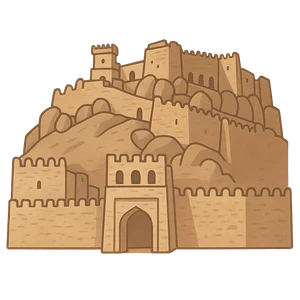
Golconda Fort
A historic fortress and former capital of the Qutb Shahi dynasty, located in Hyderabad, India…
Reads at Grades 3–5 Listens at Grades 1–5
Print & create
Answer keys·No prep·Free with an account
28 worksheets · answer keys · full story · quiz · Ages 8-10 · CEFR B1
Plus adds 164,000+ more stories in 27 languages, audio for every one, and printables for all of them.
Just want Golconda Fort?
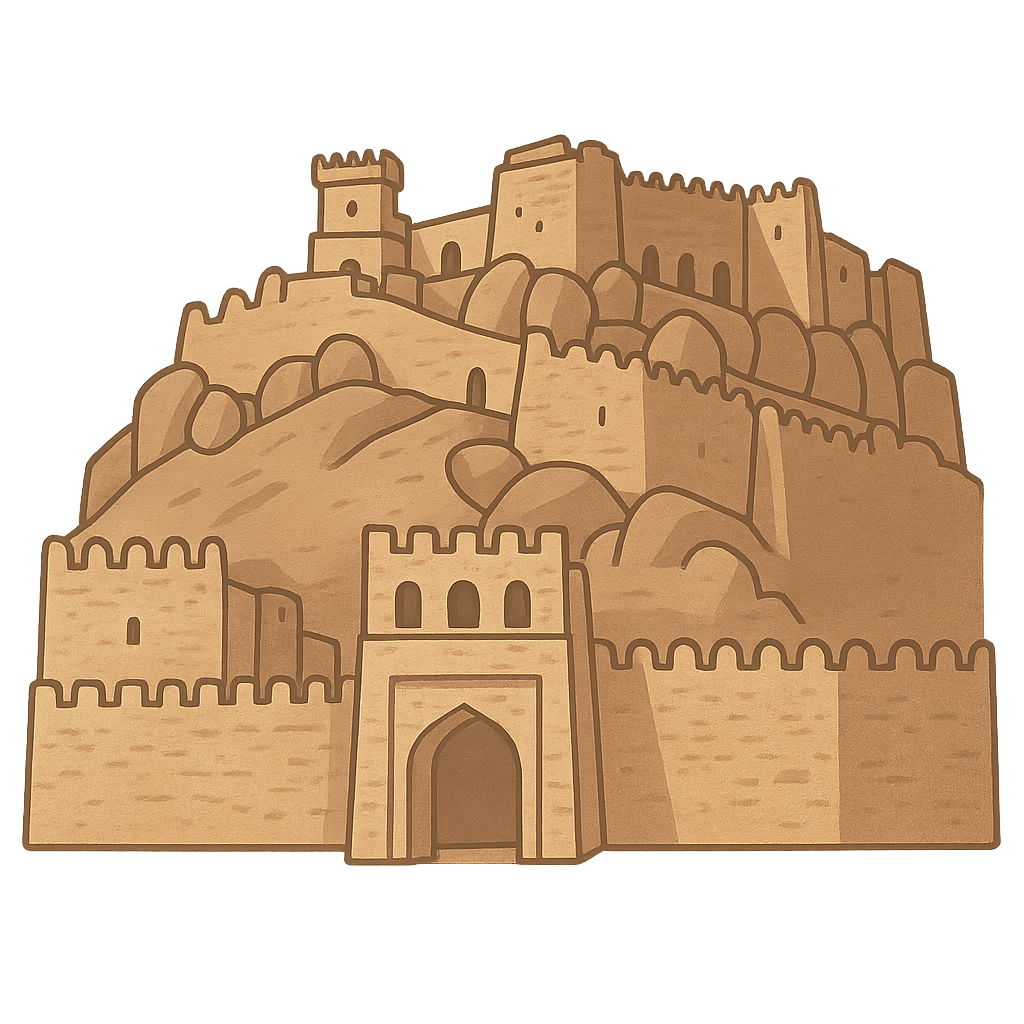
The warm Indian sun has been my companion for centuries, baking my ancient stones and casting long shadows across the bustling city of Hyderabad below. I watch from my hilltop as cars and buses move like tiny, colorful beetles. I feel the gentle breeze that whispers through my broken arches and listen to the footsteps of curious visitors echoing in my grand halls. They come seeking my secrets. One of my favorite secrets is a sound. If you stand at my grand entrance, the Fateh Darwaza, and clap your hands just once, the sound will travel. It flutters like a bird, rising higher and higher, until it can be heard perfectly at the very top of my citadel, almost a kilometer away. It is my timeless whisper, a marvel of engineering from a long-ago time. I am Golconda Fort, and I have many stories to share.
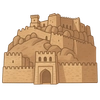
My story begins not with stone, but with simple earth. Long, long ago, in the 12th century, I was just a small mud fort built upon this granite hill. The Kakatiya kings built me around the year 1143 to watch over their lands. For hundreds of years, I was humble and simple. But then, new rulers arrived, the powerful Qutb Shahi dynasty. When they saw me, they didn't just see a mud fort. They saw potential. They dreamed of a magnificent capital city, a fortress so strong it would be legendary. Starting in 1518, they began my great transformation. For more than 60 years, thousands of workers reshaped me. They replaced my mud walls with immense blocks of granite, creating a fortress three miles around. They built towering gates studded with iron spikes, elegant palaces with airy courtyards, and beautiful mosques where people could pray. I grew from a simple mud hill into a majestic city of stone, a symbol of their power and vision.
The Whispering Fort of Golconda
The warm Indian sun has been my companion for centuries, baking my ancient stones and casting long shadows across the bustling city of Hyderabad below. I watch from my hilltop as cars and buses move like tiny, colorful beetles. I feel the gentle breeze that whispers through my broken arches and listen to the footsteps of curious visitors echoing in my grand halls. They come seeking my secrets. One of my favorite secrets is a sound. If you stand at my grand entrance, the Fateh Darwaza, and clap your hands just once, the sound will travel. It flutters like a bird, rising higher and higher, until it can be heard perfectly at the very top of my citadel, almost a kilometer away. It is my timeless whisper, a marvel of engineering from a long-ago time. I am Golconda Fort, and I have many stories to share.
My story begins not with stone, but with simple earth. Long, long ago, in the 12th century, I was just a small mud fort built upon this granite hill. The Kakatiya kings built me around the year 1143 to watch over their lands. For hundreds of years, I was humble and simple. But then, new rulers arrived, the powerful Qutb Shahi dynasty. When they saw me, they didn't just see a mud fort. They saw potential. They dreamed of a magnificent capital city, a fortress so strong it would be legendary. Starting in 1518, they began my great transformation. For more than 60 years, thousands of workers reshaped me. They replaced my mud walls with immense blocks of granite, creating a fortress three miles around. They built towering gates studded with iron spikes, elegant palaces with airy courtyards, and beautiful mosques where people could pray. I grew from a simple mud hill into a majestic city of stone, a symbol of their power and vision.
It wasn't just my strong walls that made me famous throughout the world. It was what I protected inside: incredible wealth and brilliant secrets. For many years, the lands around me produced the world's most beautiful diamonds. My markets became the center of the global diamond trade, and my name, Golconda, became another word for treasure. Legendary gems, like the deep blue Hope Diamond and the dazzling Koh-i-Noor, which is now in the British Crown Jewels, passed through my gates. My architects were also geniuses. They designed my whispering acoustic system not just as a fun trick, but as a clever security system. A guard at the gate could clap to warn the king in his palace at the top of the hill of any danger, faster than any messenger could run. They also engineered an amazing water system using clay pipes and gravity to bring fresh, cool water all the way up my steep hill, keeping everyone inside comfortable even during the hottest days. I was a fortress that was not only strong but also incredibly smart.
My greatest test came in the year 1687. The mighty Mughal emperor, Aurangzeb, arrived with a massive army, determined to conquer me. He thought it would be easy, but I was built to last. For eight long months, my strong granite walls and brave defenders held back his entire army. The siege was long and difficult for everyone inside, but we did not give up. In the end, I was not defeated by force, but by a trick that opened one of my gates. Though I was captured, my spirit was never broken. Today, the sounds of battle have faded, replaced by the happy voices of families and the clicks of cameras. People from all over the world wander through my ruins, climb my steep steps, and listen for the echo of that famous clap. At night, colorful lights dance on my walls as a sound and light show tells my story. I am a proud reminder of India's brilliant history, a story in stone that continues to inspire wonder and curiosity in all who come to listen.
Wow facts
About
A historic fortress and former capital of the Qutb Shahi dynasty, located in Hyderabad, India, renowned for its ingenious acoustics and as a center of the world's diamond trade.
Take a Quiz
Question 1 of 5
The story says the fort was transformed from 'mud to majesty.' What does the word 'majesty' mean here?
Explore next






Want to do even more?
Go beyond exploring. Unlock tools that turn every story into real learning.

Storypie Plus for families
Full stories, quizzes, and printables. Nights and car rides, sorted.
- Unlimited audio stories
- Create Mode: your child stars in the story
- Offline downloads
- Printable worksheets & coloring pages

Why Storypie for Schools
Students engaged. Prep in seconds. Evenings back to you.
- Worksheets & Quizzes
- Classroom Management
- Formative Assessment
- Custom Curriculum & Lesson Plans
- 27 Languages

Why Storypie for Homeschool
Curriculum done. They'll ask for more. Hours back in your day.
- Worksheet Generator
- First-Person Audio Stories
- Built-in Comprehension Quizzes
- Custom Curriculum & Lesson Plans
- Print & Go Activities