English

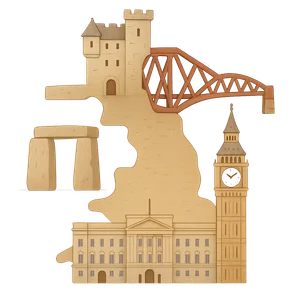
Great Britain
Great Britain is a large island in the North Atlantic Ocean off the northwest coast of continental Europe…
Reads at Grades 6–8 Listens at Grades 4–8
Print & create
Answer keys·No prep·Free with an account
28 worksheets · answer keys · full story · quiz · Ages 10-12 · CEFR B2
Plus adds 102,000+ more stories in 27 languages, audio for every one, and printables for all of them.
Just want Great Britain?
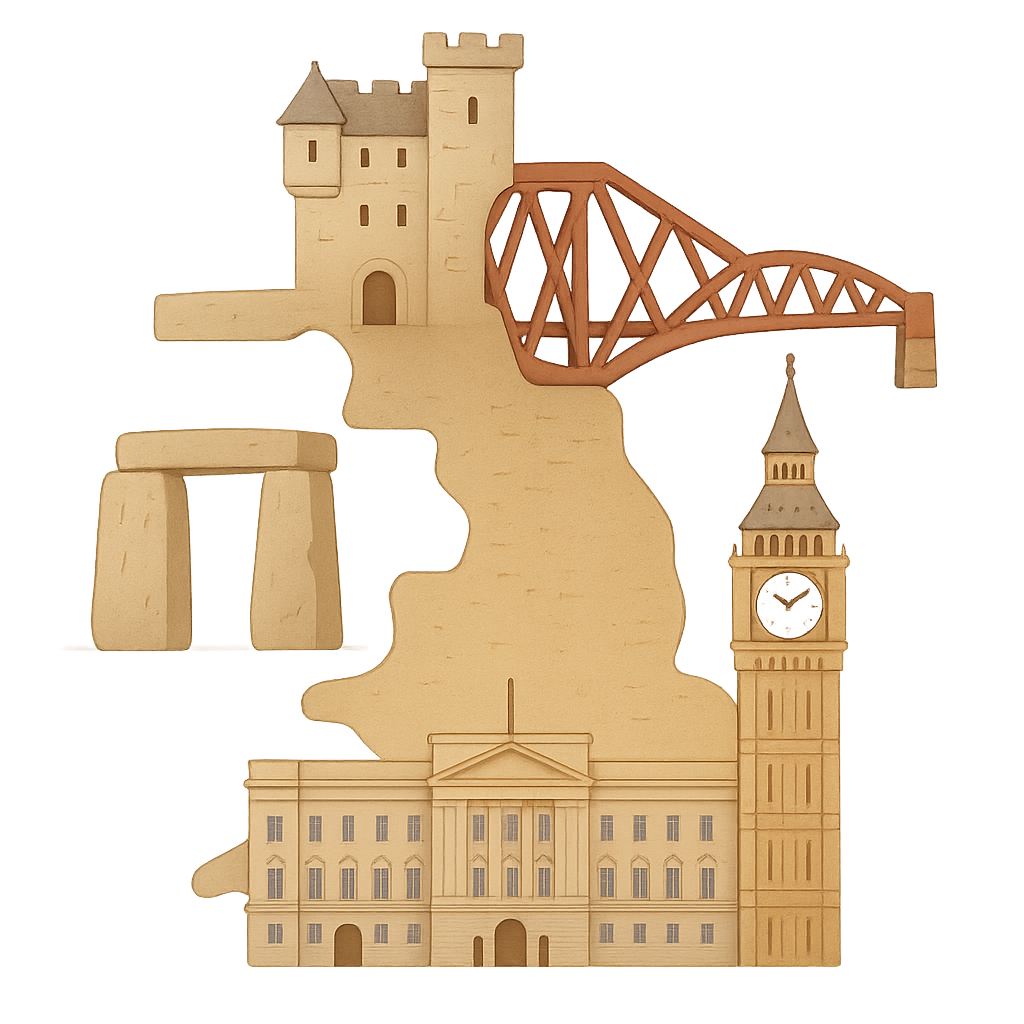
Feel the cool, salty spray on your face, carried on a wind that has traveled over restless seas. I am an island, a mass of green rolling hills, ancient, misty mountains, and shores that have seen the world change. My skin is etched with the stories of millennia. Beneath the soft grass of my fields lie the secrets of ages: giant stone circles that whisper to the sun, forgotten Roman roads that march in straight lines under modern pavement, and the foundations of castles that once echoed with the clang of swords. In my cities, new life buzzes alongside buildings that have stood for centuries. I have felt the tread of conquerors and the footsteps of inventors. I am a place of kings, poets, and pioneers. I am the island of Great Britain.
My memory stretches back to a time of mist and myth. Long before recorded history, around 3000 BCE, mysterious people worked together to raise the giant stones of Stonehenge, arranging them in a perfect circle to greet the rising sun. For centuries, Celtic tribes filled my lands, their art full of swirling knots and their stories carried by bards. Then, in 43 CE, a new sound echoed across my southern shores: the disciplined tramp of Roman sandals. The legions of the Roman Empire had arrived. They were organized and ambitious, building straight roads that connected my wild landscapes, grand villas with heated floors, and bustling cities like Londinium, which you now call London. To mark the northern edge of their vast empire, they built a mighty stone barrier, beginning the construction of Hadrian's Wall in 122 CE, a testament to their power and engineering that you can still walk along today.
Great Britain: An Island's Tale
Feel the cool, salty spray on your face, carried on a wind that has traveled over restless seas. I am an island, a mass of green rolling hills, ancient, misty mountains, and shores that have seen the world change. My skin is etched with the stories of millennia. Beneath the soft grass of my fields lie the secrets of ages: giant stone circles that whisper to the sun, forgotten Roman roads that march in straight lines under modern pavement, and the foundations of castles that once echoed with the clang of swords. In my cities, new life buzzes alongside buildings that have stood for centuries. I have felt the tread of conquerors and the footsteps of inventors. I am a place of kings, poets, and pioneers. I am the island of Great Britain.
My memory stretches back to a time of mist and myth. Long before recorded history, around 3000 BCE, mysterious people worked together to raise the giant stones of Stonehenge, arranging them in a perfect circle to greet the rising sun. For centuries, Celtic tribes filled my lands, their art full of swirling knots and their stories carried by bards. Then, in 43 CE, a new sound echoed across my southern shores: the disciplined tramp of Roman sandals. The legions of the Roman Empire had arrived. They were organized and ambitious, building straight roads that connected my wild landscapes, grand villas with heated floors, and bustling cities like Londinium, which you now call London. To mark the northern edge of their vast empire, they built a mighty stone barrier, beginning the construction of Hadrian's Wall in 122 CE, a testament to their power and engineering that you can still walk along today.
When the Roman eagles flew away for good around 410 CE, I was left to forge a new identity. New tribes, the Anglo-Saxons, sailed from across the sea, establishing kingdoms and giving a part of me its name: Angle-land, or England. Life was a patchwork of farming, feasting, and fighting. Then, from the north, came the fearsome dragon ships of the Vikings. Their first raid on the peaceful monastery at Lindisfarne in 793 CE was a shock that sent shivers through my lands. But over time, many Vikings chose to settle, becoming farmers and traders, adding their own words and customs to my story. The most dramatic change, however, arrived in the year 1066 CE. On October 14th, at the Battle of Hastings, a Norman duke named William the Conqueror defeated the English king. This single day altered my destiny. The Norman Conquest brought a new ruling class, a new language that blended with the old, and new laws. Across my hills and valleys, they built imposing stone castles, powerful symbols of their control that still stand as silent witnesses to that pivotal year.
Centuries passed, and my story grew more complex. The power of kings was not absolute, and on June 15th, 1215, a group of powerful barons forced King John to agree to a set of rules called the Magna Carta. It was a revolutionary idea—a promise that not even a king was above the law, a seed of freedom that would inspire people for generations. Later, during a time of incredible creativity called the Renaissance, my spirit soared. In the late 1500s, a man named William Shakespeare used my changing language to write plays and poems that captured the very essence of human joy and sorrow. His words are still performed in theaters all over the world. For a long time, I remained an island of separate kingdoms, often at odds with one another. But on May 1st, 1707, the Acts of Union were passed, officially joining the kingdoms of England and Scotland. A new nation was born: the Kingdom of Great Britain. This union combined our strengths and set the stage for me to play a new role in the world.
Beginning in the mid-1700s, a new kind of power rumbled through me—not of armies, but of machines. The Industrial Revolution began in my heartland, with the roar of factories and the hiss of steam. Brilliant minds like James Watt perfected the steam engine, powering trains that raced across my landscape and looms that wove cloth faster than ever before. I became the workshop of the world, producing iron, coal, and textiles that were shipped across the oceans. This economic power allowed my influence to spread globally, creating the vast British Empire. My story in the 20th century was one of great challenge and resilience. I endured the immense struggles of two World Wars, my people showing incredible courage. And my spirit of invention never faded. In 1989, one of my scientists, Tim Berners-Lee, created something that would connect the entire globe in a way no empire ever could: the World Wide Web.
Look at me now, and you will see the echoes of all these stories. I am a tapestry woven from Celtic, Roman, Anglo-Saxon, Viking, and Norman threads, enriched by the countless cultures that have since made me their home. My identity is a blend of ancient traditions and modern innovation. I am not just a place of museums and monuments; I am a living, breathing island of art, science, and diverse voices. My story is not finished; it has not been for thousands of years. It is written every day in the classrooms, laboratories, and theaters by the people who live, dream, and create here. Every person who walks my ancient paths or bustling city streets adds their own small, but important, chapter to my ongoing tale.
Wow facts
About
Great Britain is a large island in the North Atlantic Ocean off the northwest coast of continental Europe, which includes the nations of England, Scotland, and Wales.
Take a Quiz
Question 1 of 5
What is the main idea of this story?
Explore next


Want to do even more?
Go beyond exploring. Unlock tools that turn every story into real learning.

Storypie Plus for families
Full stories, quizzes, and printables. Nights and car rides, sorted.
- Unlimited audio stories
- Create Mode: your child stars in the story
- Offline downloads
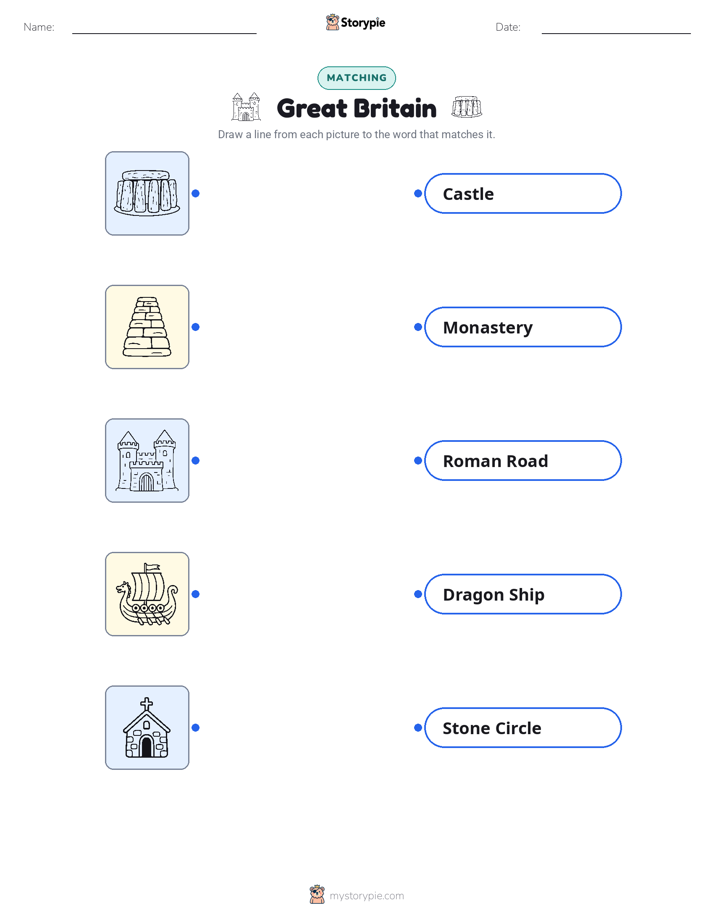
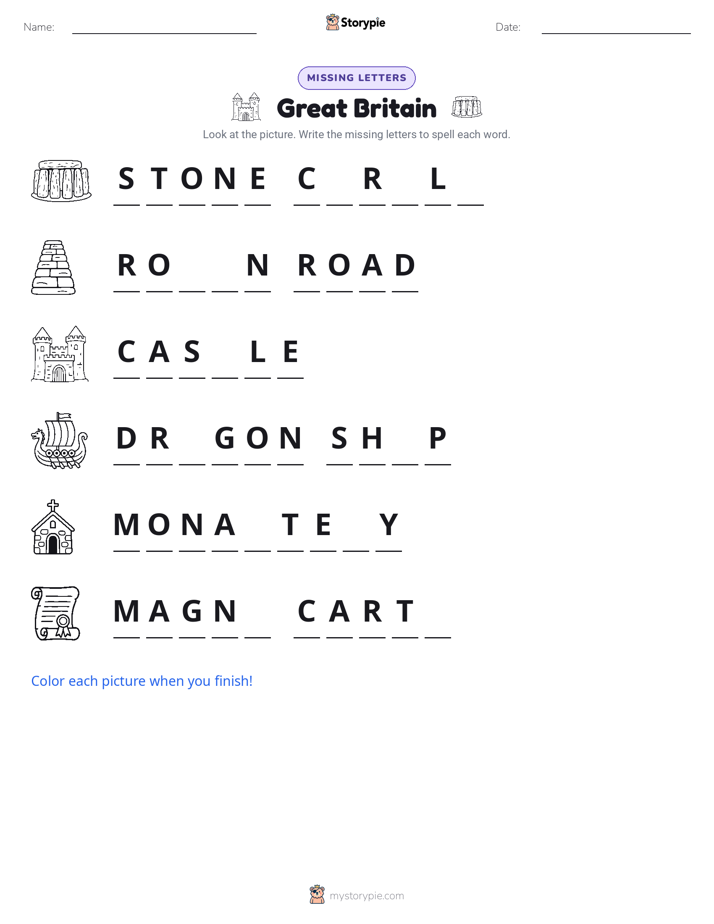
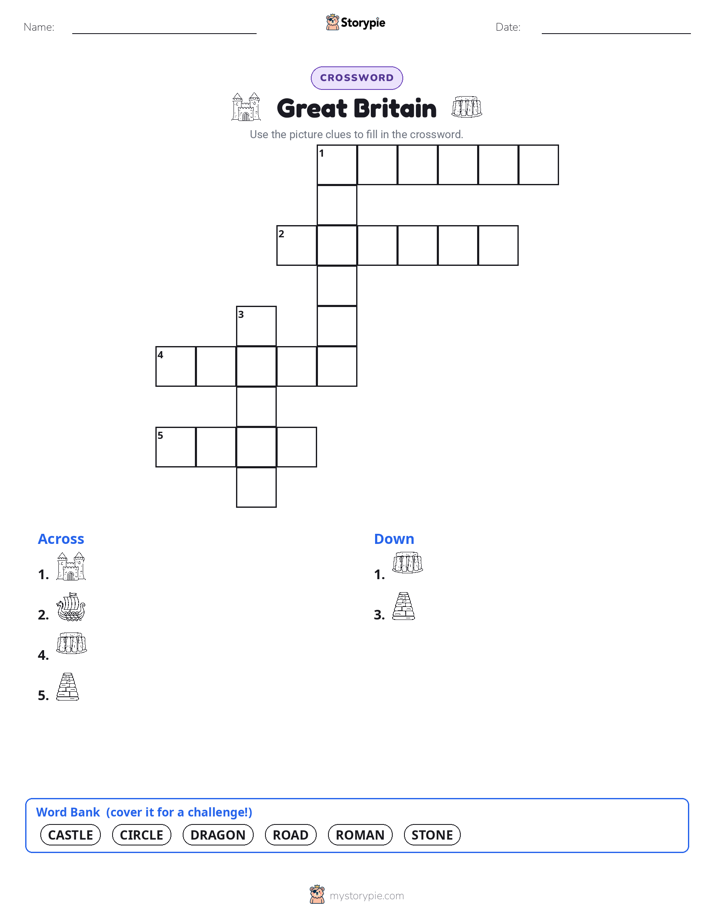
- Printable worksheets & coloring pages

Why Storypie for Schools
Students engaged. Prep in seconds. Evenings back to you.
- Worksheets & Quizzes
- Classroom Management
- Formative Assessment
- Custom Curriculum & Lesson Plans
- 27 Languages

Why Storypie for Homeschool
Curriculum done. They'll ask for more. Hours back in your day.
- Worksheet Generator
- First-Person Audio Stories
- Built-in Comprehension Quizzes
- Custom Curriculum & Lesson Plans
- Print & Go Activities