English

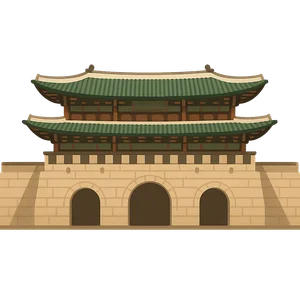
Gyeongbokgung Palace
Gyeongbokgung Palace, located in Seoul, South Korea, was the main royal palace of the Joseon dynasty…
Reads at Grades 6–8 Listens at Grades 4–8
Print & create
Answer keys·No prep·Free with an account
28 worksheets · answer keys · full story · quiz · Ages 10-12 · CEFR B2
Plus adds 208,000+ more stories in 27 languages, audio for every one, and printables for all of them.
Just want Gyeongbokgung Palace?
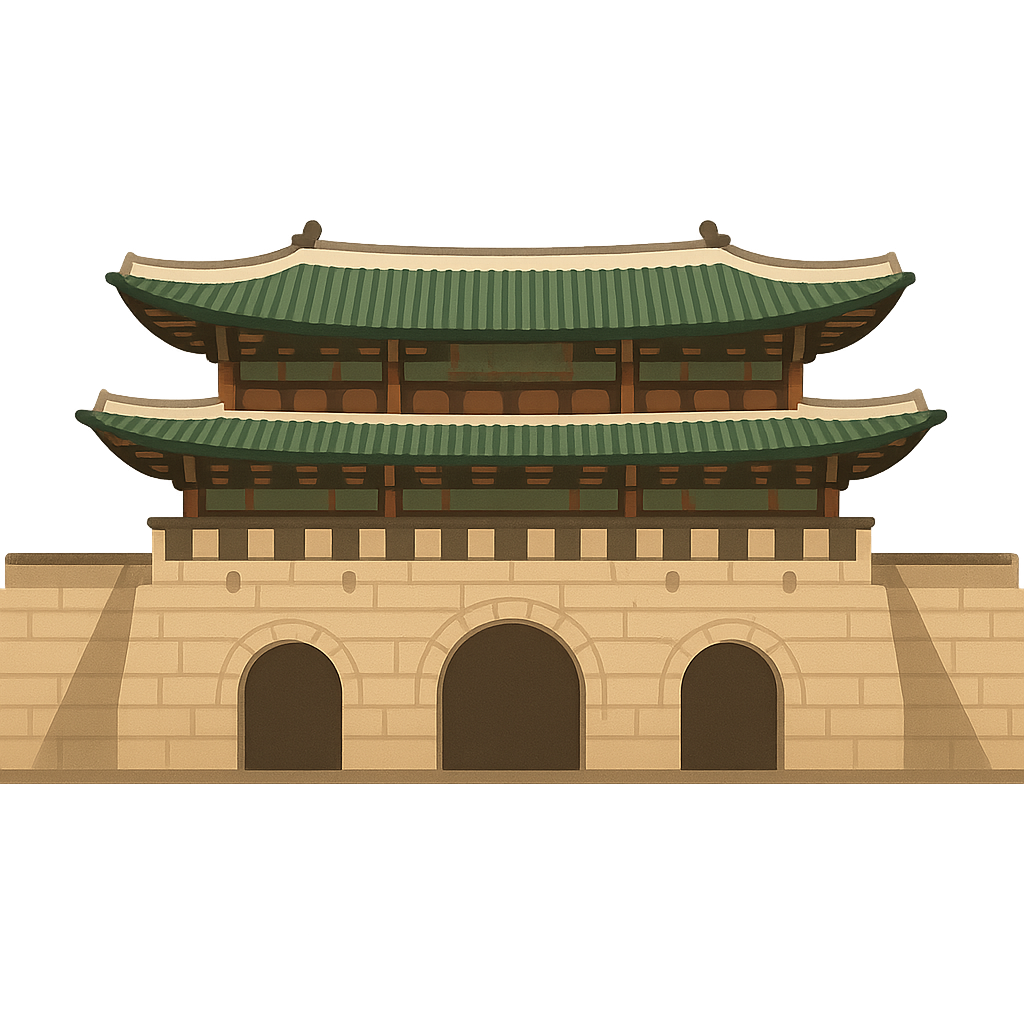
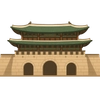
Imagine standing in a vast courtyard, surrounded by buildings with gracefully curved roofs that seem to reach for the sky. Behind me, the majestic peak of Mount Bugak stands guard, a silent protector for centuries. The air here feels different, filled with whispers of kings and queens, scholars and soldiers who have walked these same stone paths. My wooden pillars are painted in vibrant shades of red and green, and intricate patterns decorate my eaves, each one telling a story of artistry and ambition. For over six hundred years, I have been the heart of a great city, a symbol of a dynasty, and a witness to both incredible triumph and profound sorrow. My name is a wish, a blessing meant to last for eternity. My name means ‘Palace Greatly Blessed by Heaven.’ I am Gyeongbokgung.
My story begins with a visionary king named Taejo. In the year 1392, he founded a new dynasty, the Joseon Dynasty, which would rule for over five hundred years. He needed a capital, and he chose this beautiful land, which is now the city of Seoul. And every great dynasty needs a grand palace, a place to be the center of its universe. So, in 1394, King Taejo ordered my construction. Architects and artisans from all over the kingdom gathered here. They didn't just build me; they carefully placed me within the landscape. Following principles of feng shui, they designed me to be in harmony with the mountains behind me and the stream that once flowed in front of me, ensuring good fortune for the new kingdom. In 1395, my main buildings were complete. My gates opened to a bustling world of royal court life. Inside my throne hall, Geunjeongjeon, King Taejo and his successors held court, made important decisions, and met with envoys from distant lands. My pavilions hosted grand banquets, and my royal library was filled with the nation's most precious knowledge. I was alive with purpose, the proud centerpiece of a thriving dynasty.
The Palace of Great Blessing
Imagine standing in a vast courtyard, surrounded by buildings with gracefully curved roofs that seem to reach for the sky. Behind me, the majestic peak of Mount Bugak stands guard, a silent protector for centuries. The air here feels different, filled with whispers of kings and queens, scholars and soldiers who have walked these same stone paths. My wooden pillars are painted in vibrant shades of red and green, and intricate patterns decorate my eaves, each one telling a story of artistry and ambition. For over six hundred years, I have been the heart of a great city, a symbol of a dynasty, and a witness to both incredible triumph and profound sorrow. My name is a wish, a blessing meant to last for eternity. My name means ‘Palace Greatly Blessed by Heaven.’ I am Gyeongbokgung.
My story begins with a visionary king named Taejo. In the year 1392, he founded a new dynasty, the Joseon Dynasty, which would rule for over five hundred years. He needed a capital, and he chose this beautiful land, which is now the city of Seoul. And every great dynasty needs a grand palace, a place to be the center of its universe. So, in 1394, King Taejo ordered my construction. Architects and artisans from all over the kingdom gathered here. They didn't just build me; they carefully placed me within the landscape. Following principles of feng shui, they designed me to be in harmony with the mountains behind me and the stream that once flowed in front of me, ensuring good fortune for the new kingdom. In 1395, my main buildings were complete. My gates opened to a bustling world of royal court life. Inside my throne hall, Geunjeongjeon, King Taejo and his successors held court, made important decisions, and met with envoys from distant lands. My pavilions hosted grand banquets, and my royal library was filled with the nation's most precious knowledge. I was alive with purpose, the proud centerpiece of a thriving dynasty.
For nearly two hundred years, I enjoyed a period of relative peace and prosperity. Generations of the royal family lived within my walls, and the kingdom flourished under their rule. But that peace was shattered in the late 16th century. A time of great conflict, known as the Imjin War, began with invasions from Japan. In the chaos and fear of the conflict, a terrible fire swept through the capital in 1592. I was engulfed in flames, and my beautiful wooden halls and pavilions were reduced to ashes and scorched earth. It was a devastating blow. When the war ended, the royal court decided to move to a smaller, secondary palace. I was left behind, a skeleton of my former self. For more than 270 years, I lay in ruins, abandoned and silent. My courtyards grew wild with weeds, and my foundations were all that remained to tell of the glory that once was. It was a long, lonely sleep, a quiet testament to the scars of war.
Hope returned to my grounds in the 19th century. A powerful regent named Heungseon Daewongun, the father of the king, decided that the nation’s primary palace must be restored to its former splendor. Beginning in 1867, a massive reconstruction project began. It was a tremendous national effort, requiring immense resources and the labor of thousands of people. Slowly, my halls, gates, and pavilions rose from the ashes, meticulously rebuilt to match their original designs. By 1872, I was once again the magnificent center of the kingdom. However, this rebirth was followed by another period of darkness. In the early 20th century, Korea came under Japanese rule. After 1910, my significance as a symbol of Korean sovereignty made me a target. Many of my buildings, more than ninety percent in fact, were systematically torn down. The greatest indignity came in 1926, when the massive stone Japanese Government-General Building was constructed directly in front of my throne hall, deliberately obscuring my view and severing my connection to the city. I was hidden, silenced once more.
My final chapter is one of rediscovery and pride. After Korea regained its independence, a new understanding of the importance of cultural heritage grew. In 1990, the government of South Korea launched a comprehensive, long-term project to restore me to my original form. This wasn't just about rebuilding structures; it was about healing a nation's historical wounds. One of the most powerful moments came on August 15th, 1995, the 50th anniversary of Korean liberation, when the process of demolishing the Japanese Government-General Building began. It was a symbolic act of reclaiming my identity and restoring the nation's pride. Today, the restoration continues, and I stand more complete than I have been in over a century. I am no longer a home for kings, but a home for history. I welcome millions of visitors from around the world who come to walk through my courtyards, admire my architecture, and learn my story. I am a living museum, a testament to the resilience of the Korean people, and a reminder that even after centuries of hardship, a spirit of beauty and strength can endure.
Wow facts
About
Gyeongbokgung Palace, located in Seoul, South Korea, was the main royal palace of the Joseon dynasty, first constructed in 1395. It has been destroyed and restored multiple times throughout its history and now stands as a symbol of Korean heritage.
Take a Quiz
Question 1 of 5
What is the main theme of Gyeongbokgung Palace's story?
Explore next




Want to do even more?
Go beyond exploring. Unlock tools that turn every story into real learning.

Storypie Plus for families
Full stories, quizzes, and printables. Nights and car rides, sorted.
- Unlimited audio stories
- Create Mode: your child stars in the story
- Offline downloads
- Printable worksheets & coloring pages

Why Storypie for Schools
Students engaged. Prep in seconds. Evenings back to you.
- Worksheets & Quizzes
- Classroom Management
- Formative Assessment
- Custom Curriculum & Lesson Plans
- 27 Languages

Why Storypie for Homeschool
Curriculum done. They'll ask for more. Hours back in your day.
- Worksheet Generator
- First-Person Audio Stories
- Built-in Comprehension Quizzes
- Custom Curriculum & Lesson Plans
- Print & Go Activities