English

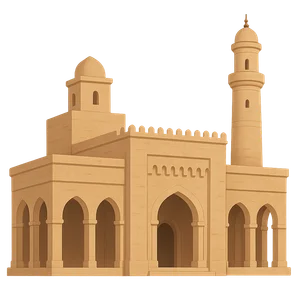
House of Wisdom
The House of Wisdom was a grand library and translation institute; its role as a formal academy is debated.
Reads at Grades 6–8 Listens at Grades 4–8
Print & create
Answer keys·No prep·Free with an account
28 worksheets · answer keys · full story · quiz · Ages 10-12 · CEFR B2
Plus adds 102,000+ more stories in 27 languages, audio for every one, and printables for all of them.
Just want House of Wisdom?
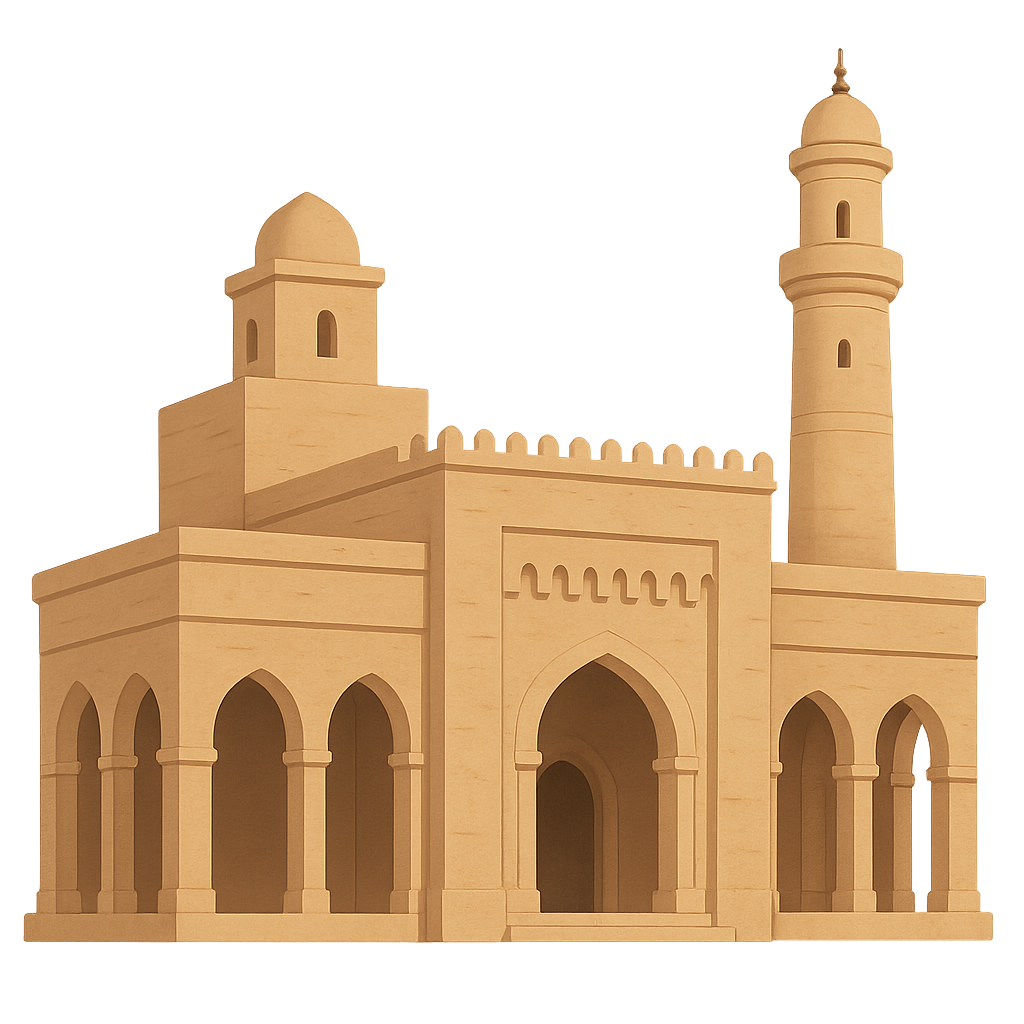
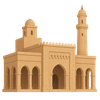
In the heart of a great, round city called Baghdad, a whisper of discovery once filled the air. Imagine a time, over a thousand years ago, when this city was the world's center of learning. The streets buzzed with energy, but within certain walls, a quiet hum of curiosity thrived. The air smelled of fresh paper, rich leather bindings, and the sharp, earthy scent of ink. Scholars from places as far as Greece, India, and Persia gathered in my courtyards, their voices a gentle murmur of debate in many different languages. Scrolls and magnificent books filled my shelves, holding the secrets of mathematics, medicine, and the stars. I was not just a building made of brick and mortar; I was a heart that beat with the rhythm of questions and the thrill of new answers. My purpose was to gather the world's knowledge like a great river flowing into a single, vast sea. I am the House of Wisdom, Bayt al-Hikmah in Arabic, and my story is written on the stars themselves.
My story begins in the late 8th century, not as a grand public institution, but as a private collection. The great Caliph Harun al-Rashid, a ruler famous for his love of stories and poetry, began gathering manuscripts for his personal library. He cherished knowledge and saw its power. But it was his son, Caliph al-Ma'mun, who dreamed of something far grander. He was not content for wisdom to be kept behind closed doors. He believed it should be a beacon, shining for any mind thirsty to learn. So, around the year 830 CE, he transformed me. He made me into a grand academy, a public institution open to scholars from all backgrounds. To fill my halls, al-Ma'mun sent his best people on long, difficult journeys. They traveled to Constantinople, to Persia, and beyond, searching for every important book they could find. They returned with the philosophical works of Aristotle, the mind-bending geometry of Euclid, and the advanced medical knowledge of Galen. My purpose became clear: to collect all of humanity’s knowledge, to translate it into Arabic so all could share it, and to build upon it for generations to come.
The House of Wisdom's Echo
In the heart of a great, round city called Baghdad, a whisper of discovery once filled the air. Imagine a time, over a thousand years ago, when this city was the world's center of learning. The streets buzzed with energy, but within certain walls, a quiet hum of curiosity thrived. The air smelled of fresh paper, rich leather bindings, and the sharp, earthy scent of ink. Scholars from places as far as Greece, India, and Persia gathered in my courtyards, their voices a gentle murmur of debate in many different languages. Scrolls and magnificent books filled my shelves, holding the secrets of mathematics, medicine, and the stars. I was not just a building made of brick and mortar; I was a heart that beat with the rhythm of questions and the thrill of new answers. My purpose was to gather the world's knowledge like a great river flowing into a single, vast sea. I am the House of Wisdom, Bayt al-Hikmah in Arabic, and my story is written on the stars themselves.
My story begins in the late 8th century, not as a grand public institution, but as a private collection. The great Caliph Harun al-Rashid, a ruler famous for his love of stories and poetry, began gathering manuscripts for his personal library. He cherished knowledge and saw its power. But it was his son, Caliph al-Ma'mun, who dreamed of something far grander. He was not content for wisdom to be kept behind closed doors. He believed it should be a beacon, shining for any mind thirsty to learn. So, around the year 830 CE, he transformed me. He made me into a grand academy, a public institution open to scholars from all backgrounds. To fill my halls, al-Ma'mun sent his best people on long, difficult journeys. They traveled to Constantinople, to Persia, and beyond, searching for every important book they could find. They returned with the philosophical works of Aristotle, the mind-bending geometry of Euclid, and the advanced medical knowledge of Galen. My purpose became clear: to collect all of humanity’s knowledge, to translate it into Arabic so all could share it, and to build upon it for generations to come.
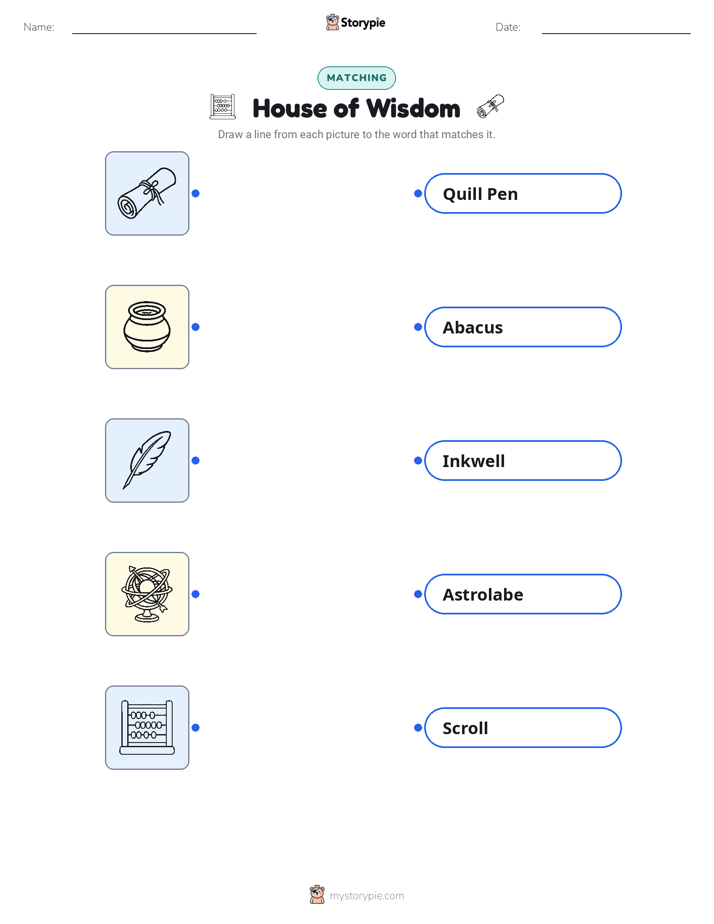
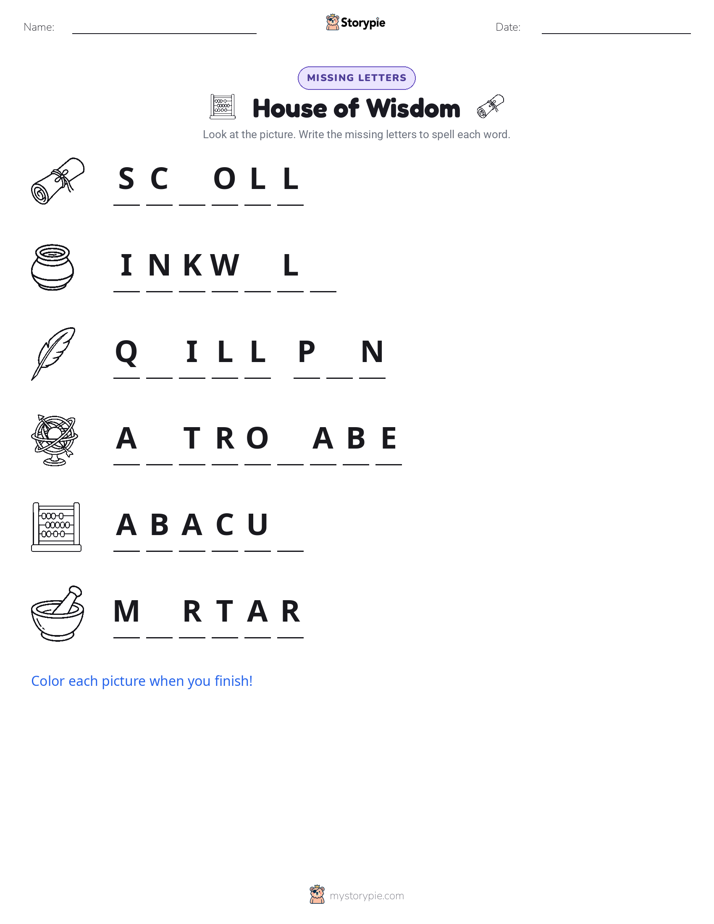
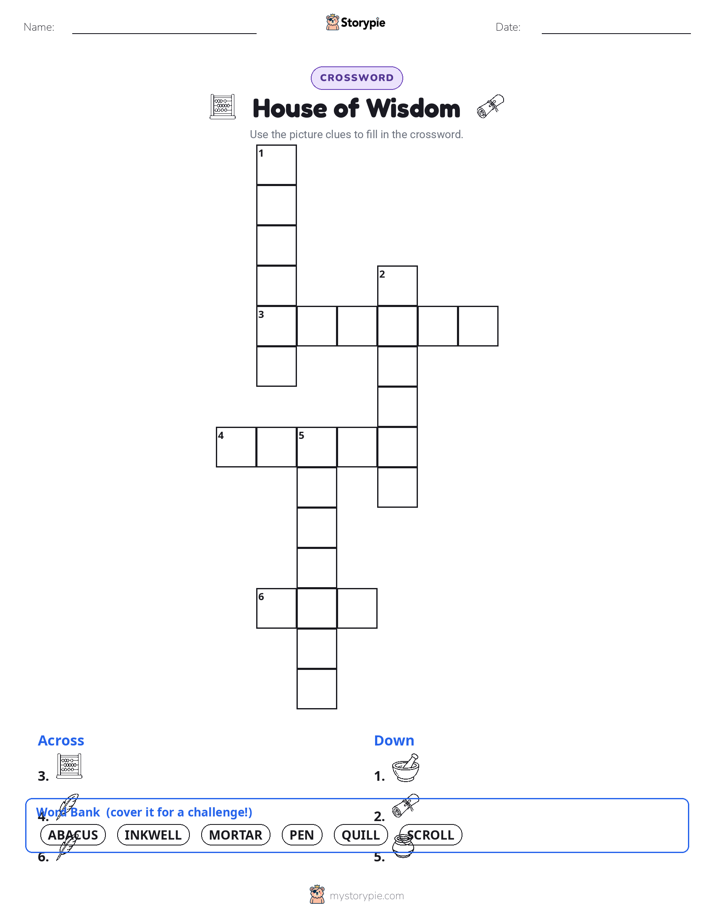
Life within my walls was a universe of discovery. I was a place of incredible diversity, where brilliant minds came together not despite their differences, but because of them. Muslim, Christian, and Jewish scholars worked side-by-side, sharing ideas and challenging one another to think in new ways. This collaborative spirit fueled the great Translation Movement, which flourished from the 8th to the 10th centuries. My scholars undertook the immense task of translating the world’s most important texts from Greek, Syriac, Persian, and Sanskrit into Arabic, which had become the common language of scholarship. This was not simple copying. It was a deep, intellectual conversation across centuries. They added commentaries, corrected errors they found, and combined ideas from different cultures to create something entirely new. I was more than a library. I housed an astronomical observatory where scholars mapped the heavens with amazing accuracy. My scriptoriums were buzzing workshops where scribes carefully copied manuscripts and new ideas were put to paper. With hundreds of thousands of volumes, I was a living, breathing center of discovery, a place where the knowledge of the past was used to forge the future, not just a dusty archive of what had been.
It was the people, the thinkers and innovators, who truly gave me life. Their genius echoed in my halls and filled my pages. One of the greatest was a Persian mathematician named Muhammad ibn Musa al-Khwarizmi. Around 820 CE, while working within my walls, he wrote a revolutionary book that created a new way of solving problems with unknown numbers. He called his method 'al-jabr', a word that you will recognize today as 'algebra'. His work was groundbreaking, providing a systematic way to solve equations. Al-Khwarizmi also helped introduce a revolutionary numbering system from India to the Arab world and, eventually, to Europe. These are the numerals we all use today: 1, 2, 3, and so on, including the incredible concept of zero. Then there were the Banu Musa brothers, three brilliant engineers and inventors of the 9th century. They were fascinated by mechanics and automation. They designed incredible devices that seemed like magic: self-playing flutes, fountains that changed patterns automatically, and lamps with non-diminishing fuel. They showed the world that science wasn't just for serious study; it could also be a source of wonder and delight. These were the minds that made me legendary.
My physical form, however, was not destined to last forever. My story took a heartbreaking turn on a cold day, February 13th, 1258. On that day, Mongol armies conquered the city of Baghdad. In the chaos and destruction that followed, my halls were emptied, and my treasures were lost. It is said that my countless books, the product of centuries of scholarship and dedication, were thrown into the Tigris River. The legend says so many books were destroyed that the river ran black with their ink for days. It was a tragic end for a place that had held so much of the world's light. But a building can be destroyed, and books can be lost, but ideas are much harder to erase. The knowledge I nurtured did not die in the river. It had already traveled far and wide, carried in the minds of scholars who had studied here and in the countless copies of books that had been made and sent across the world. The wisdom of algebra, medicine, and astronomy that I helped preserve and advance eventually reached Europe, helping to spark the Renaissance centuries later. My true self was never just the building, but the unstoppable spirit of human inquiry. That spirit lives on in every library, every school, and in every curious mind that looks at the world and asks, 'Why?'.
Wow facts
About
The House of Wisdom was a grand library and translation institute; its role as a formal academy is debated. It was a significant center of learning in Abbasid-era Baghdad, but some historians question how much influence it really had during the Islamic Golden Age.
Take a Quiz
Question 1 of 5
Which sentence best summarizes the main purpose of the House of Wisdom?
Explore next






Want to do even more?
Go beyond exploring. Unlock tools that turn every story into real learning.

Storypie Plus for families
Full stories, quizzes, and printables. Nights and car rides, sorted.
- Unlimited audio stories
- Create Mode: your child stars in the story
- Offline downloads
- Printable worksheets & coloring pages

Why Storypie for Schools
Students engaged. Prep in seconds. Evenings back to you.
- Worksheets & Quizzes
- Classroom Management
- Formative Assessment
- Custom Curriculum & Lesson Plans
- 27 Languages

Why Storypie for Homeschool
Curriculum done. They'll ask for more. Hours back in your day.
- Worksheet Generator
- First-Person Audio Stories
- Built-in Comprehension Quizzes
- Custom Curriculum & Lesson Plans
- Print & Go Activities