English

Inca Empire
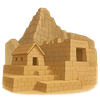
The Inca Empire was the largest empire in pre-Columbian America…
Reads at Grades 6–8 Listens at Grades 4–8
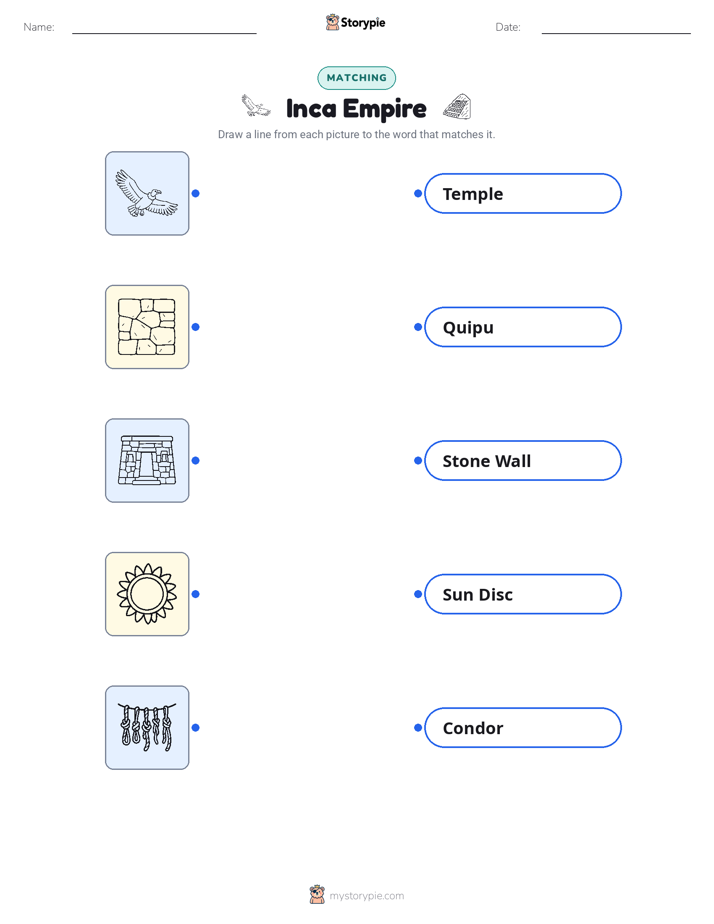
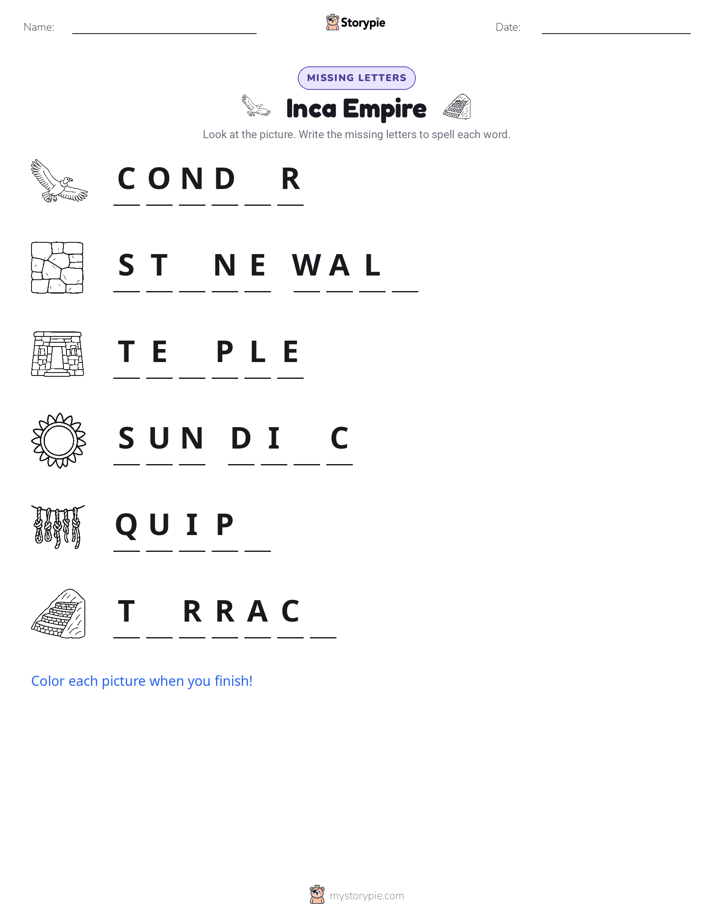
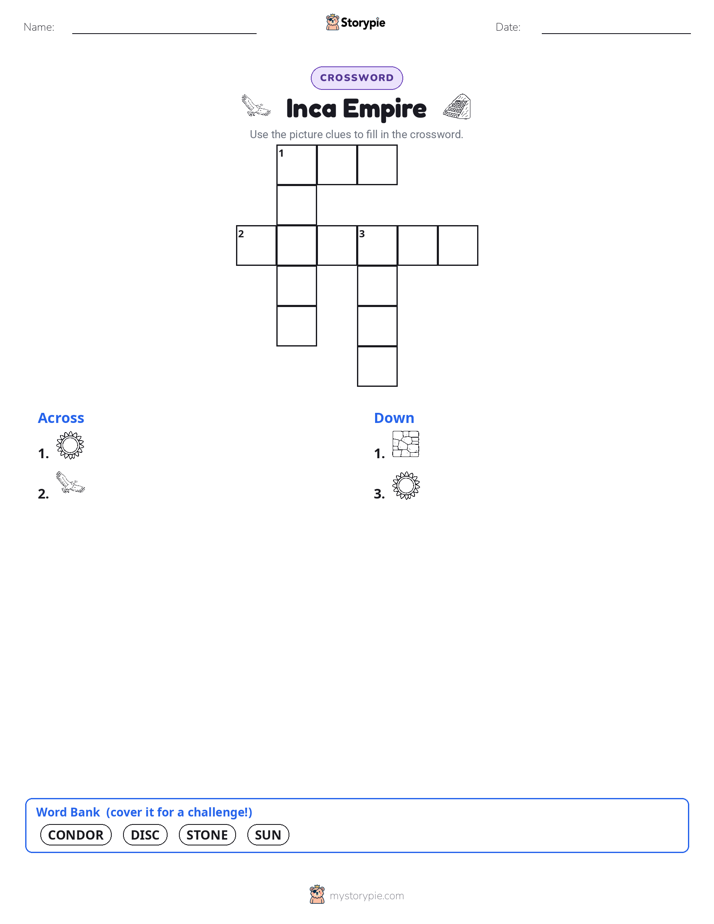
Print & create
Answer keys·No prep·Free with an account
28 worksheets · answer keys · full story · quiz · Ages 10-12 · CEFR B2
Plus adds 102,000+ more stories in 27 languages, audio for every one, and printables for all of them.
Just want Inca Empire?
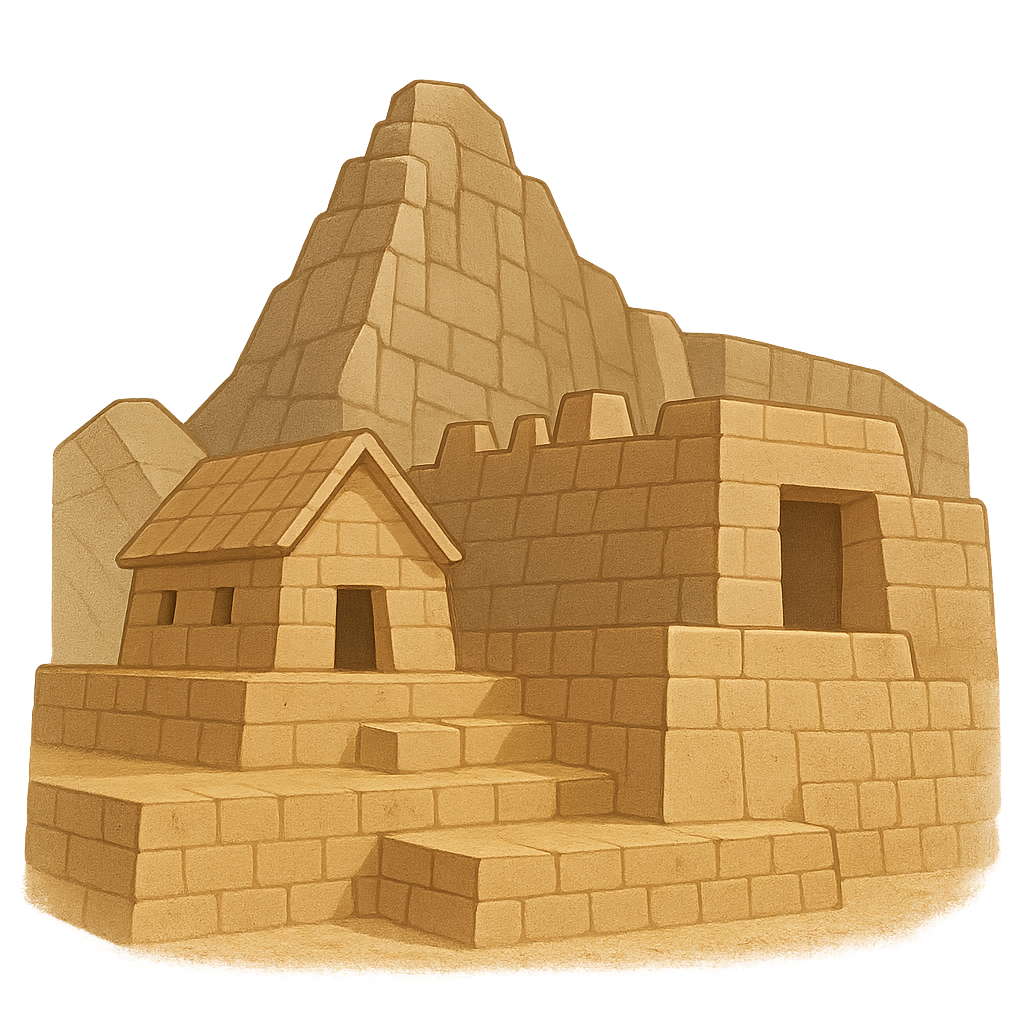
I am a whisper on the wind that rushes over the high peaks of the Andes mountains. I am the feeling of cold, thin air and the sight of a condor soaring on thermal currents, its shadow gliding across deep valleys below. My bones are the stones of cities that cling to sheer cliffsides, and my veins are the thousands of miles of roads that stretch like golden threads across deserts, jungles, and mountain passes. For centuries, my people moved with the landscape, not against it. They listened to the mountain spirits, the Apu, and honored the sun, the moon, and the earth that sustained them. My heart was a golden city called Cuzco, the navel of my world, a place of immense power and sacred meaning. From this center, I reached out to touch every corner of the world I knew, connecting millions of people under a single, brilliant purpose. My heart was a golden city called Cuzco, the navel of my world. I am the Inca Empire, the Land of the Four Quarters—Tawantinsuyu.
My story begins not with stone, but with water, in the shimmering depths of Lake Titicaca. Legend says that from this sacred lake, the first Inca, Manco Cápac, was sent to earth by my most important god, Inti, the Sun. He founded the Kingdom of Cuzco, a small but proud community nestled in a fertile valley. For hundreds of years, we were one of many groups in the Andes. But everything changed in the year 1438 CE. Our enemies, the Chanka people, swept down from the hills, determined to conquer Cuzco. The king and his heir fled, but one prince refused to abandon our home. His name was Cusi Yupanqui. He rallied the warriors, prayed to the gods for strength, and miraculously drove the invaders away. After this heroic victory, he was crowned the new emperor, taking the name Pachacuti, which means “He Who Remakes the World.” Pachacuti was a true visionary. He didn't just want to rule a kingdom; he wanted to build an empire. He reorganized our society, created new laws, and designed a government that could manage a vast and diverse population. He ordered the construction of magnificent temples to honor Inti and expanded my borders through clever diplomacy and, when necessary, with his powerful and disciplined army.
I Am Tawantinsuyu: The Empire of the Sun
I am a whisper on the wind that rushes over the high peaks of the Andes mountains. I am the feeling of cold, thin air and the sight of a condor soaring on thermal currents, its shadow gliding across deep valleys below. My bones are the stones of cities that cling to sheer cliffsides, and my veins are the thousands of miles of roads that stretch like golden threads across deserts, jungles, and mountain passes. For centuries, my people moved with the landscape, not against it. They listened to the mountain spirits, the Apu, and honored the sun, the moon, and the earth that sustained them. My heart was a golden city called Cuzco, the navel of my world, a place of immense power and sacred meaning. From this center, I reached out to touch every corner of the world I knew, connecting millions of people under a single, brilliant purpose. My heart was a golden city called Cuzco, the navel of my world. I am the Inca Empire, the Land of the Four Quarters—Tawantinsuyu.
My story begins not with stone, but with water, in the shimmering depths of Lake Titicaca. Legend says that from this sacred lake, the first Inca, Manco Cápac, was sent to earth by my most important god, Inti, the Sun. He founded the Kingdom of Cuzco, a small but proud community nestled in a fertile valley. For hundreds of years, we were one of many groups in the Andes. But everything changed in the year 1438 CE. Our enemies, the Chanka people, swept down from the hills, determined to conquer Cuzco. The king and his heir fled, but one prince refused to abandon our home. His name was Cusi Yupanqui. He rallied the warriors, prayed to the gods for strength, and miraculously drove the invaders away. After this heroic victory, he was crowned the new emperor, taking the name Pachacuti, which means “He Who Remakes the World.” Pachacuti was a true visionary. He didn't just want to rule a kingdom; he wanted to build an empire. He reorganized our society, created new laws, and designed a government that could manage a vast and diverse population. He ordered the construction of magnificent temples to honor Inti and expanded my borders through clever diplomacy and, when necessary, with his powerful and disciplined army.
Under Pachacuti and his successors, my body grew into a marvel of engineering and organization. My greatest achievement was the Qhapaq Ñan, a massive network of roads stretching over 25,000 miles. It was the circulatory system of the empire, allowing armies, goods, and information to move with incredible speed. Along these roads ran my swift-footed messengers, the chasquis. They operated in relays, passing messages and small items from one runner to the next, and could cover up to 150 miles in a single day. But how did we keep track of everything in an empire of millions without a written alphabet?. We used the quipu, a mysterious and beautiful tool made of knotted strings. The colors, knots, and placements of the strings recorded numbers, census data, and perhaps even stories—a secret code that we are still trying to fully understand today. Our stonemasons were masters of their craft. They could cut and shape enormous stones, some weighing over one hundred tons, so precisely that they fit together like puzzle pieces, with no mortar needed to hold them. Their walls have withstood centuries of earthquakes. To feed everyone, we invented terrace farming, carving steps called andenes into the steep mountainsides to create flat land for growing crops. Around the year 1450 CE, Pachacuti ordered the construction of his private royal estate, a breathtaking city in the clouds you now know as Machu Picchu. All of this was possible because of the ayllu, the traditional community, where everyone worked together for the common good, a principle called ayni, or reciprocity.
For nearly a century, I was a world in balance. But that balance was fragile. After the death of a great emperor, two of his sons, the brothers Huáscar and Atahualpa, fought a bitter civil war over who would rule. This conflict wounded me deeply, leaving my armies and my people divided and exhausted. It was at this moment of weakness, in the year 1532 CE, that strangers arrived on my shores. They came from across the sea, led by a man named Francisco Pizarro. These Spanish conquistadors had armor that gleamed like silver, weapons that exploded with fire and thunder, and powerful animals—horses—that my people had never seen before. On November 16th, 1532, in the city of Cajamarca, Pizarro and his men ambushed and captured my emperor, Atahualpa, plunging the empire into chaos. The clash of our worlds was swift and devastating. The Spanish sought gold and power, and they brought with them diseases that my people had no defense against. Though brave Inca warriors fought back for many years, the end of my rule was inevitable. By the year 1572 CE, the last Inca stronghold had fallen. My time as a unified empire was over, but this was only the end of my government, not the end of my spirit.
Even though I no longer rule the Andes, my stones still speak today. The massive, perfectly fitted walls of my capital, Cuzco, and the fortress of Sacsayhuamán still stand, a testament to the skill of my builders. High in the mountains, Machu Picchu continues to capture the imagination of everyone who walks its quiet paths, a symbol of my connection to the natural world. My voice lives on in the Quechua language, still spoken by millions of people throughout the Andes. The vibrant traditions of my people—the intricate weaving of colorful textiles that tell stories, the deep respect for Pachamama, or Mother Earth, and the strength of community—continue to thrive. My story is not just one of golden treasures and powerful emperors, but a timeless reminder of what humans can achieve through ingenuity, cooperation, and a profound connection to the world around them. My legacy is proof that a culture’s strength can endure long after its empire has passed into memory.
Wow facts
About
The Inca Empire was the largest empire in pre-Columbian America, flourishing in the Andean region of South America from the early 15th century to the mid-16th century. It was known for its sophisticated engineering, vast road network, and unique administrative systems.
Take a Quiz
Question 1 of 5
In one or two sentences, summarize the main idea of the section 'Weaving a World Together.'
Explore next

Want to do even more?
Go beyond exploring. Unlock tools that turn every story into real learning.

Storypie Plus for families
Full stories, quizzes, and printables. Nights and car rides, sorted.
- Unlimited audio stories
- Create Mode: your child stars in the story
- Offline downloads
- Printable worksheets & coloring pages

Why Storypie for Schools
Students engaged. Prep in seconds. Evenings back to you.
- Worksheets & Quizzes
- Classroom Management
- Formative Assessment
- Custom Curriculum & Lesson Plans
- 27 Languages

Why Storypie for Homeschool
Curriculum done. They'll ask for more. Hours back in your day.
- Worksheet Generator
- First-Person Audio Stories
- Built-in Comprehension Quizzes
- Custom Curriculum & Lesson Plans
- Print & Go Activities