English

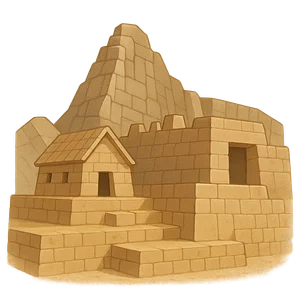
Inca Empire
The Inca Empire was the largest empire in pre-Columbian America…
Reads at Grades 3–5 Listens at Grades 1–5
Print & create
Answer keys·No prep·Free with an account
28 worksheets · answer keys · full story · quiz · Ages 8-10 · CEFR B1
Plus adds 102,000+ more stories in 27 languages, audio for every one, and printables for all of them.
Just want Inca Empire?
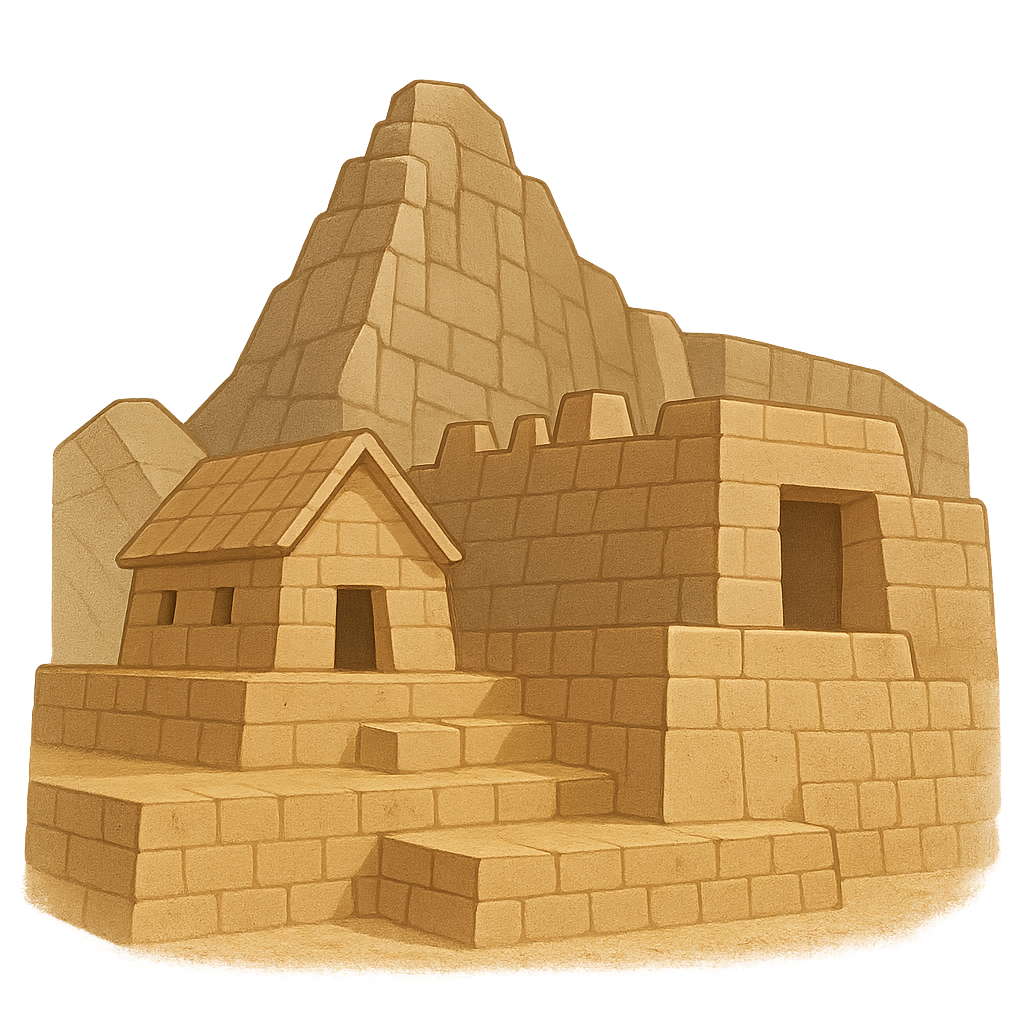
High in the Andes Mountains, the wind whispers secrets across jagged peaks. It tells of stone cities that cling to cliffs, so close to the clouds they seem to touch the sky. It hums over giant stone staircases carved into the mountainsides, where corn and potatoes grow in neat rows. For centuries, my people looked to the sun, Inti, as their father, and the mountains, the Apus, as their protectors. They built a home here, a kingdom of gold, stone, and incredible spirit. I am the Inca Empire, or as my people called me, Tawantinsuyu—the Land of the Four Quarters. My heart was born from the earth itself, and my story is written in the stones that still stand today, a testament to a world built in harmony with the heavens.
My life began humbly, as a small seed in the great mountain range. In what is now modern-day Peru, my capital city, Cusco, was founded. Legends say that around the 12th century, the first great ruler, Manco Cápac, was sent by the sun god to find the perfect spot. He and his people settled in the fertile valley of Cusco. For a long time, I was just a small kingdom, strong and proud, but surrounded by other powerful groups. My people learned to be resilient. They mastered the difficult environment, learning how to farm on steep slopes and build sturdy homes from stone. They lived by the rules of community and respect for the land, slowly growing stronger, year by year, in their mountain fortress.
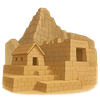
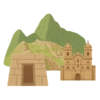
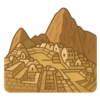
Everything changed around the year 1438. A new visionary leader, a Sapa Inca named Pachacuti, came to power. He was not content with me being just a small kingdom. He had a dream of something much grander. Under his rule, I began to stretch my arms, reaching north, south, east, and west. My expansion was incredible. My engineers and builders were geniuses. They created a massive road network called the Qhapaq Ñan, which stretched for thousands of miles, connecting every corner of my domain. They built magnificent stone cities like Machu Picchu, perched on a mountain ridge like a crown. All of this was possible because of the *mit'a*, a system where my people would take turns working on projects for the good of the empire. It was a promise they made to each other to build a better world together.
I Am the Land of the Four Quarters
High in the Andes Mountains, the wind whispers secrets across jagged peaks. It tells of stone cities that cling to cliffs, so close to the clouds they seem to touch the sky. It hums over giant stone staircases carved into the mountainsides, where corn and potatoes grow in neat rows. For centuries, my people looked to the sun, Inti, as their father, and the mountains, the Apus, as their protectors. They built a home here, a kingdom of gold, stone, and incredible spirit. I am the Inca Empire, or as my people called me, Tawantinsuyu—the Land of the Four Quarters. My heart was born from the earth itself, and my story is written in the stones that still stand today, a testament to a world built in harmony with the heavens.
My life began humbly, as a small seed in the great mountain range. In what is now modern-day Peru, my capital city, Cusco, was founded. Legends say that around the 12th century, the first great ruler, Manco Cápac, was sent by the sun god to find the perfect spot. He and his people settled in the fertile valley of Cusco. For a long time, I was just a small kingdom, strong and proud, but surrounded by other powerful groups. My people learned to be resilient. They mastered the difficult environment, learning how to farm on steep slopes and build sturdy homes from stone. They lived by the rules of community and respect for the land, slowly growing stronger, year by year, in their mountain fortress.
Everything changed around the year 1438. A new visionary leader, a Sapa Inca named Pachacuti, came to power. He was not content with me being just a small kingdom. He had a dream of something much grander. Under his rule, I began to stretch my arms, reaching north, south, east, and west. My expansion was incredible. My engineers and builders were geniuses. They created a massive road network called the Qhapaq Ñan, which stretched for thousands of miles, connecting every corner of my domain. They built magnificent stone cities like Machu Picchu, perched on a mountain ridge like a crown. All of this was possible because of the mit'a, a system where my people would take turns working on projects for the good of the empire. It was a promise they made to each other to build a better world together.
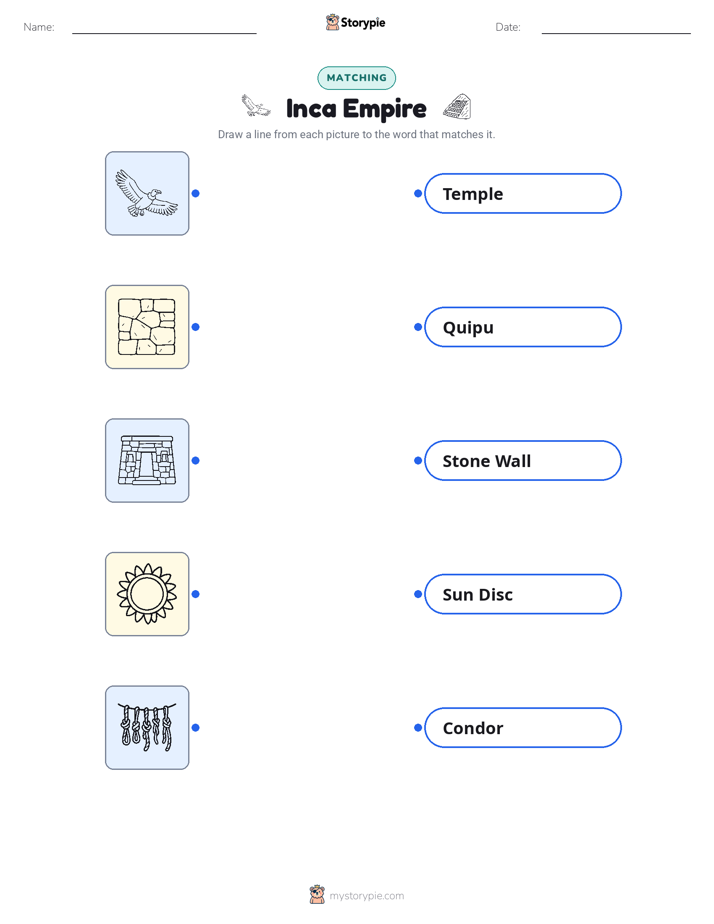
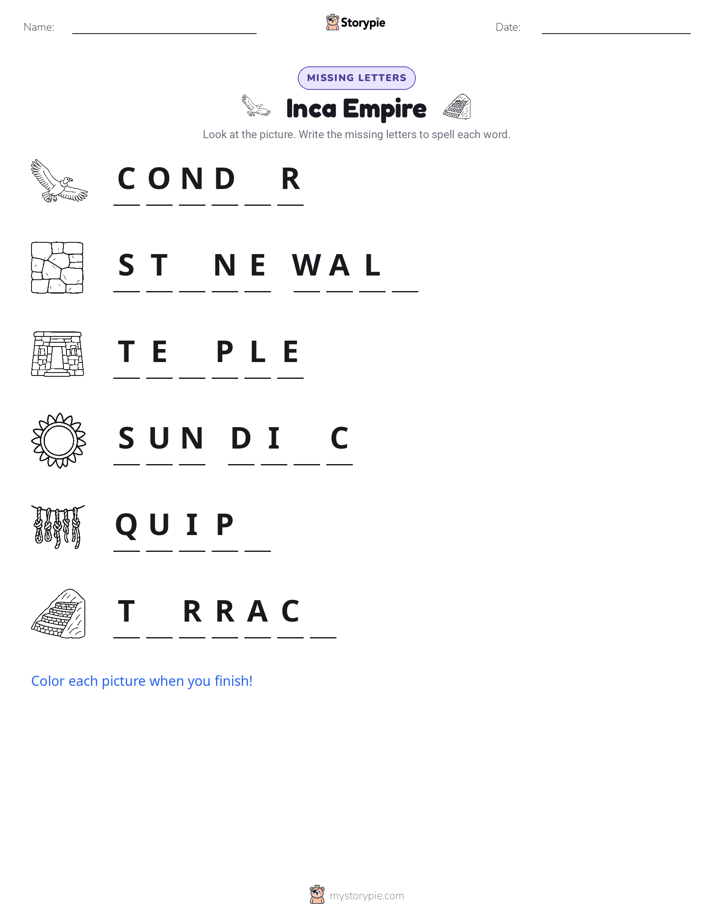
To manage such a vast and sprawling land, my people had to be incredibly clever. They developed systems that were pure ingenuity. To send messages quickly across the mountains, we had the chasquis. These were highly trained runners who worked in relays. A chasqui would run a few miles to the next station and pass the message to another runner, like a human baton race. In this way, news could travel over 150 miles in a single day. Since we didn't have a written alphabet, we invented the quipu. This was a fascinating device made of knotted strings of different colors and sizes. The knots and colors stored information, helping us count people, track food supplies, and remember important stories. We also perfected terrace farming, cutting steps into the mountains to create flat land for crops, which prevented soil from washing away in the rain.
The world I knew began to change in the 1530s. Ships arrived from across the sea, carrying Spanish conquistadors led by a man named Francisco Pizarro. They brought with them things my people had never seen before. Their arrival brought great confusion and conflict. My last emperor, Atahualpa, was captured in the year 1532. The very next year, in 1533, my beautiful capital city of Cusco fell to the Spanish forces. This was the beginning of my end. The systems that had worked so perfectly for centuries began to crumble, and the Land of the Four Quarters was changed forever by these new arrivals.
Though my time as a great empire came to an end, my spirit was never broken. It lives on in the hearts of millions of people who still speak the Quechua language today. It echoes in the silent stone walls of Machu Picchu, which fills visitors with awe and wonder. My legacy is in the idea of community, the cleverness of my engineers, and the deep respect my people had for nature. I am a reminder that even when great things fall, the lessons they teach and the beauty they create can endure through time, inspiring new generations to build, to connect, and to live in harmony with the world around them.
Wow facts
About
The Inca Empire was the largest empire in pre-Columbian America, flourishing in the Andean region of South America from the early 15th century to the mid-16th century. It was known for its sophisticated engineering, vast road network, and unique administrative systems.
Take a Quiz
Question 1 of 5
The story mentions the Inca people showed 'ingenuity.' Based on the story, what does the word 'ingenuity' mean?
Explore next
Want to do even more?
Go beyond exploring. Unlock tools that turn every story into real learning.

Storypie Plus for families
Full stories, quizzes, and printables. Nights and car rides, sorted.
- Unlimited audio stories
- Create Mode: your child stars in the story
- Offline downloads
- Printable worksheets & coloring pages

Why Storypie for Schools
Students engaged. Prep in seconds. Evenings back to you.
- Worksheets & Quizzes
- Classroom Management
- Formative Assessment
- Custom Curriculum & Lesson Plans
- 27 Languages

Why Storypie for Homeschool
Curriculum done. They'll ask for more. Hours back in your day.
- Worksheet Generator
- First-Person Audio Stories
- Built-in Comprehension Quizzes
- Custom Curriculum & Lesson Plans
- Print & Go Activities