English

Mali Empire
A vast and wealthy West African empire that flourished from the 13th to the 16th century…
Reads at Grades 6–8 Listens at Grades 4–8
Print & create
Answer keys·No prep·Free with an account
28 worksheets · answer keys · full story · quiz · Ages 10-12 · CEFR B2
Plus adds 164,000+ more stories in 27 languages, audio for every one, and printables for all of them.
Just want Mali Empire?
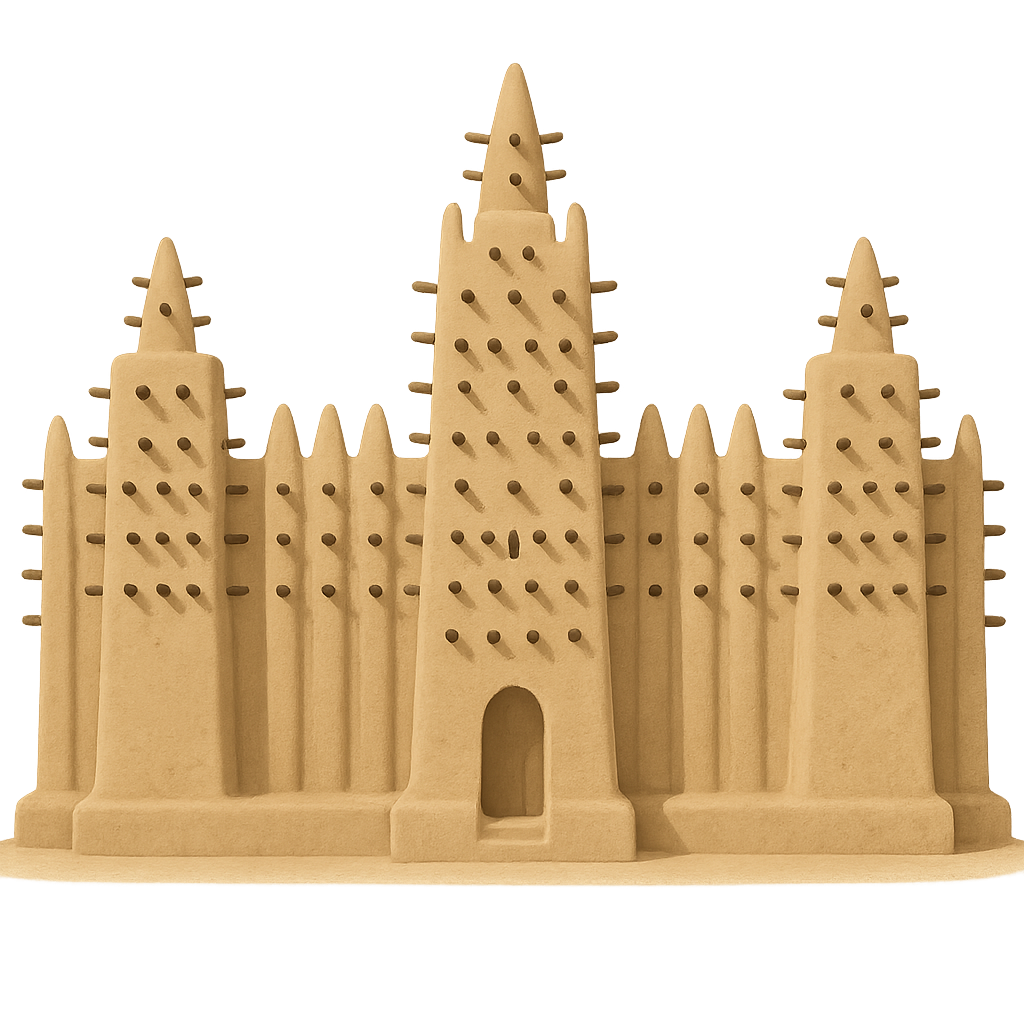
Feel the sun on your skin, a warmth that has baked the earth for centuries. See the great Niger River, a life-giving ribbon of blue cutting through a landscape of savanna and sand. In my markets, the air hummed with a hundred languages, thick with the scent of spices, leather, and kola nuts. The true source of my power, however, was something that glittered in the light—gold. So much gold that it was said to be as common as dust. I was a kingdom of incredible wealth, a center of powerful learning, and a testament to the strength of West Africa, rising from the legacy of the older Ghana Empire that came before me. My story is carried on the desert wind, a tale of lions and kings, of faith and wisdom. I am the Mali Empire.
My story begins not with a whisper, but with a roar. It is the story of a prince destined for greatness, Sundiata Keita, known as the Lion Prince. He did not have an easy start; a difficult childhood saw him exiled from his home. But destiny cannot be so easily avoided. Sundiata grew strong and wise, gathering followers who believed in his vision of a united people. His moment came at the Battle of Kirina in the year 1235. There, he faced the powerful sorcerer king, Soumaoro Kanté, whose cruelty had oppressed the Mandinka people for too long. Sundiata’s victory that day was more than just winning a battle; it was my birth. He united the scattered kingdoms into one strong body, with its heart, the capital city of Niani, beating proudly. For his achievement, Sundiata was given the title 'Mansa,' meaning 'king of kings,' and my foundation was laid.
The Golden Kingdom of Mali
Feel the sun on your skin, a warmth that has baked the earth for centuries. See the great Niger River, a life-giving ribbon of blue cutting through a landscape of savanna and sand. In my markets, the air hummed with a hundred languages, thick with the scent of spices, leather, and kola nuts. The true source of my power, however, was something that glittered in the light—gold. So much gold that it was said to be as common as dust. I was a kingdom of incredible wealth, a center of powerful learning, and a testament to the strength of West Africa, rising from the legacy of the older Ghana Empire that came before me. My story is carried on the desert wind, a tale of lions and kings, of faith and wisdom. I am the Mali Empire.
My story begins not with a whisper, but with a roar. It is the story of a prince destined for greatness, Sundiata Keita, known as the Lion Prince. He did not have an easy start; a difficult childhood saw him exiled from his home. But destiny cannot be so easily avoided. Sundiata grew strong and wise, gathering followers who believed in his vision of a united people. His moment came at the Battle of Kirina in the year 1235. There, he faced the powerful sorcerer king, Soumaoro Kanté, whose cruelty had oppressed the Mandinka people for too long. Sundiata’s victory that day was more than just winning a battle; it was my birth. He united the scattered kingdoms into one strong body, with its heart, the capital city of Niani, beating proudly. For his achievement, Sundiata was given the title 'Mansa,' meaning 'king of kings,' and my foundation was laid.
My heart was forged from gold, and my golden age was shaped by a king whose name became a legend across the known world. His name was Mansa Musa, and he began his reign around the year 1312. My wealth under his rule was almost beyond imagination. It flowed from vast gold mines deep within my lands, but also from my control over the trans-Saharan trade routes. These paths crossed the desert like golden threads, carrying precious salt from the north in exchange for my gold from the south. In the year 1324, Mansa Musa embarked on a pilgrimage to Mecca, a journey that would echo through history. His caravan was a city on the move, a procession of tens of thousands of soldiers, civilians, and servants. Camels, numbering in the hundreds, were each laden with pounds of pure gold. As he traveled, he gave it away with such generosity that in cities like Cairo, the value of gold dropped for over a decade. This incredible display of wealth put me on the map—literally. European mapmakers heard the stories, and on the famous Catalan Atlas of 1375, Mansa Musa was drawn sitting on a golden throne, holding a golden nugget, introducing me to a world that had never known my name.
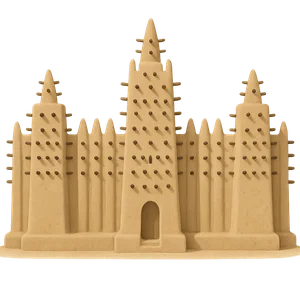
But my riches were not only dug from the earth; they were also grown in the minds of my people. When Mansa Musa returned from his pilgrimage, he brought with him the greatest scholars, architects, and thinkers he could find. They helped transform my cities into centers of culture and learning that rivaled any in the world. My brightest star was the city of Timbuktu. It became a beacon for those who sought knowledge. At its heart was the great Sankoré University, a collection of schools where students from all over Africa and the Middle East came to study mathematics, astronomy, literature, and law. Grand mosques, like the Djinguereber Mosque built around 1327, filled the city skyline. My libraries were my vaults, and the manuscripts they held were my most precious treasure. They showed the world that in my lands, wisdom was just as valuable as gold, and that the pursuit of understanding was the mark of a truly great civilization.
Empires, like all things, have their seasons. After the time of my great Mansas, my strength began to fade. Internal disagreements over succession weakened my core, and powerful neighbors began to challenge my borders. A new power, the Songhai Empire, rose to my east. In the year 1468, they captured my jewel, Timbuktu, marking a turning point in my story. Over the next century, my territory continued to shrink. By the 1600s, my grand, unified self had fractured into smaller, independent kingdoms, and the great Mali Empire was no more. But a story does not end just because its physical form is gone. My legacy is an echo that still sounds today. It lives in the tales of Sundiata’s courage, in the legend of Mansa Musa’s wealth, and in the enduring wisdom from the manuscripts of Timbuktu. I am proof that Africa’s history is filled with golden ages, and my story continues to inspire people with its tale of unity, prosperity, and knowledge that will never fade.
Wow facts
About
A vast and wealthy West African empire that flourished from the 13th to the 16th century, renowned for its control of the gold and salt trade and its centers of learning like Timbuktu.
Take a Quiz
Question 1 of 5
What is the main idea of the story?
Explore next






Want to do even more?
Go beyond exploring. Unlock tools that turn every story into real learning.

Storypie Plus for families
Full stories, quizzes, and printables. Nights and car rides, sorted.
- Unlimited audio stories
- Create Mode: your child stars in the story
- Offline downloads
- Printable worksheets & coloring pages

Why Storypie for Schools
Students engaged. Prep in seconds. Evenings back to you.
- Worksheets & Quizzes
- Classroom Management
- Formative Assessment
- Custom Curriculum & Lesson Plans
- 27 Languages

Why Storypie for Homeschool
Curriculum done. They'll ask for more. Hours back in your day.
- Worksheet Generator
- First-Person Audio Stories
- Built-in Comprehension Quizzes
- Custom Curriculum & Lesson Plans
- Print & Go Activities