English

Mali Empire
A vast and wealthy West African empire that flourished from the 13th to the 16th century…
Reads at Grades 3–5 Listens at Grades 1–5
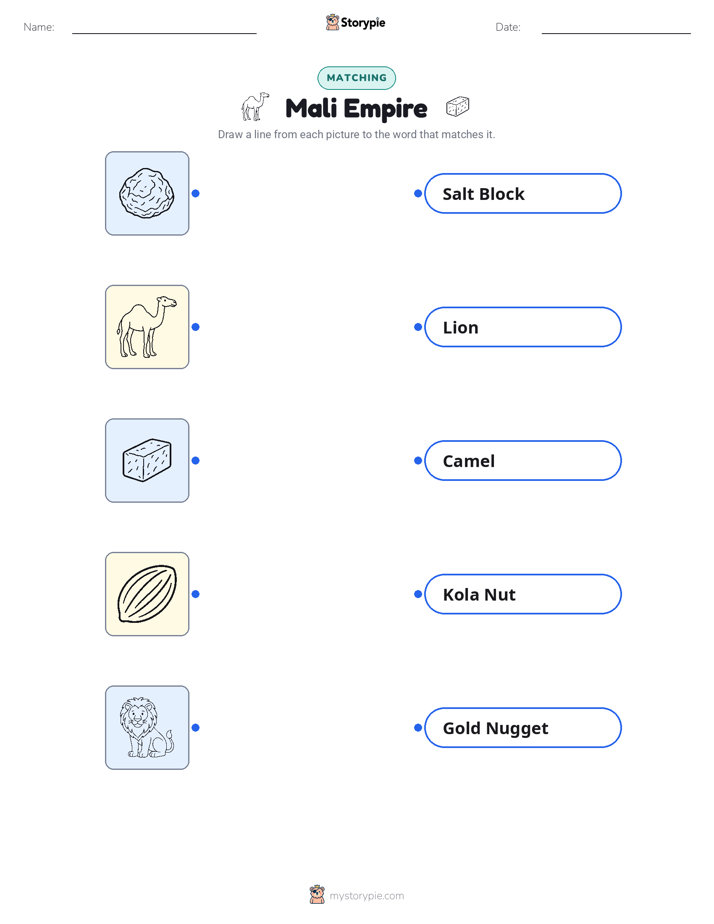
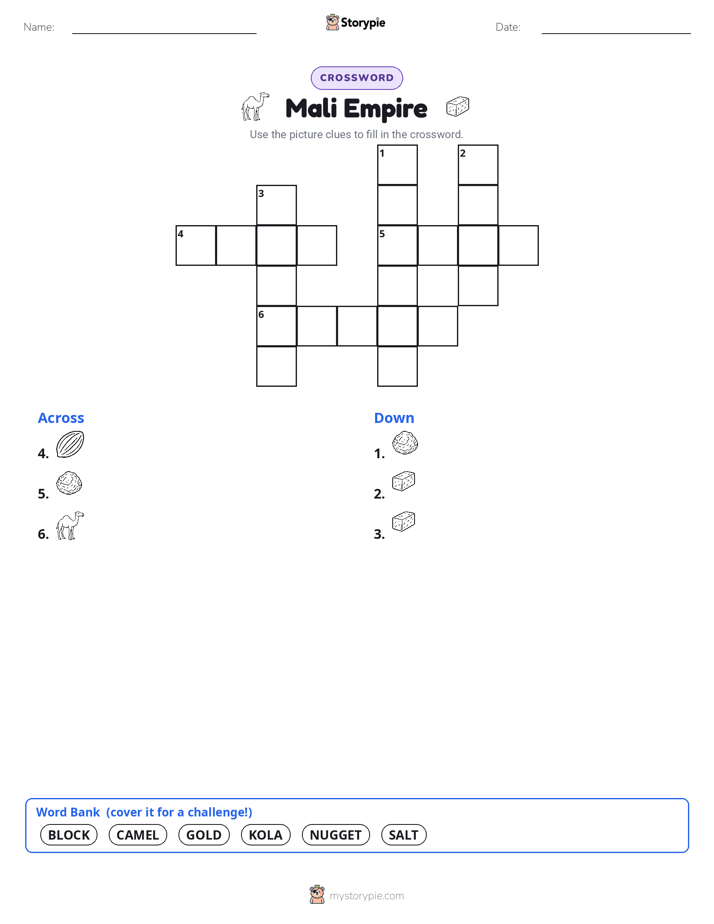
Print & create
Answer keys·No prep·Free with an account
28 worksheets · answer keys · full story · quiz · Ages 8-10 · CEFR B1
Plus adds 164,000+ more stories in 27 languages, audio for every one, and printables for all of them.
Just want Mali Empire?
Feel the hot sun on your face and imagine endless grassy plains stretching as far as you can see. This is the savanna of West Africa, my home. A mighty river, the Niger, flows through my lands like a giant, curving ribbon, giving life to everything it touches. For centuries, my earth has held amazing treasures—glittering gold that shines like the sun and precious salt, which was once as valuable as gold itself. If you could listen to the wind, you would hear the sounds of my busy cities, where merchants from faraway lands traded their goods in bustling markets. You would hear storytellers, called griots, singing the tales of great heroes and powerful kings. They are singing about me, for I am the great Mali Empire.
My story began with a boy who was destined for greatness, though no one knew it at first. His name was Sundiata Keita, and as a child, he could not walk. But he had the heart of a lion, and he grew strong in both body and spirit. Around the year 1235 CE, he led his people, the Mandinka, into a great battle known as the Battle of Kirina. His courage inspired everyone, and he won a mighty victory. This was more than just a battle won; it was the moment I was born. Sundiata united many different groups of people who had once been rivals. He became the first mansa, which means ‘king of kings,’ and he created fair laws that helped everyone live together in peace. He built a strong foundation, and on it, I grew into a powerful and respected empire.
My greatest years were a golden age, a time of incredible wealth and power, all thanks to my most famous king, Mansa Musa. He began his rule around the year 1312 CE and was known throughout the world for his generosity and wisdom. In the year 1324 CE, he began an incredible journey, a pilgrimage to the holy city of Mecca, thousands of miles away. It wasn't just a simple trip. His caravan was a moving city of its own, stretching for miles across the desert. It included sixty thousand people and a long line of camels, each carrying bags filled with pure gold. As he traveled, Mansa Musa gave away gold to the poor and to the rulers of the cities he visited. In places like Cairo, Egypt, he gave away so much that the value of gold dropped for years. News of my immense wealth spread like wildfire, and for the first time, my name appeared on maps in Europe and the Middle East. The world now knew of the golden empire of Mali.
The Lion's Golden Legacy
Feel the hot sun on your face and imagine endless grassy plains stretching as far as you can see. This is the savanna of West Africa, my home. A mighty river, the Niger, flows through my lands like a giant, curving ribbon, giving life to everything it touches. For centuries, my earth has held amazing treasures—glittering gold that shines like the sun and precious salt, which was once as valuable as gold itself. If you could listen to the wind, you would hear the sounds of my busy cities, where merchants from faraway lands traded their goods in bustling markets. You would hear storytellers, called griots, singing the tales of great heroes and powerful kings. They are singing about me, for I am the great Mali Empire.
My story began with a boy who was destined for greatness, though no one knew it at first. His name was Sundiata Keita, and as a child, he could not walk. But he had the heart of a lion, and he grew strong in both body and spirit. Around the year 1235 CE, he led his people, the Mandinka, into a great battle known as the Battle of Kirina. His courage inspired everyone, and he won a mighty victory. This was more than just a battle won; it was the moment I was born. Sundiata united many different groups of people who had once been rivals. He became the first mansa, which means ‘king of kings,’ and he created fair laws that helped everyone live together in peace. He built a strong foundation, and on it, I grew into a powerful and respected empire.
My greatest years were a golden age, a time of incredible wealth and power, all thanks to my most famous king, Mansa Musa. He began his rule around the year 1312 CE and was known throughout the world for his generosity and wisdom. In the year 1324 CE, he began an incredible journey, a pilgrimage to the holy city of Mecca, thousands of miles away. It wasn't just a simple trip. His caravan was a moving city of its own, stretching for miles across the desert. It included sixty thousand people and a long line of camels, each carrying bags filled with pure gold. As he traveled, Mansa Musa gave away gold to the poor and to the rulers of the cities he visited. In places like Cairo, Egypt, he gave away so much that the value of gold dropped for years. News of my immense wealth spread like wildfire, and for the first time, my name appeared on maps in Europe and the Middle East. The world now knew of the golden empire of Mali.
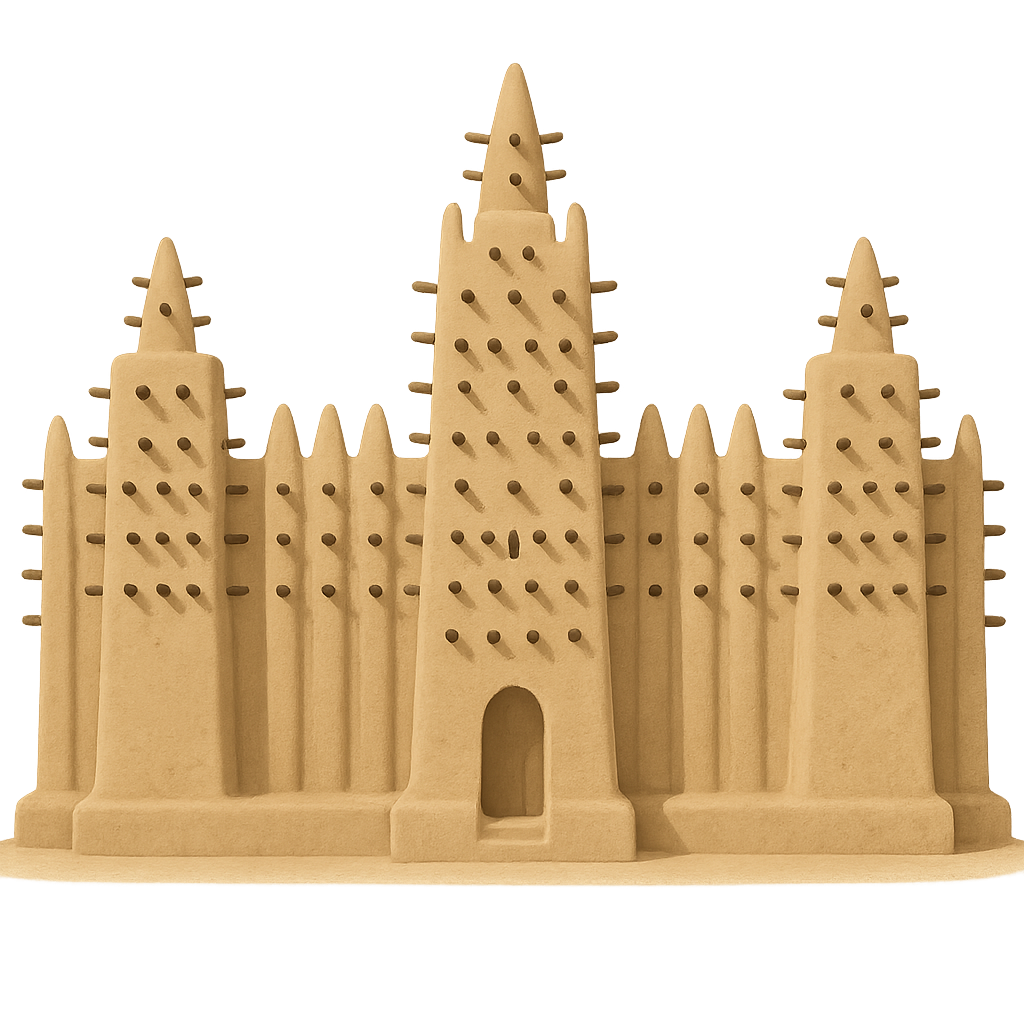
But I was more than just a land of gold. At my very heart was a city that shone with a different kind of treasure: knowledge. This city was Timbuktu. While traders came to exchange salt from the north for gold from the south, scholars, poets, and scientists came to exchange ideas. Timbuktu was home to the famous University of Sankore, which wasn't one single building but a collection of schools and libraries. Students and teachers traveled from all over Africa and the Middle East to study here, surrounded by thousands of beautiful, handwritten books on subjects from astronomy to law. After Mansa Musa returned from his pilgrimage, he brought back architects who helped build magnificent mosques made of earth and wood. One of the most famous, the Djinguereber Mosque, was constructed around 1327 CE and became a celebrated center for prayer and learning.
Like all great things, my time as a vast, unified empire eventually came to an end. By the 15th and 16th centuries, new kingdoms began to rise, and my lands started to shrink. But a story as powerful as mine can never truly disappear. My spirit lives on. You can hear it in the music and tales of the griots, who still sing of Sundiata's strength and Mansa Musa's journey. You can find it in the ancient books and manuscripts still carefully preserved in Timbuktu. And you can feel it in the pride of the people of West Africa. I am a reminder that great knowledge, incredible wealth, and strong leadership once shone brightly on the African savanna, leaving a legacy that time cannot erase.
Wow facts
About
A vast and wealthy West African empire that flourished from the 13th to the 16th century, renowned for its control of the gold and salt trade and its centers of learning like Timbuktu.
Take a Quiz
Question 1 of 5
The story says storytellers called 'griots' sang tales of heroes. What does the word 'griot' mean in this story?
Explore next






Want to do even more?
Go beyond exploring. Unlock tools that turn every story into real learning.

Storypie Plus for families
Full stories, quizzes, and printables. Nights and car rides, sorted.
- Unlimited audio stories
- Create Mode: your child stars in the story
- Offline downloads
- Printable worksheets & coloring pages

Why Storypie for Schools
Students engaged. Prep in seconds. Evenings back to you.
- Worksheets & Quizzes
- Classroom Management
- Formative Assessment
- Custom Curriculum & Lesson Plans
- 27 Languages

Why Storypie for Homeschool
Curriculum done. They'll ask for more. Hours back in your day.
- Worksheet Generator
- First-Person Audio Stories
- Built-in Comprehension Quizzes
- Custom Curriculum & Lesson Plans
- Print & Go Activities