English

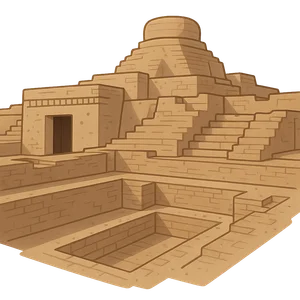
Mohenjo-Daro
Mohenjo-Daro was one of the largest settlements of the ancient Indus Valley Civilization…
Reads at Grades 6–8 Listens at Grades 4–8
Print & create
Answer keys·No prep·Free with an account
28 worksheets · answer keys · full story · quiz · Ages 10-12 · CEFR B2
Plus adds 208,000+ more stories in 27 languages, audio for every one, and printables for all of them.
Just want Mohenjo-Daro?
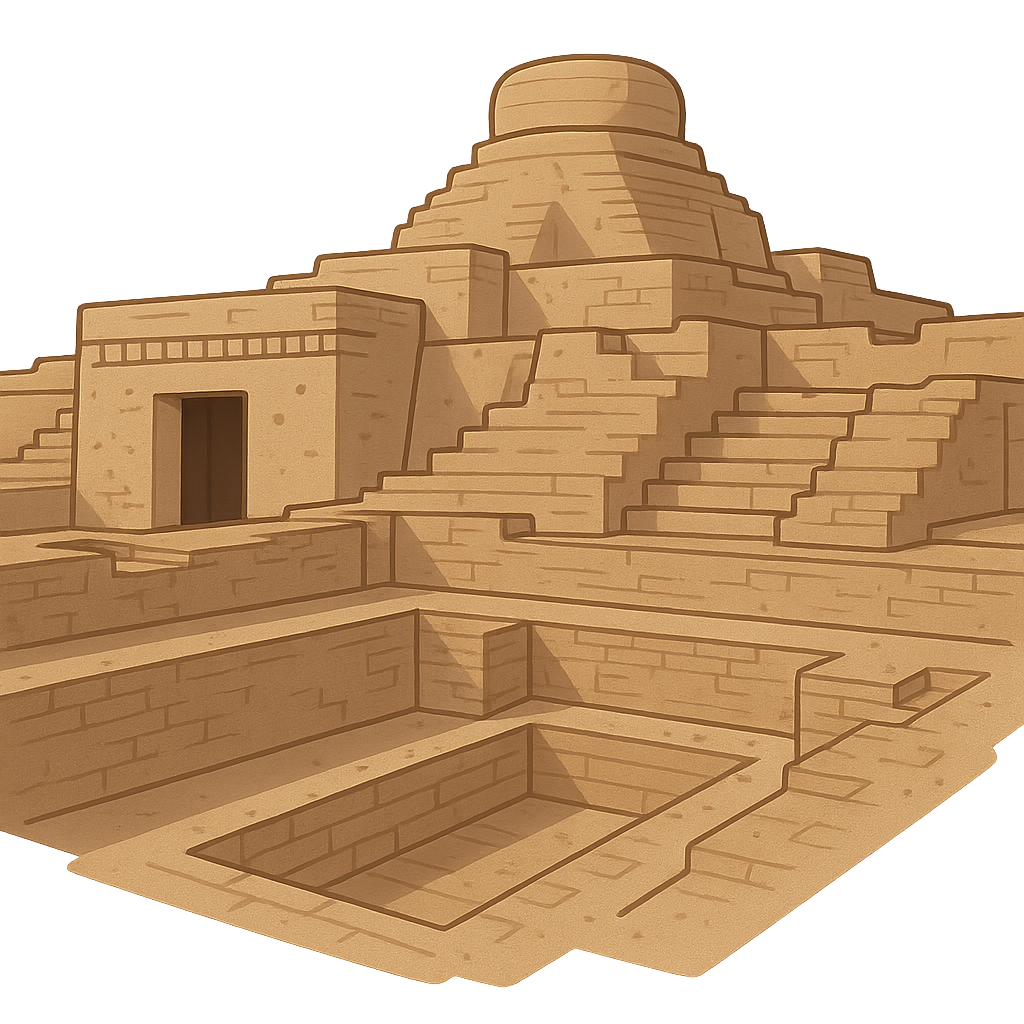
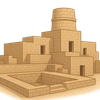
I lie under the hot sun of what is now southern Pakistan, a skeleton of a city made from baked brick. The wind is my only companion, whispering through streets that were laid out in perfect, straight lines thousands of years ago. My walls, though crumbled, still tell stories of careful plans and a time of great order. If you were to visit, you would see a great mound rising above the rest of me, a place where, much later, a Buddhist stupa was built like a crown on an ancient king. But the real treasure lies beneath. Can you imagine me, not as silent ruins, but as a place teeming with life? Can you hear the chatter of merchants, the laughter of children, and the sounds of a civilization at its peak? Close your eyes and listen to the dust. It will tell you my name. I am Mohenjo-Daro, a name that in the local language means the 'Mound of the Dead Men.'
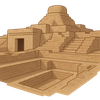
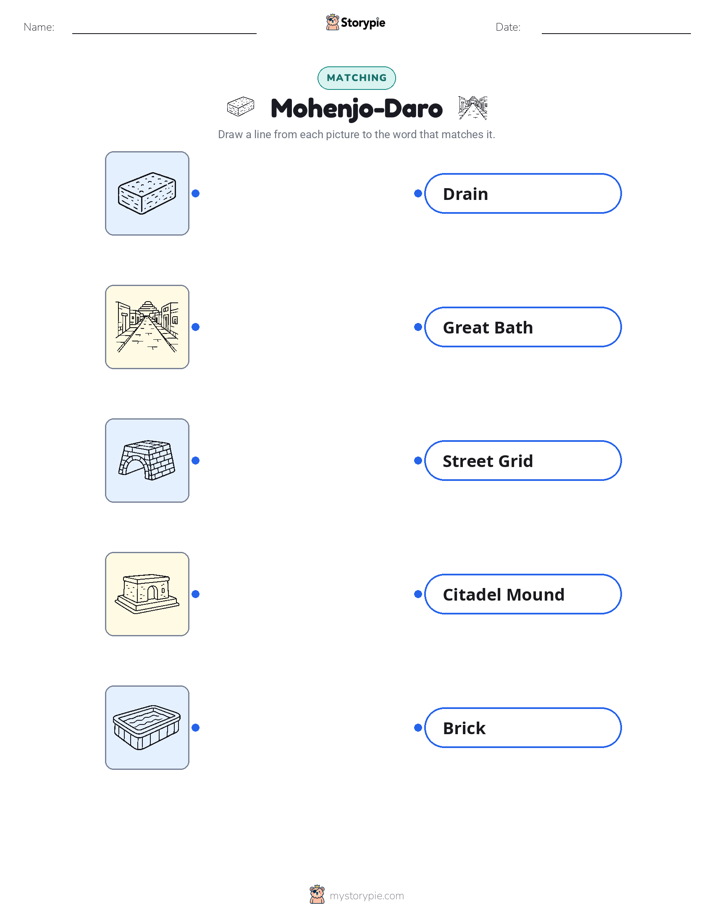
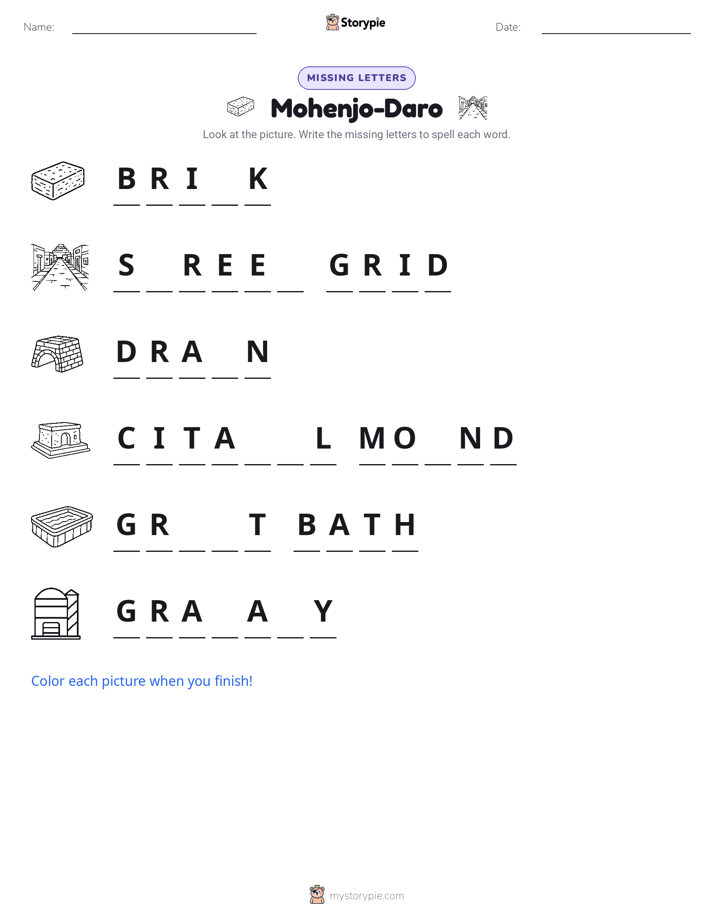
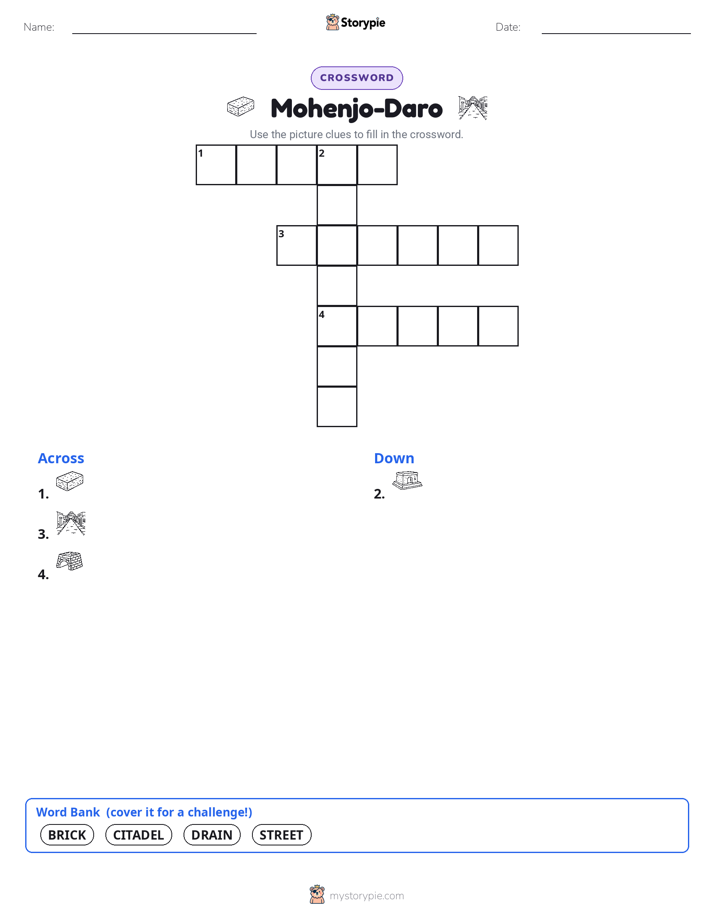
My story begins long, long ago, during the Bronze Age. Around 2500 BCE, I was born, not of accident, but of brilliant design. I became one of the largest and most impressive cities of the Indus Valley Civilization, a contemporary of ancient Egypt and Mesopotamia. My creators, the skilled Harappan people, were master planners and engineers. They built me with a precision that still astonishes people today. I was a city of two parts. My lower city was a sprawling, orderly grid of streets, a feature unheard of in most other ancient cities. Houses, made from uniform, fire-baked bricks, were built with private courtyards and often had their own bathrooms connected to a sophisticated drainage system. This network of covered drains ran beneath the main streets, carrying waste away and keeping my avenues clean. It was an engineering marvel. Above the lower city stood my citadel, a raised platform of mud-brick that held my most important public buildings. Here, you would have found the Great Bath, a magnificent structure that was essentially a huge, waterproof swimming pool. Its floor and walls were meticulously built with baked bricks and sealed with natural tar to prevent leaks. No one knows its exact purpose, but historians believe it was used for important religious ceremonies, a place for ritual purification. Nearby stood a huge granary for storing food, ensuring my people were fed. My streets were alive with activity. You could hear the hum of artisans spinning pottery on their wheels, creating beautiful pots and jars. Jewelers sat hunched over their work, carving intricate beads from carnelian and other stones. Merchants were central to my existence. They used small, square seals made of soapstone to stamp their goods. These seals were masterpieces, carved with images of powerful animals like bulls, rhinoceroses, and even a mythical unicorn-like creature. Each seal also bore a line of elegant script, a written language that remains one of history's greatest puzzles. To this day, no one has been able to decipher what my people wrote, leaving their thoughts and stories locked away in silence.
The Story of Mohenjo-Daro
I lie under the hot sun of what is now southern Pakistan, a skeleton of a city made from baked brick. The wind is my only companion, whispering through streets that were laid out in perfect, straight lines thousands of years ago. My walls, though crumbled, still tell stories of careful plans and a time of great order. If you were to visit, you would see a great mound rising above the rest of me, a place where, much later, a Buddhist stupa was built like a crown on an ancient king. But the real treasure lies beneath. Can you imagine me, not as silent ruins, but as a place teeming with life? Can you hear the chatter of merchants, the laughter of children, and the sounds of a civilization at its peak? Close your eyes and listen to the dust. It will tell you my name. I am Mohenjo-Daro, a name that in the local language means the 'Mound of the Dead Men.'
My story begins long, long ago, during the Bronze Age. Around 2500 BCE, I was born, not of accident, but of brilliant design. I became one of the largest and most impressive cities of the Indus Valley Civilization, a contemporary of ancient Egypt and Mesopotamia. My creators, the skilled Harappan people, were master planners and engineers. They built me with a precision that still astonishes people today. I was a city of two parts. My lower city was a sprawling, orderly grid of streets, a feature unheard of in most other ancient cities. Houses, made from uniform, fire-baked bricks, were built with private courtyards and often had their own bathrooms connected to a sophisticated drainage system. This network of covered drains ran beneath the main streets, carrying waste away and keeping my avenues clean. It was an engineering marvel. Above the lower city stood my citadel, a raised platform of mud-brick that held my most important public buildings. Here, you would have found the Great Bath, a magnificent structure that was essentially a huge, waterproof swimming pool. Its floor and walls were meticulously built with baked bricks and sealed with natural tar to prevent leaks. No one knows its exact purpose, but historians believe it was used for important religious ceremonies, a place for ritual purification. Nearby stood a huge granary for storing food, ensuring my people were fed. My streets were alive with activity. You could hear the hum of artisans spinning pottery on their wheels, creating beautiful pots and jars. Jewelers sat hunched over their work, carving intricate beads from carnelian and other stones. Merchants were central to my existence. They used small, square seals made of soapstone to stamp their goods. These seals were masterpieces, carved with images of powerful animals like bulls, rhinoceroses, and even a mythical unicorn-like creature. Each seal also bore a line of elegant script, a written language that remains one of history's greatest puzzles. To this day, no one has been able to decipher what my people wrote, leaving their thoughts and stories locked away in silence.
My golden age, like all things, eventually came to an end. The great silence began to fall around 1900 BCE. It was not a sudden collapse caused by a dramatic battle or a single catastrophic event. Instead, my vibrant life slowly faded away over many generations. The world that had nourished me began to change. My lifeblood, the mighty Indus River, may have shifted its course, moving away from my walls and making trade and farming more difficult. The climate, too, might have turned against me. Evidence suggests the region grew drier, and the life-giving monsoon rains became less reliable. Farming, the foundation of my society, would have become a struggle. My people did not vanish in an instant. They gradually moved away, seeking better lives elsewhere. My streets grew quiet. The wells that had provided fresh water ran dry. My grand buildings slowly crumbled. Over thousands of years, the wind and earth became my keepers, gently covering me with layers of silt and sand. I fell into a deep sleep, and my story was forgotten by the world, my secrets held safe beneath the ground.
For nearly four thousand years, I lay dormant, a hidden memory in the earth of the Sindh province. My awakening began in the 20th century. In 1922, an officer of the Archaeological Survey of India named R. D. Banerji was excavating the Buddhist stupa that stood on my highest mound. He believed it was a relatively recent structure. But as he dug deeper, he began to find things that didn't belong—flint scrapers and beautifully carved stone seals that were much, much older than the stupa itself. He realized he had stumbled upon something extraordinary. The news of his discovery spread, and soon, a large-scale excavation was organized under the direction of Sir John Marshall. The excitement was immense. As archaeologists carefully brushed away the layers of time, my grid-like streets, my sturdy brick houses, and my Great Bath saw the sunlight for the first time in millennia. It was as if I was taking a long, slow breath after an impossibly deep sleep. I was no longer a forgotten mound of earth. I was a lost city, found again, ready to share the tale of my ancient world with modern humanity.
Today, I am no longer just a subject for archaeologists. In 1980, I was officially recognized as a UNESCO World Heritage Site, a treasure belonging to all of humanity. I stand as a testament to the ingenuity and peaceful nature of the Indus Valley Civilization. Yet, I remain a profound puzzle. My script is still undeciphered, a silent language that holds the key to understanding the beliefs, laws, and stories of my creators. Why did they build me with such precision? What gods did they worship in their ceremonies at the Great Bath? The answers are still waiting to be discovered. I am more than just bricks and dust. I am a reminder that incredible societies with advanced urban planning, sanitation, and art existed long before the famous empires of Greece and Rome. I am a voice from the deep past, inviting you to listen, to wonder, and to appreciate the enduring power of human creativity.
Wow facts
About
Mohenjo-Daro was one of the largest settlements of the ancient Indus Valley Civilization, and one of the world's earliest major cities, known for its sophisticated civil engineering and urban planning.
Take a Quiz
Question 1 of 5
Based on the story, what is the main idea the author wants you to understand about Mohenjo-Daro?
Explore next



Want to do even more?
Go beyond exploring. Unlock tools that turn every story into real learning.

Storypie Plus for families
Full stories, quizzes, and printables. Nights and car rides, sorted.
- Unlimited audio stories
- Create Mode: your child stars in the story
- Offline downloads
- Printable worksheets & coloring pages

Why Storypie for Schools
Students engaged. Prep in seconds. Evenings back to you.
- Worksheets & Quizzes
- Classroom Management
- Formative Assessment
- Custom Curriculum & Lesson Plans
- 27 Languages

Why Storypie for Homeschool
Curriculum done. They'll ask for more. Hours back in your day.
- Worksheet Generator
- First-Person Audio Stories
- Built-in Comprehension Quizzes
- Custom Curriculum & Lesson Plans
- Print & Go Activities