English

Rio de Janeiro
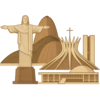
A major coastal city in Brazil, famous for its iconic Christ the Redeemer statue, Sugarloaf Mountain…
Reads at Grades 6–8 Listens at Grades 4–8
The Story of Rio de Janeiro
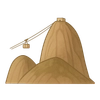
The sun warms my granite mountains, which tumble like sleeping giants into the deep blue of the Atlantic Ocean. A gentle breeze carries the scent of salt and tropical flowers through my streets, where the rhythm of samba seems to rise from the very pavement, a constant, joyful heartbeat. From my highest peaks, like the famous Sugarloaf Mountain that juts defiantly into the sky, you can see the whole story of my life laid out below. Golden beaches, like long ribbons of sand, curve along the shore where waves crash in a soothing chorus. Lush green forests, remnants of the great Atlantic Rainforest, cling to my hills, a testament to the power of nature. And nestled between it all is a bustling metropolis alive with energy, a sprawling tapestry of homes, parks, and avenues. High atop Corcovado Mountain, a colossal figure stands with arms stretched wide in a gesture of eternal welcome, a silent guardian watching over the millions of people who call me home. This figure has seen my entire journey, from a simple coastal outpost to a global icon of celebration. My landscape is so breathtaking that people who see me for the first time often gasp. They call me the Cidade Maravilhosa—the Marvelous City. I am Rio de Janeiro.
My story did not begin with tall buildings or paved streets. For countless centuries, my shores were home to the Tupi people, who lived in deep harmony with the dense forests and sparkling waters of Guanabara Bay. They built their villages here, fished in my calm waters for their food, and hunted in my lush forests. Their lives were woven into the very fabric of my natural beauty, a quiet existence shaped by the tides and seasons. Then, everything began to change. On a sweltering summer day, January 1st, 1502, a fleet of tall Portuguese ships appeared on the horizon, their sails like white clouds against the endless blue sky. Their captain, Gaspar de Lemos, was on an important expedition to map this vast, newly discovered continent for the king of Portugal. As he skillfully navigated his ships into the magnificent bay, he was so awestruck by its sheer size and grandeur that he made a historic mistake. He believed he had discovered the mouth of a massive river. Since it was the first day of January, he named the location "Rio de Janeiro," which translates to "River of January." The name was based entirely on a misunderstanding—I am a bay, not a river—but it was so lyrical and memorable that it stuck with me forever. For many years after that first visit, my coastline became a point of conflict between the Portuguese and the French, who also recognized my strategic importance and wanted to control my valuable harbor for trade. Finally, to secure the territory for Portugal once and for all, a brave knight named Estácio de Sá arrived with soldiers and settlers. On March 1st, 1565, he officially founded the city of São Sebastião do Rio de Janeiro, my full, formal name. His mission was to create a permanent settlement and defend me from all rivals, laying the first stones of the incredible city I would one day become.
For my first couple of centuries, I was a quiet but strategic colonial town, a defender of the coast. But in the 1700s, something incredible was discovered deep in the heart of Brazil: gold, and later, diamonds. This discovery changed everything for me. Suddenly, I was transformed from a sleepy outpost into a bustling, vital hub. My port became the main exit point for shiploads of unimaginable wealth bound for Portugal. I grew quickly and dramatically, my streets filling with merchants, sailors, fortune-seekers, and enslaved workers whose labor fueled the boom. But my most astonishing transformation was yet to come. Across the ocean in Europe, a powerful French emperor named Napoleon Bonaparte was conquering nation after nation. In 1807, his armies marched toward Portugal. To save his kingdom from capture, the Portuguese prince regent, Dom João VI, made a decision that was unprecedented in history. He decided to move his entire royal court—himself, his mother the queen, and nearly 15,000 nobles, servants, and officials—across the Atlantic Ocean to me. In 1808, their ships filled my bay. Imagine my surprise. Overnight, I went from being a colonial city to the functioning capital of the entire Portuguese Empire, the only European capital ever to exist outside of Europe. The royals brought their treasures, their sophisticated culture, and their grand ideas. They established a national library filled with rare books, a beautiful botanical garden that still thrives today with exotic plants, and academies for art and science. I was no longer just a place of commerce; I was becoming a center of knowledge, power, and art. This new status set the stage for the next great chapter. When Brazil peacefully declared its independence from Portugal on September 7th, 1822, it was only natural that I would serve as the capital of this vibrant, new nation, a role I held with pride for nearly 140 years.
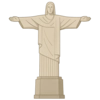
As the 20th century dawned, I was a city buzzing with new ideas and a strong sense of national pride. To celebrate the 100th anniversary of Brazil’s independence, which had occurred in 1822, the people of Brazil decided they wanted to create a powerful symbol of their faith and their welcoming spirit. The idea was to build a monumental statue of Christ, visible from every corner of the city. The chosen location was the peak of the 700-meter-high Corcovado Mountain, a place that offered breathtaking views. A Brazilian engineer designed it, but the statue itself was crafted by a French sculptor in Paris. It was made in pieces from reinforced concrete and soapstone and shipped all the way across the ocean. Assembling it on that steep, windy mountaintop was an incredible feat of engineering and dedication. Finally, on October 12th, 1931, the statue of Christ the Redeemer was inaugurated, opening its arms in a gesture of peace to the entire world. It quickly became my most famous symbol. I continued to grow and modernize, but another big change was on the horizon. The leaders of Brazil decided to build a brand-new, futuristic capital city, Brasília, deep in the country's interior. On April 21st, 1960, the government officially moved. It was a bittersweet moment for me. I was sad to give up my role as the nation's political heart, but it also gave me a chance to embrace a new identity, one focused on culture, art, and being a beacon of joy for the world.
Today, my purpose is to share my spirit with the world. This spirit explodes into life every year during Carnival, a festival of pure joy where the entire city pulses with the rhythm of samba. Streets fill with enormous, colorful parades, dazzling costumes, and people dancing with infectious energy. But my joy is also found in simpler moments: in the laughter of families playing on my famous beaches, Copacabana and Ipanema, or in a quiet hike through the Tijuca Forest. In 2016, I had the incredible honor of welcoming the entire world when I hosted the Summer Olympic Games, sharing my beauty and energy on a global stage. My story is written in my mountains, my sea, and the hearts of my people. I am a mix of stunning nature and unstoppable human creativity, and my arms, like those of my famous statue, will always be open, welcoming everyone to share in my marvelous, joyful life.
Wow facts
About
A major coastal city in Brazil, famous for its iconic Christ the Redeemer statue, Sugarloaf Mountain, vibrant Carnival festival, and stunning natural setting between mountains and the sea.
Take a Quiz
Question 1 of 5
Which sentence best summarizes Rio de Janeiro's journey as a capital city?
Explore next


Want to do even more?
Go beyond exploring. Unlock tools that turn every story into real learning.

Storypie Plus for families
Full stories, quizzes, and printables. Nights and car rides, sorted.
- Unlimited audio stories
- Create Mode: your child stars in the story
- Offline downloads
- Printable worksheets & coloring pages

Why Storypie for Schools
Students engaged. Prep in seconds. Evenings back to you.
- Worksheets & Quizzes
- Classroom Management
- Formative Assessment
- Custom Curriculum & Lesson Plans
- 27 Languages

Why Storypie for Homeschool
Curriculum done. They'll ask for more. Hours back in your day.
- Worksheet Generator
- First-Person Audio Stories
- Built-in Comprehension Quizzes
- Custom Curriculum & Lesson Plans
- Print & Go Activities