English

Salar de Uyuni
Located in Bolivia, Salar de Uyuni is the world's largest salt flat…
Reads at Grades K-2 Listens at K–3
Print & create
Answer keys·No prep·Free with an account
28 worksheets · answer keys · full story · quiz · Ages 6-8 · CEFR A2
Plus adds 208,000+ more stories in 27 languages, audio for every one, and printables for all of them.
Just want Salar de Uyuni?
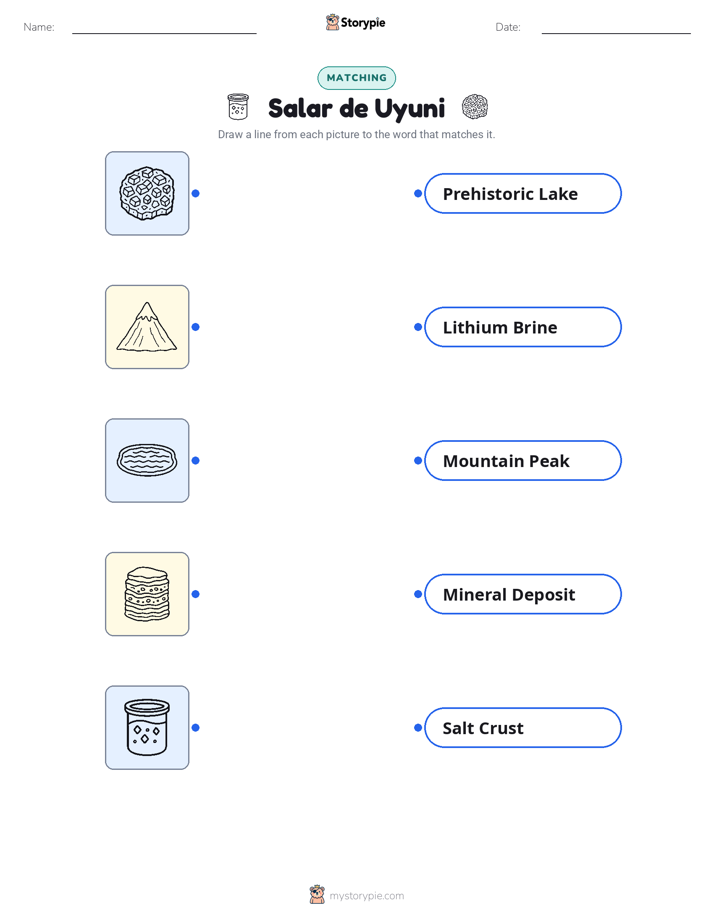
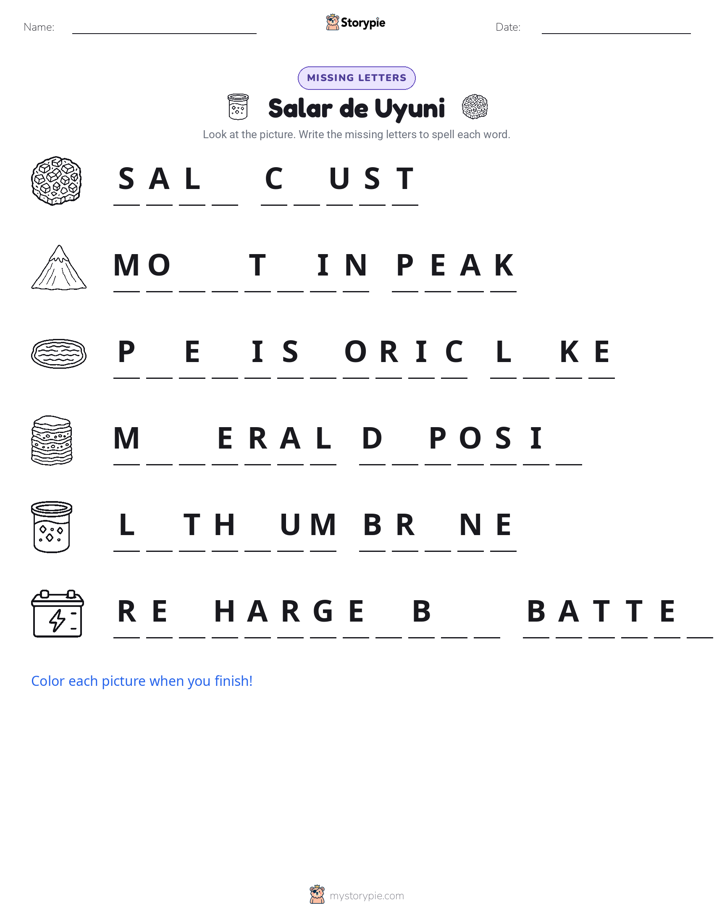
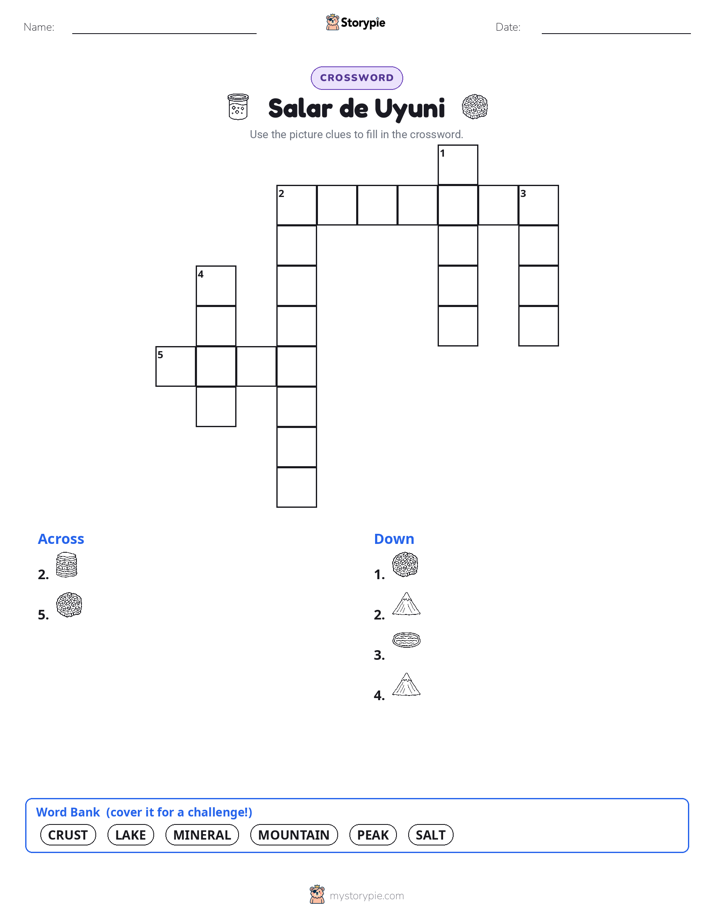
High in the mountains, under a big blue sky, I stretch out as far as you can see. I am a giant, flat blanket of crunchy, white salt. During the dry season, my surface looks like a huge puzzle made of sparkly shapes. But when the rains come, from December to April, something magical happens. I fill with a little bit of water and become the world’s biggest mirror. I reflect the fluffy clouds and the bright sun so perfectly that it looks like the sky is both above you and below you. I am the Salar de Uyuni, a giant salt flat in Bolivia.
My story began a very, very long time ago. Around 40,000 years ago, I wasn't a salt flat at all. I was a giant prehistoric lake called Lake Minchin, filled with water. But over thousands and thousands of years, the climate got warmer and the sun shone down on me day after day. Slowly, the water began to disappear into the air, a little bit like a puddle drying on a sunny day. It left all of its salt behind. A smaller lake, named Lake Tauca, was the last piece of that great water world. By about 10,000 years ago, it had dried up too, and I was born. I became the vast, white salt desert that sparkles in the sun today.
I am not just an empty place. For centuries, I have been very important to the people who live nearby. People, like the Aymara, come to me to carefully gather my salt. They scrape it into little mounds that look like tiny volcanoes and let the sun dry them out completely. Then, they can use the salt for cooking their food or trade it for other things they need. I am also a special home for animals. Every year, around November, flocks of beautiful pink flamingos fly here. They wade in my shallow, salty lakes and build nests to raise their baby chicks. It is a wonderful sight to see their bright pink feathers against my white salt.
The Sky's Giant Mirror
High in the mountains, under a big blue sky, I stretch out as far as you can see. I am a giant, flat blanket of crunchy, white salt. During the dry season, my surface looks like a huge puzzle made of sparkly shapes. But when the rains come, from December to April, something magical happens. I fill with a little bit of water and become the world’s biggest mirror. I reflect the fluffy clouds and the bright sun so perfectly that it looks like the sky is both above you and below you. I am the Salar de Uyuni, a giant salt flat in Bolivia.
My story began a very, very long time ago. Around 40,000 years ago, I wasn't a salt flat at all. I was a giant prehistoric lake called Lake Minchin, filled with water. But over thousands and thousands of years, the climate got warmer and the sun shone down on me day after day. Slowly, the water began to disappear into the air, a little bit like a puddle drying on a sunny day. It left all of its salt behind. A smaller lake, named Lake Tauca, was the last piece of that great water world. By about 10,000 years ago, it had dried up too, and I was born. I became the vast, white salt desert that sparkles in the sun today.
I am not just an empty place. For centuries, I have been very important to the people who live nearby. People, like the Aymara, come to me to carefully gather my salt. They scrape it into little mounds that look like tiny volcanoes and let the sun dry them out completely. Then, they can use the salt for cooking their food or trade it for other things they need. I am also a special home for animals. Every year, around November, flocks of beautiful pink flamingos fly here. They wade in my shallow, salty lakes and build nests to raise their baby chicks. It is a wonderful sight to see their bright pink feathers against my white salt.
Not long ago, in the late 20th century, people discovered I was hiding a secret treasure. It wasn’t gold or diamonds, but something even more special for today's world. Deep beneath my crunchy salt crust is a metal called lithium. You can’t see it, but it’s very powerful. Lithium is what helps power the batteries in things you use every day, like phones, laptops, and even big electric cars. It's like I have a secret superpower, helping to give energy to the whole world.
I love it when visitors come to see my magic. They drive across my flat surface and take silly pictures that trick your eyes. Because I am so big and flat, they can make it look like they are holding a tiny car in their hand or running away from a giant toy dinosaur. When I am a mirror, people say it feels like they are walking on the clouds. I am a place of wonder, where you can touch the sky. I hope I always remind people how beautiful and amazing nature can be, connecting the earth to the stars.
Wow facts
About
Located in Bolivia, Salar de Uyuni is the world's largest salt flat, formed from the remnants of prehistoric lakes. It is famous for its vast, mirror-like surface during the rainy season and contains significant lithium reserves, with estimates suggesting Bolivia holds about 15% of the world's lithium reserves.
Take a Quiz
Question 1 of 4
Why do people visit me to collect salt?
Explore next


Want to do even more?
Go beyond exploring. Unlock tools that turn every story into real learning.

Storypie Plus for families
Full stories, quizzes, and printables. Nights and car rides, sorted.
- Unlimited audio stories
- Create Mode: your child stars in the story
- Offline downloads
- Printable worksheets & coloring pages

Why Storypie for Schools
Students engaged. Prep in seconds. Evenings back to you.
- Worksheets & Quizzes
- Classroom Management
- Formative Assessment
- Custom Curriculum & Lesson Plans
- 27 Languages

Why Storypie for Homeschool
Curriculum done. They'll ask for more. Hours back in your day.
- Worksheet Generator
- First-Person Audio Stories
- Built-in Comprehension Quizzes
- Custom Curriculum & Lesson Plans
- Print & Go Activities