English

St. Augustine, Florida
St.
Reads at Grades 6–8 Listens at Grades 4–8
Print & create
Answer keys·No prep·Free with an account
28 worksheets · answer keys · full story · quiz · Ages 10-12 · CEFR B2
Plus adds 102,000+ more stories in 27 languages, audio for every one, and printables for all of them.
Just want St. Augustine, Florida?
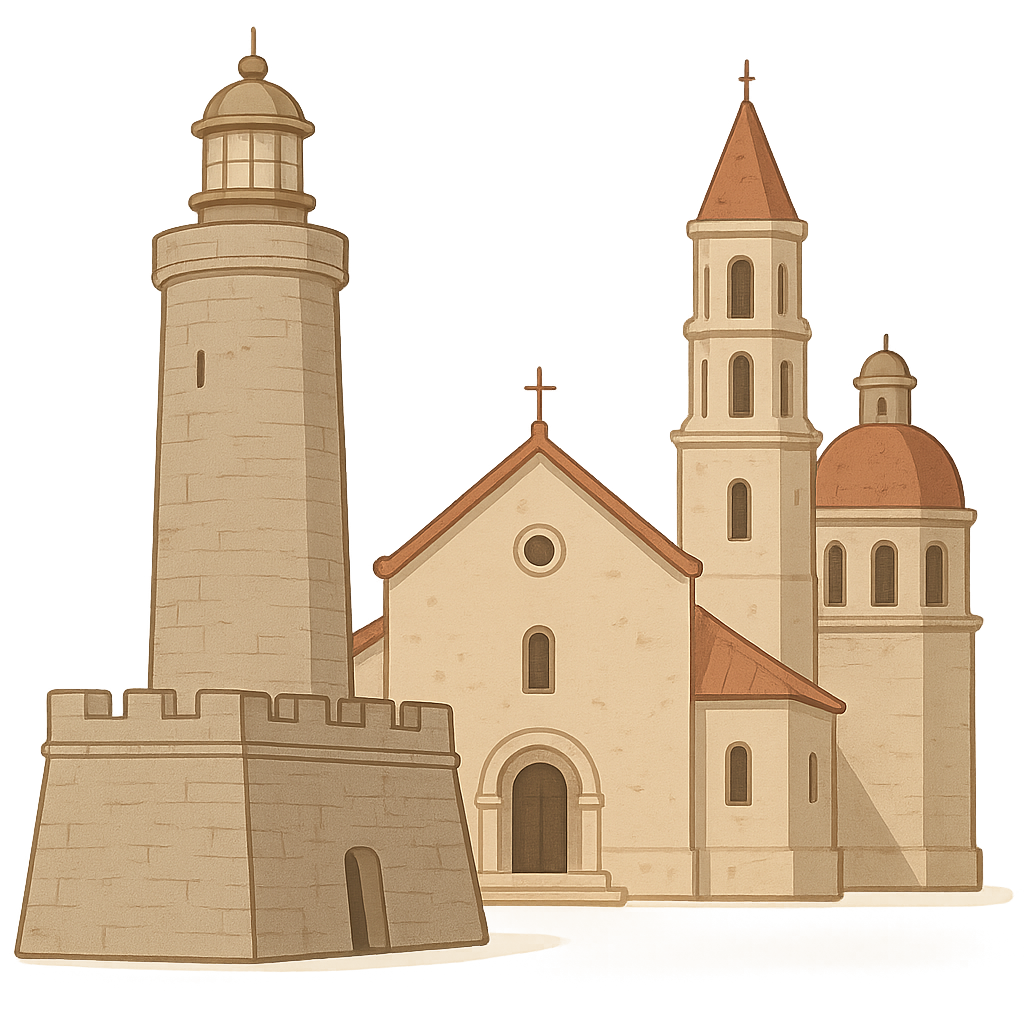
The warm Florida sun bakes my stones, and the salty breeze from the Atlantic whispers through my narrow lanes. If you walk my cobblestone streets, you can hear the faint clip-clop of horses from centuries ago and see the intricate ironwork on balconies overflowing with flowers. I have felt the weight of many flags flying over my squares and listened to people speak Spanish, English, and languages long since faded from this coast. For hundreds of years, I have watched the tides come and go, a silent guardian on the edge of a new world. My memory is long, etched into walls made of seashell and hardened by time. I am St. Augustine, the oldest city in the United States founded by European settlers, and my story is written in shell and stone.
My life began with the creak of wooden ships and the snap of sails in the wind. On September 8th, 1565, a Spanish Admiral named Pedro Menéndez de Avilés waded ashore with his soldiers and settlers. He had first spotted this land on August 28th, the feast day of a great thinker named St. Augustine of Hippo, and so he gave me my name. Those first years were a desperate struggle for survival. My first homes were simple wooden forts, vulnerable to hurricanes and fire. We lived in constant tension with the local Timucua tribes, who had called this land home for generations. My greatest early trial came in 1586, when the English privateer Sir Francis Drake and his fleet appeared on the horizon. He attacked my shores, and his fires turned my wooden defenses to ash. But he could not destroy the spirit of the people who called me home. They rebuilt, determined to create a permanent foothold for Spain in this new land.
The Stone Storyteller of the Florida Coast
The warm Florida sun bakes my stones, and the salty breeze from the Atlantic whispers through my narrow lanes. If you walk my cobblestone streets, you can hear the faint clip-clop of horses from centuries ago and see the intricate ironwork on balconies overflowing with flowers. I have felt the weight of many flags flying over my squares and listened to people speak Spanish, English, and languages long since faded from this coast. For hundreds of years, I have watched the tides come and go, a silent guardian on the edge of a new world. My memory is long, etched into walls made of seashell and hardened by time. I am St. Augustine, the oldest city in the United States founded by European settlers, and my story is written in shell and stone.
My life began with the creak of wooden ships and the snap of sails in the wind. On September 8th, 1565, a Spanish Admiral named Pedro Menéndez de Avilés waded ashore with his soldiers and settlers. He had first spotted this land on August 28th, the feast day of a great thinker named St. Augustine of Hippo, and so he gave me my name. Those first years were a desperate struggle for survival. My first homes were simple wooden forts, vulnerable to hurricanes and fire. We lived in constant tension with the local Timucua tribes, who had called this land home for generations. My greatest early trial came in 1586, when the English privateer Sir Francis Drake and his fleet appeared on the horizon. He attacked my shores, and his fires turned my wooden defenses to ash. But he could not destroy the spirit of the people who called me home. They rebuilt, determined to create a permanent foothold for Spain in this new land.
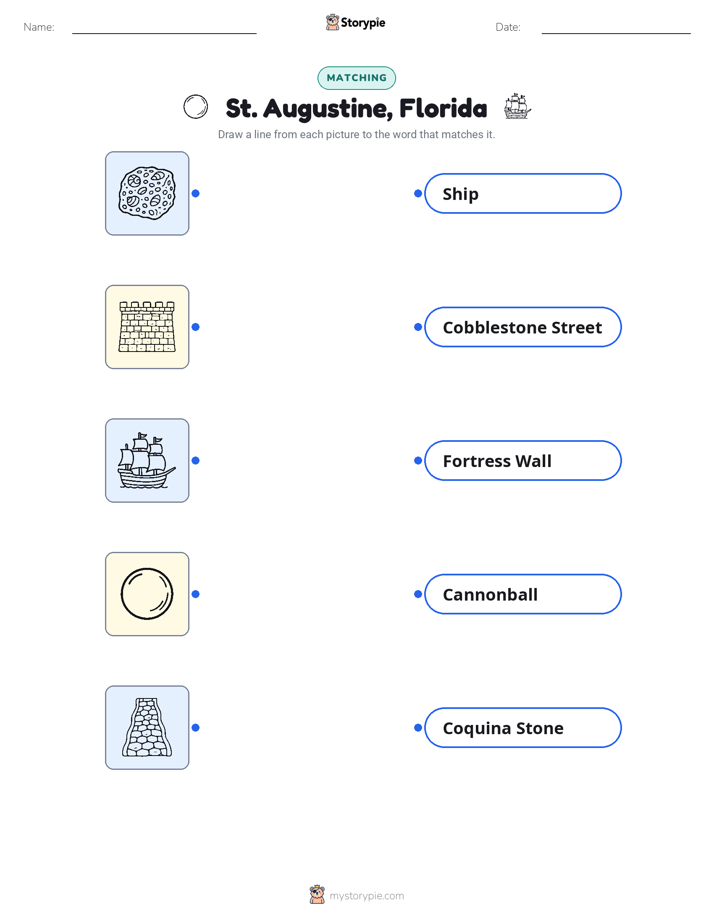
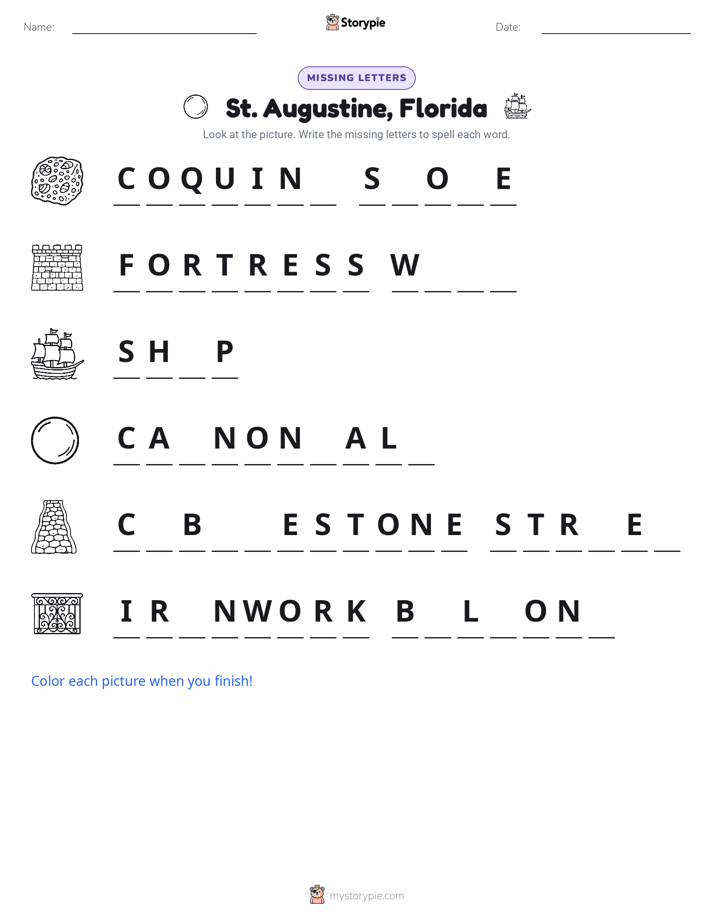
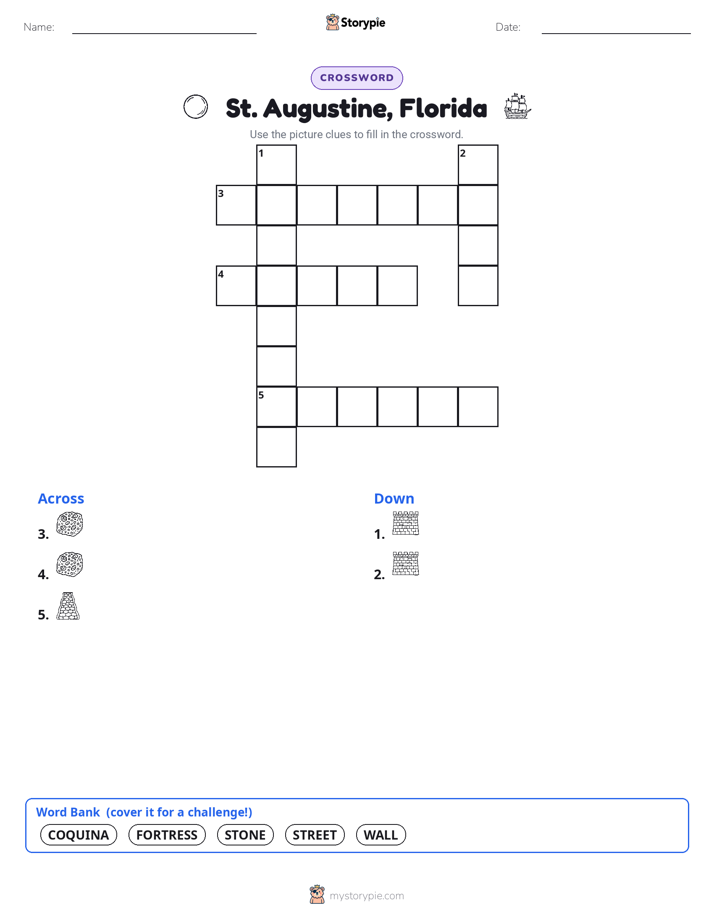
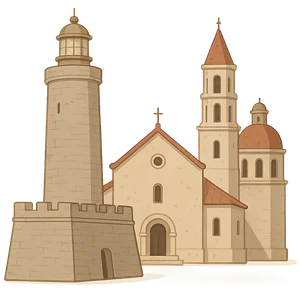
After years of devastating attacks, it became clear that wood and earth were not enough to protect me. My people needed a true fortress, a bastion of strength that could withstand any assault. In 1672, a monumental project began. Workers quarried a special kind of stone from the nearby coast. It wasn't granite or marble, but something unique called coquina, which is Spanish for 'tiny shell.' This remarkable stone was formed from the compressed shells of ancient sea creatures. It had a secret power: it was porous. Instead of shattering when struck by a cannonball, the coquina would absorb the impact, swallowing the cannonball whole. For 23 years, workers labored under the hot sun, and in 1695, my magnificent protector, the Castillo de San Marcos, was finally complete. Its strength was tested in 1702, when British forces laid siege to me for two months. My people huddled safely inside the Castillo’s walls, and the fortress never fell. My coquina walls had saved us all.
Over the next century, the flags flying over my Castillo changed with the tides of empires. In 1763, after a distant war, I was given to Great Britain. Then, in 1783, I was returned to Spain. Finally, in 1821, I became part of the young and growing United States of America. I was a quiet military town for many years, but a new chapter of my life began in the late 1800s with the arrival of a visionary industrialist named Henry Flagler. He didn't see me as just a fort; he saw me as a winter paradise for America's wealthy elite. He built a railroad that connected me to the rest of the country and then began constructing some of the most magnificent buildings I had ever seen. His grandest creation was the Hotel Ponce de León, a stunning masterpiece of Spanish Renaissance architecture that opened its doors on January 10th, 1888. It had electricity, installed by Flagler's friend Thomas Edison. Suddenly, my ancient streets were filled with glamour, art, and the excitement of the Gilded Age.
My long life has taught me that history is not just about forts and hotels; it's about people and their fight for a better world. In 1964, my old streets became a critical battleground in the Civil Rights Movement. Activists, including Dr. Martin Luther King Jr., came here to lead marches and protests against segregation, facing great danger to demand equality. Their courage added another profound layer to my story, turning me into a beacon for change. Today, I am a living museum. My coquina walls still stand guard, my Gilded Age hotels have become a college and a museum, and my cobblestone lanes echo with the footsteps of people from all over the world. I am more than just old; I am a living storybook, a place where you can touch the past and see the long, complex, and resilient journey of a nation. I invite you to walk my paths, listen to my echoes, and discover how the past is always present.
Wow facts
About
St. Augustine, located on the northeast coast of Florida, is the oldest continuously inhabited European-established settlement in the contiguous United States, founded in 1565 by Spanish admiral Pedro Menéndez de Avilés.
Take a Quiz
Question 1 of 5
The story says the coquina stone's 'porous nature absorbed cannonballs.' The word 'porous' means full of tiny holes. How did this trait make the Castillo de San Marcos a strong fortress?
Explore next






Want to do even more?
Go beyond exploring. Unlock tools that turn every story into real learning.

Storypie Plus for families
Full stories, quizzes, and printables. Nights and car rides, sorted.
- Unlimited audio stories
- Create Mode: your child stars in the story
- Offline downloads
- Printable worksheets & coloring pages

Why Storypie for Schools
Students engaged. Prep in seconds. Evenings back to you.
- Worksheets & Quizzes
- Classroom Management
- Formative Assessment
- Custom Curriculum & Lesson Plans
- 27 Languages

Why Storypie for Homeschool
Curriculum done. They'll ask for more. Hours back in your day.
- Worksheet Generator
- First-Person Audio Stories
- Built-in Comprehension Quizzes
- Custom Curriculum & Lesson Plans
- Print & Go Activities