English

Strait of Magellan
A navigable sea route in southern Chile separating mainland South America from Tierra del Fuego…
Reads at Grades 6–8 Listens at Grades 4–8
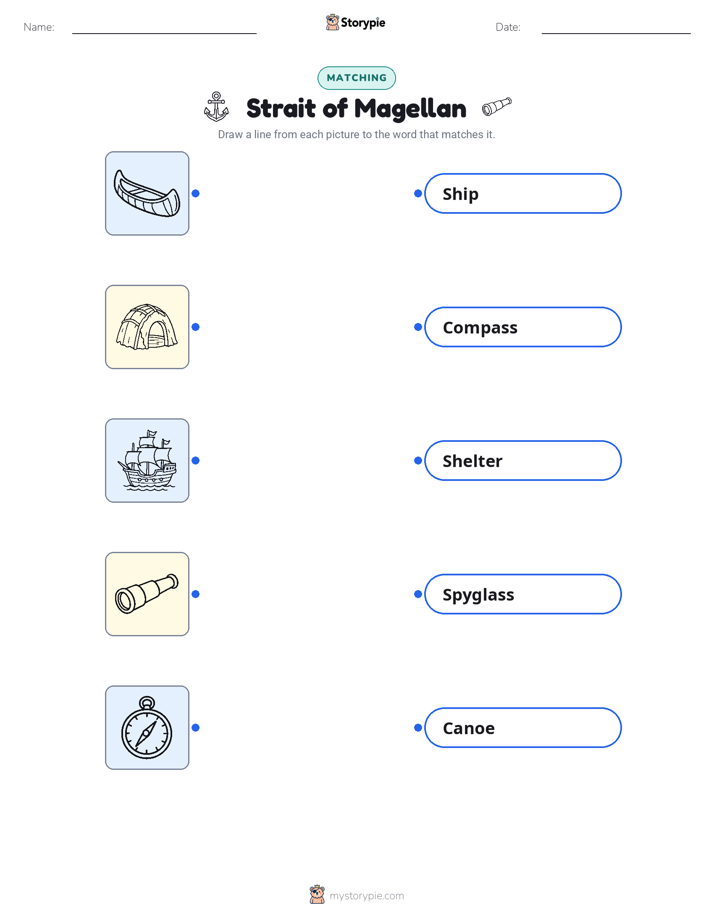
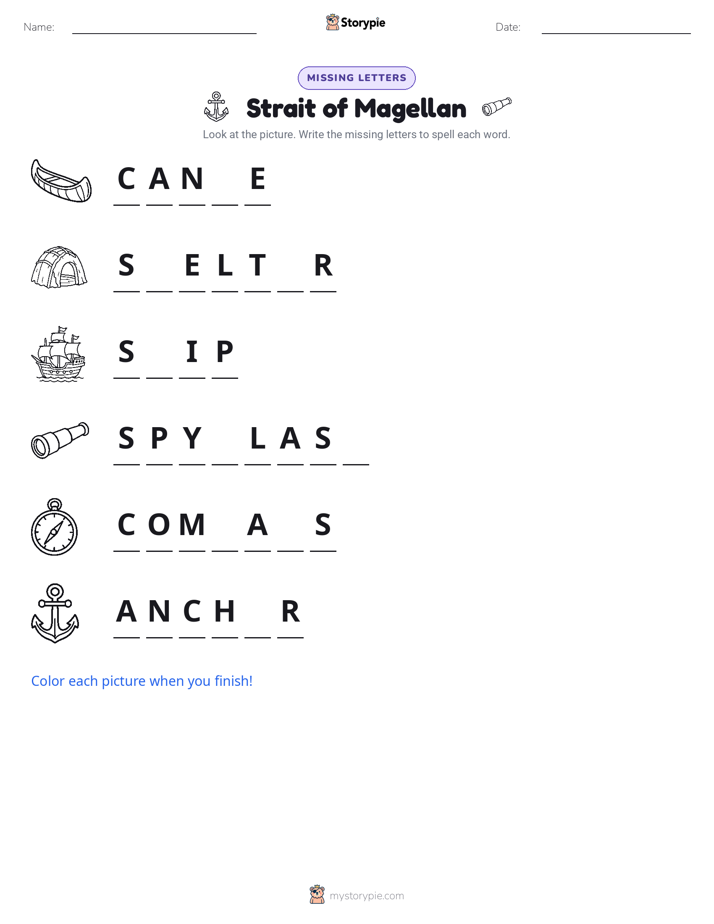
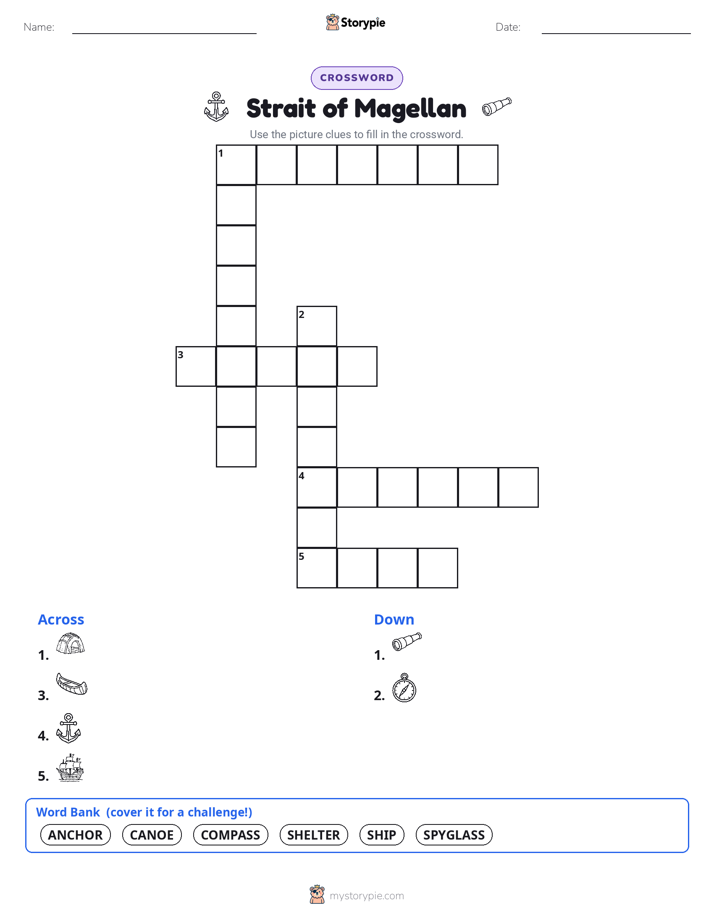
Print & create
Answer keys·No prep·Free with an account
28 worksheets · answer keys · full story · quiz · Ages 10-12 · CEFR B2
Plus adds 164,000+ more stories in 27 languages, audio for every one, and printables for all of them.
Just want Strait of Magellan?
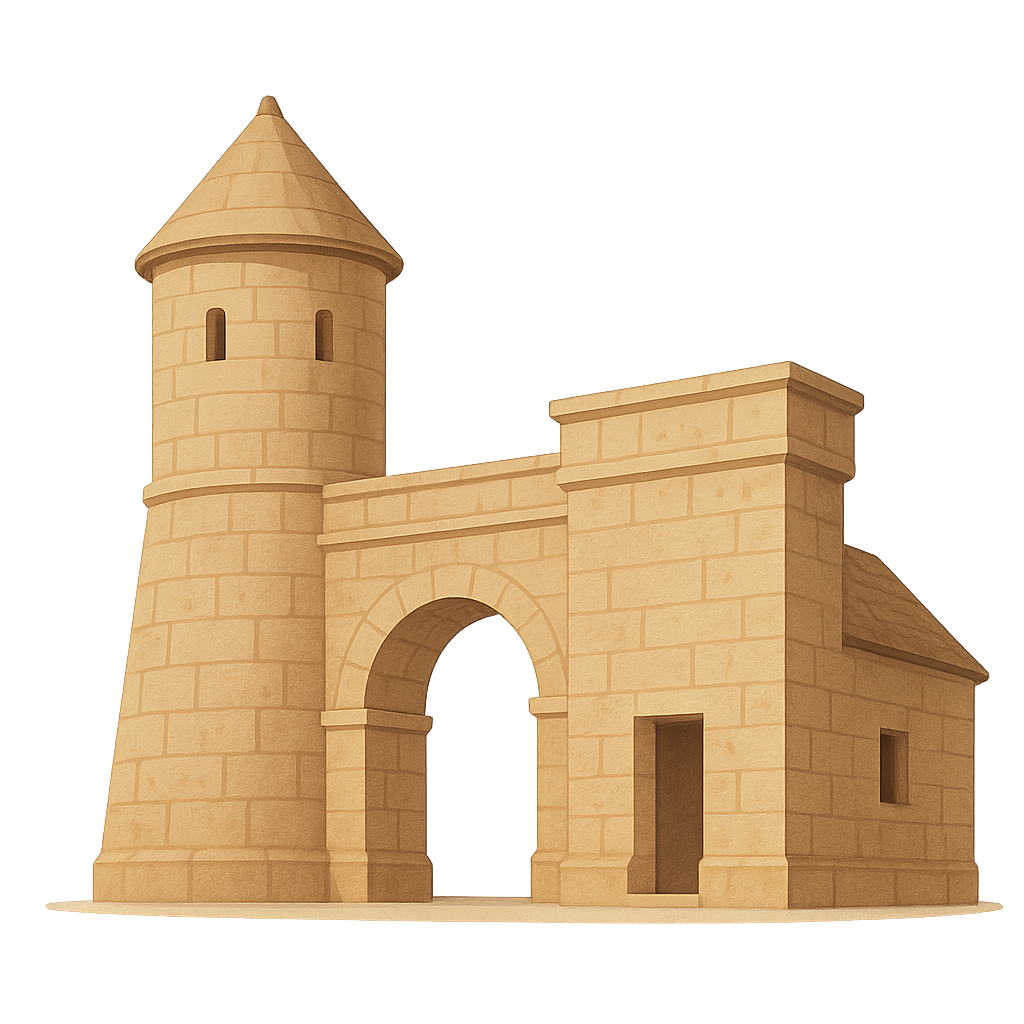
Imagine a place where two great oceans meet in a crash of cold, salty water. I am that place, a secret passage carved between jagged, snow-capped mountains and icy blue glaciers at the very bottom of the world. My winds howl with stories, and my deep, dark waters echo with the calls of humpback whales and the chatter of penguin colonies that dot my shores. For thousands of years, I kept my secrets well. I am a labyrinth of fjords and islands at the tip of South America, a natural gateway between the stormy Atlantic and the vast Pacific. Only the most skilled and courageous local navigators, who knew my every twist and turn, dared to travel through my channels. They understood my moods and respected my power. To the rest of the world, I was just a myth, a rumored passage that might not even exist. But I was always here, waiting for history to find me. I am the Strait of Magellan.
Long before European sails appeared on my horizon, my waters were a home. For thousands of years, my shores and channels were navigated by the Indigenous peoples of this region, including the remarkable Kawésqar and Yaghan. They were masters of this challenging world. In sleek canoes expertly crafted from tree bark, they paddled through my chilly currents, fishing, hunting sea lions, and gathering food along the coastline. They built temporary shelters on my shores and lived in harmony with my dramatic seasons and powerful tides. Their resilience was extraordinary. One day, from the deck of a passing ship, European sailors saw countless small fires flickering along the coastline of the large island to my south. These were the campfires of the local people, keeping them warm and cooking their food. The sight was so striking against the darkening sky that the sailors named the island Tierra del Fuego, which means "Land of Fire." That name, born from the simple, everyday lives of my first people, has remained ever since.
The Strait of Magellan: A Story of Fire and Ice
Imagine a place where two great oceans meet in a crash of cold, salty water. I am that place, a secret passage carved between jagged, snow-capped mountains and icy blue glaciers at the very bottom of the world. My winds howl with stories, and my deep, dark waters echo with the calls of humpback whales and the chatter of penguin colonies that dot my shores. For thousands of years, I kept my secrets well. I am a labyrinth of fjords and islands at the tip of South America, a natural gateway between the stormy Atlantic and the vast Pacific. Only the most skilled and courageous local navigators, who knew my every twist and turn, dared to travel through my channels. They understood my moods and respected my power. To the rest of the world, I was just a myth, a rumored passage that might not even exist. But I was always here, waiting for history to find me. I am the Strait of Magellan.
Long before European sails appeared on my horizon, my waters were a home. For thousands of years, my shores and channels were navigated by the Indigenous peoples of this region, including the remarkable Kawésqar and Yaghan. They were masters of this challenging world. In sleek canoes expertly crafted from tree bark, they paddled through my chilly currents, fishing, hunting sea lions, and gathering food along the coastline. They built temporary shelters on my shores and lived in harmony with my dramatic seasons and powerful tides. Their resilience was extraordinary. One day, from the deck of a passing ship, European sailors saw countless small fires flickering along the coastline of the large island to my south. These were the campfires of the local people, keeping them warm and cooking their food. The sight was so striking against the darkening sky that the sailors named the island Tierra del Fuego, which means "Land of Fire." That name, born from the simple, everyday lives of my first people, has remained ever since.
My quiet existence changed forever in the 16th century. A determined Portuguese explorer named Ferdinand Magellan, sailing for the King of Spain, was on a mission of global importance. He believed he could find a westward sea route to the legendary Spice Islands of Asia, a path that no one had ever successfully navigated. His fleet of five ships had battled fierce storms and dwindling hope for over a year. Then, on October 21st, 1520, they spotted a promising opening in the coastline. It was my entrance. Cautiously, Magellan ordered his ships to enter my uncharted waters. The journey that followed was a true test of courage and skill. For 38 grueling days, beginning on November 1st, they navigated my winding, unpredictable channels. Towering cliffs rose on either side, casting deep shadows on the water. Sudden, violent storms, which I am famous for, threatened to smash their wooden ships against the rocks. The crew was terrified, and the captain of one ship lost his nerve, secretly turning his vessel around and sailing back to Spain. But Magellan refused to give up. He pressed on, believing this was the path he had been searching for. Finally, on November 28th, 1520, his remaining ships sailed out of my western end and into a vast, calm body of water. It was so peaceful after the turmoil of my passage that Magellan named it the "Mar Pacífico," the Pacific Ocean. His perseverance had paid off. He had found the way, and his expedition would become the first to circumnavigate the Earth, proving the world was round and forever changing humanity's understanding of the planet.
After Magellan’s historic voyage, my name was known around the world. For nearly 400 years, I was the most important shortcut for ships sailing between the Atlantic and Pacific oceans. I was a challenging route, but I was far safer than the treacherous open sea around Cape Horn to my south. My waters became a busy highway for global history. I saw the sails of explorers like the English sea captain Sir Francis Drake, who passed through in 1578 on his own famous circumnavigation. I watched as heavily armed Spanish galleons, loaded with silver and gold from the mines of South America, navigated my channels on their way back to Europe. In the 19th century, whaling ships from America and Europe hunted in the rich waters of the Southern Ocean, using my passage as a gateway. Later, my currents swelled with the traffic of vessels filled with hopeful prospectors during the California Gold Rush, all eager to reach the west coast of North America. To support all this activity, settlements grew on my shores. The city of Punta Arenas in Chile was founded in 1848, becoming a vital port where ships could restock on coal, water, and supplies before continuing their long journeys. I was more than just a waterway; I was a lifeline connecting cultures, economies, and dreams across the globe.
My time as the world's primary shortcut came to an end with the dawn of a new era in engineering. On August 15th, 1914, the Panama Canal opened, carving a new, much faster path through Central America. Many thought I would fade into obscurity, a relic of a bygone age of exploration. But my story was far from over. While the canal took much of the commercial traffic, I remained essential. My deep, wide channels are perfect for modern supertankers and massive ships that are too large to fit through the canal's locks. Today, I am also a place of wonder and discovery. Cruise ships bring travelers from all over the world to gaze at my magnificent glaciers, watch for dolphins and whales, and visit the penguin colonies that call my islands home. Scientific research vessels use my route as a gateway to Antarctica, embarking on important missions to study climate change and the planet's most remote ecosystems. I am a living monument to the Earth’s raw, untamed beauty and a powerful reminder of the courage of explorers, from the ancient Kawésqar in their canoes to the modern scientists on their icebreakers. I continue to connect people not just between oceans, but to the incredible, wild world at the very edge of the continent.
Wow facts
About
A navigable sea route in southern Chile separating mainland South America from Tierra del Fuego, historically significant as the first natural passage discovered between the Atlantic and Pacific Oceans.
Take a Quiz
Question 1 of 5
In the story, the Strait of Magellan says its journey was a 'true test of courage and skill.' Using evidence from the text, explain two specific challenges Magellan's crew faced during their 38-day passage.
Explore next



Want to do even more?
Go beyond exploring. Unlock tools that turn every story into real learning.

Storypie Plus for families
Full stories, quizzes, and printables. Nights and car rides, sorted.
- Unlimited audio stories
- Create Mode: your child stars in the story
- Offline downloads
- Printable worksheets & coloring pages

Why Storypie for Schools
Students engaged. Prep in seconds. Evenings back to you.
- Worksheets & Quizzes
- Classroom Management
- Formative Assessment
- Custom Curriculum & Lesson Plans
- 27 Languages

Why Storypie for Homeschool
Curriculum done. They'll ask for more. Hours back in your day.
- Worksheet Generator
- First-Person Audio Stories
- Built-in Comprehension Quizzes
- Custom Curriculum & Lesson Plans
- Print & Go Activities