English

Tenochtitlan
The magnificent island capital of the Aztec Empire, located on Lake Texcoco…
Reads at Grades 6–8 Listens at Grades 4–8
Print & create
Answer keys·No prep·Free with an account
28 worksheets · answer keys · full story · quiz · Ages 10-12 · CEFR B2
Plus adds 164,000+ more stories in 27 languages, audio for every one, and printables for all of them.
Just want Tenochtitlan?
Imagine a city born from water. Instead of dusty roads, picture shimmering canals where thousands of canoes glide like silent swans. Sunlight dances on the surface, reflecting the bright colors of flowers blooming in gardens that actually float. All around, the air hums with the energy of a quarter of a million people living and working together, their voices a constant, gentle murmur. I was a jewel set in the middle of a vast lake, connected to the shores by great stone bridges that seemed to walk on water. I was a place of impossible beauty, a marvel of human determination built on a swampy island where many believed no city could ever stand. My founders saw not an obstacle, but an opportunity. They created land where there was only water, and built pyramids that seemed to touch the clouds. My markets were filled with treasures from every corner of a great empire—gleaming obsidian, bright feathers, and fragrant spices. My heart was a sacred precinct of towering temples painted in brilliant reds and blues, a place where the universe was said to touch the earth. I was a testament to a vision, a prophecy fulfilled in stone and water. I am Tenochtitlan, the magnificent capital of the Aztec Empire.
My story begins not with stone, but with a journey. The people who built me, the Mexica, wandered for generations. They were guided by a promise from their god, Huitzilopochtli, who told them to search for a sign that would mark their promised land. This sign was very specific: a mighty eagle perched on a prickly pear cactus, devouring a serpent. For years, they searched through deserts and mountains, always looking for this divine symbol. Finally, around the year 1325 CE, they arrived at a large lake called Lake Texcoco. There, on a small, swampy island in the middle of the water, they saw it—the eagle, the cactus, and the snake, just as the prophecy had foretold. Their long journey was over. This was to be their home. But building a great city on soft, marshy ground was a tremendous challenge. How could they lay foundations for massive temples in what was essentially mud? The Mexica were brilliant engineers. They developed a clever system, driving thousands of long wooden stakes deep into the soft lakebed. These piles created a solid, stable base upon which they could build. They packed mud and rock between the stakes, slowly creating firm land. It was a slow, difficult process, but through their ingenuity and unwavering faith, they transformed a soggy island into the foundation for a mighty city. My first simple temples and homes rose from the water, marking the beginning of a great civilization.
The City on the Lake
Imagine a city born from water. Instead of dusty roads, picture shimmering canals where thousands of canoes glide like silent swans. Sunlight dances on the surface, reflecting the bright colors of flowers blooming in gardens that actually float. All around, the air hums with the energy of a quarter of a million people living and working together, their voices a constant, gentle murmur. I was a jewel set in the middle of a vast lake, connected to the shores by great stone bridges that seemed to walk on water. I was a place of impossible beauty, a marvel of human determination built on a swampy island where many believed no city could ever stand. My founders saw not an obstacle, but an opportunity. They created land where there was only water, and built pyramids that seemed to touch the clouds. My markets were filled with treasures from every corner of a great empire—gleaming obsidian, bright feathers, and fragrant spices. My heart was a sacred precinct of towering temples painted in brilliant reds and blues, a place where the universe was said to touch the earth. I was a testament to a vision, a prophecy fulfilled in stone and water. I am Tenochtitlan, the magnificent capital of the Aztec Empire.
My story begins not with stone, but with a journey. The people who built me, the Mexica, wandered for generations. They were guided by a promise from their god, Huitzilopochtli, who told them to search for a sign that would mark their promised land. This sign was very specific: a mighty eagle perched on a prickly pear cactus, devouring a serpent. For years, they searched through deserts and mountains, always looking for this divine symbol. Finally, around the year 1325 CE, they arrived at a large lake called Lake Texcoco. There, on a small, swampy island in the middle of the water, they saw it—the eagle, the cactus, and the snake, just as the prophecy had foretold. Their long journey was over. This was to be their home. But building a great city on soft, marshy ground was a tremendous challenge. How could they lay foundations for massive temples in what was essentially mud? The Mexica were brilliant engineers. They developed a clever system, driving thousands of long wooden stakes deep into the soft lakebed. These piles created a solid, stable base upon which they could build. They packed mud and rock between the stakes, slowly creating firm land. It was a slow, difficult process, but through their ingenuity and unwavering faith, they transformed a soggy island into the foundation for a mighty city. My first simple temples and homes rose from the water, marking the beginning of a great civilization.
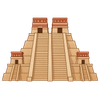
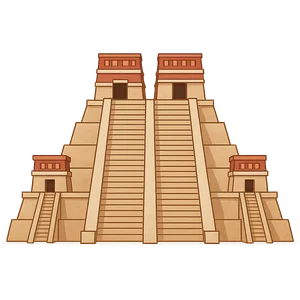
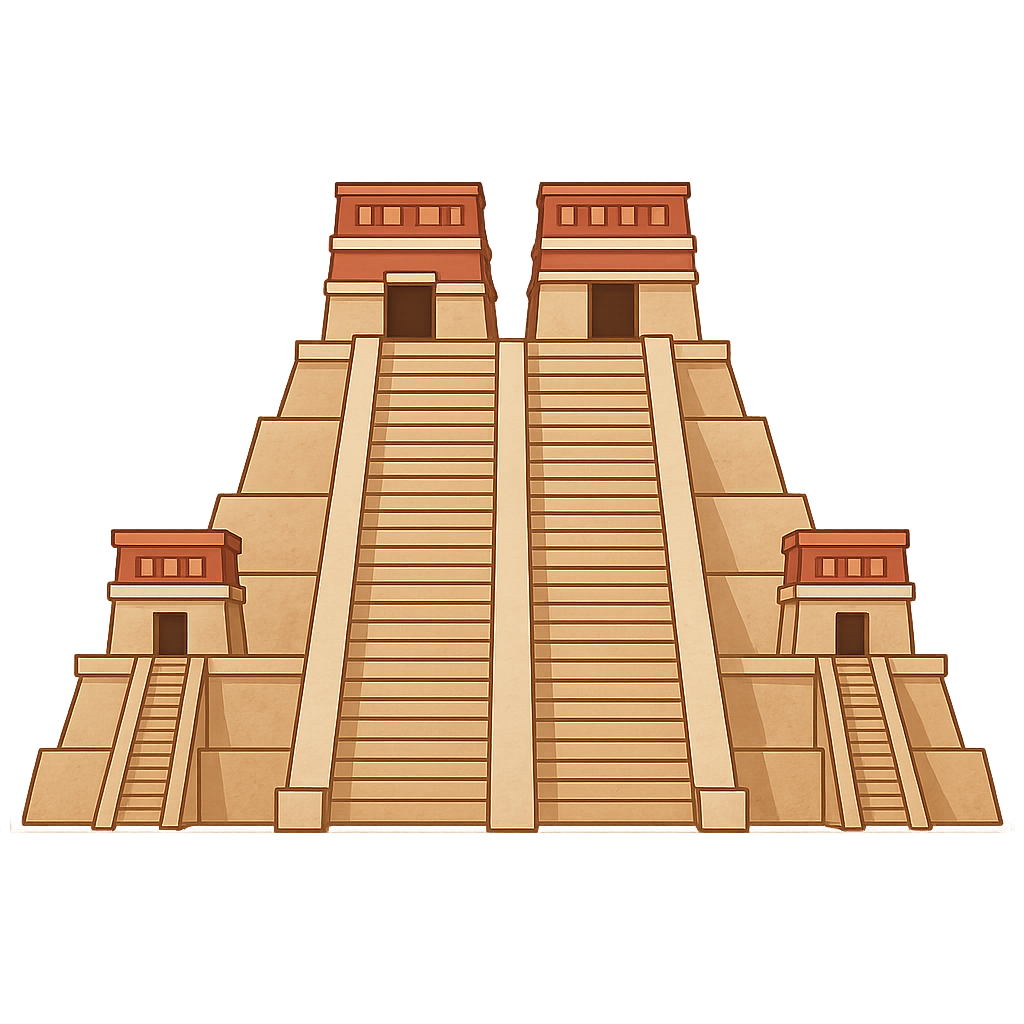
By the early 1500s, I was a thriving metropolis, one of the largest and most magnificent cities in the world. At my very center stood the Templo Mayor, a massive twin pyramid dedicated to the gods Huitzilopochtli and Tlaloc. It was the sacred heart of the empire, and its final, most glorious version was rededicated around 1487 CE. Its two shrines soared high above the city, a breathtaking sight for all who approached. I was an island city, but not an isolated one. Three enormous stone causeways, wide enough for ten people to walk side-by-side, stretched for miles across Lake Texcoco, connecting me firmly to the mainland. These were feats of engineering, acting as both bridges and dikes to control the water levels. To bring clean, fresh water to my hundreds of thousands of citizens, two stone aqueducts were built, carrying water from springs in the hills of Chapultepec. Life within my canals was vibrant. The market at Tlatelolco was a dizzying spectacle of commerce and culture. Merchants sold everything imaginable: gold and silver jewelry, brilliantly colored textiles, exotic fruits, and even animals like jaguars and eagles. But perhaps my most ingenious feature was how I fed my people. The Mexica created incredible man-made islands called chinampas. They wove giant mats from reeds, piled them with rich mud from the lake bottom, and planted willow trees at the corners to anchor them. These "floating gardens" were incredibly fertile, allowing for multiple harvests a year and providing the food necessary to sustain my massive population. I was a city that worked in harmony with water, a testament to human creativity.
My golden age came to an abrupt and startling end. In the year 1519 CE, strangers appeared from the east, arriving in vessels unlike any my people had ever seen. They were the Spanish conquistadors, led by a man named Hernán Cortés. They had metal armor that gleamed in the sun, weapons that spoke with fire and thunder, and rode upon strange, powerful beasts that my people called "deer." My emperor, Moctezuma II, welcomed them into the city with a mixture of curiosity and caution, unsure if they were men or gods. For a time, there was a fragile peace, but it was shattered by misunderstanding and ambition. Conflict erupted, and the city that had once been a symbol of power became a battlefield. The Spanish were driven out, but they returned with more soldiers and allies from rival city-states. A terrible siege began. My causeways were blockaded, my aqueducts were cut, and my people fought bravely to defend their home. For months, they resisted, but disease and starvation weakened them. On August 13th, 1521 CE, after a long and brutal struggle, I finally fell. My beautiful temples were toppled, my canals were filled with rubble, and the hum of my markets fell silent. It was the end of an era, a moment of profound sadness for the magnificent world that was lost and the great Aztec civilization that was changed forever.
My fall was not my end, but a transformation. The Spanish conquerors, amazed by my strategic location, decided to build their new capital directly upon my ruins. They dismantled my pyramids and temples, using the stones to construct their own cathedrals and palaces. For nearly five hundred years, my story lay buried, a secret sleeping beneath the bustling streets of the new city, Mexico City. People walked over my grand plazas and canals without knowing what lay just a few feet beneath them. My memory became a legend, a story whispered in books. Then, on a quiet night, February 21st, 1978 CE, something incredible happened. Electrical workers digging downtown struck a hard, carved stone. They had accidentally stumbled upon a massive, circular monolith depicting the Aztec moon goddess, Coyolxauhqui. This single discovery sparked a massive archaeological project. The world realized that the heart of the Aztec Empire was not lost forever. They had found the ruins of my Templo Mayor. Today, you can visit my foundations, standing in the shadow of a colonial cathedral, a powerful symbol of the layers of history. Though my original form is gone, my spirit endures. I am the foundation of one of the world's largest and most vibrant cities. My heart still beats, sharing the story of the ingenuity, resilience, and artistry of the Aztec people with everyone who walks the streets of Mexico City today.
Wow facts
About
The magnificent island capital of the Aztec Empire, located on Lake Texcoco, which is now the site of modern Mexico City.
Take a Quiz
Question 1 of 5
In your own words, retell the story of how Tenochtitlan was founded, starting with the Mexica people's journey.
Explore next


Want to do even more?
Go beyond exploring. Unlock tools that turn every story into real learning.

Storypie Plus for families
Full stories, quizzes, and printables. Nights and car rides, sorted.
- Unlimited audio stories
- Create Mode: your child stars in the story
- Offline downloads
- Printable worksheets & coloring pages

Why Storypie for Schools
Students engaged. Prep in seconds. Evenings back to you.
- Worksheets & Quizzes
- Classroom Management
- Formative Assessment
- Custom Curriculum & Lesson Plans
- 27 Languages

Why Storypie for Homeschool
Curriculum done. They'll ask for more. Hours back in your day.
- Worksheet Generator
- First-Person Audio Stories
- Built-in Comprehension Quizzes
- Custom Curriculum & Lesson Plans
- Print & Go Activities