English

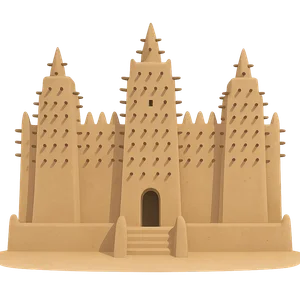
Timbuktu
A historic city in Mali, West Africa…
Reads at Grades 6–8 Listens at Grades 4–8
Print & create
Answer keys·No prep·Free with an account
28 worksheets · answer keys · full story · quiz · Ages 10-12 · CEFR B2
Plus adds 102,000+ more stories in 27 languages, audio for every one, and printables for all of them.
Just want Timbuktu?
I am a city of earth and sand, a place where the endless golden waves of the Sahara Desert finally rest against the life-giving waters of the Niger River. For centuries, my name was a whisper on the winds, a legend told in faraway kingdoms of a mysterious city filled with impossible riches. Merchants guided their camel caravans across vast, sun-scorched dunes, dreaming of my golden gates. They came seeking wealth, and they found it. But my true treasure was never the gold that passed through my markets. It was something far more lasting, something that could be carried in hearts and minds across generations. I am Timbuktu, and my greatest treasure has always been knowledge.
My beginnings were humble. Around the 12th century, I was little more than a seasonal camp, a temporary home for Tuareg nomads seeking pasture for their animals. But my location was destined for greatness. I was a perfect resting spot, a safe haven where the perilous journey across the desert met the navigable route of the river. This unique position made me a natural crossroads for trade. Soon, what was once a quiet camp transformed into a bustling hub of commerce. Great caravans arrived from the north, their camels laden with enormous, heavy slabs of salt dug from desert mines. In this part of the world, salt was as precious as gold because it was vital for preserving food. In return, they left with the treasures of West Africa: shimmering gold, smooth ivory, and other valuable goods. I grew quickly, my sandy streets filling with the sounds of different languages as I became one of the most important market cities in Africa.
The Pearl of the Desert: The Story of Timbuktu
I am a city of earth and sand, a place where the endless golden waves of the Sahara Desert finally rest against the life-giving waters of the Niger River. For centuries, my name was a whisper on the winds, a legend told in faraway kingdoms of a mysterious city filled with impossible riches. Merchants guided their camel caravans across vast, sun-scorched dunes, dreaming of my golden gates. They came seeking wealth, and they found it. But my true treasure was never the gold that passed through my markets. It was something far more lasting, something that could be carried in hearts and minds across generations. I am Timbuktu, and my greatest treasure has always been knowledge.
My beginnings were humble. Around the 12th century, I was little more than a seasonal camp, a temporary home for Tuareg nomads seeking pasture for their animals. But my location was destined for greatness. I was a perfect resting spot, a safe haven where the perilous journey across the desert met the navigable route of the river. This unique position made me a natural crossroads for trade. Soon, what was once a quiet camp transformed into a bustling hub of commerce. Great caravans arrived from the north, their camels laden with enormous, heavy slabs of salt dug from desert mines. In this part of the world, salt was as precious as gold because it was vital for preserving food. In return, they left with the treasures of West Africa: shimmering gold, smooth ivory, and other valuable goods. I grew quickly, my sandy streets filling with the sounds of different languages as I became one of the most important market cities in Africa.
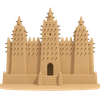
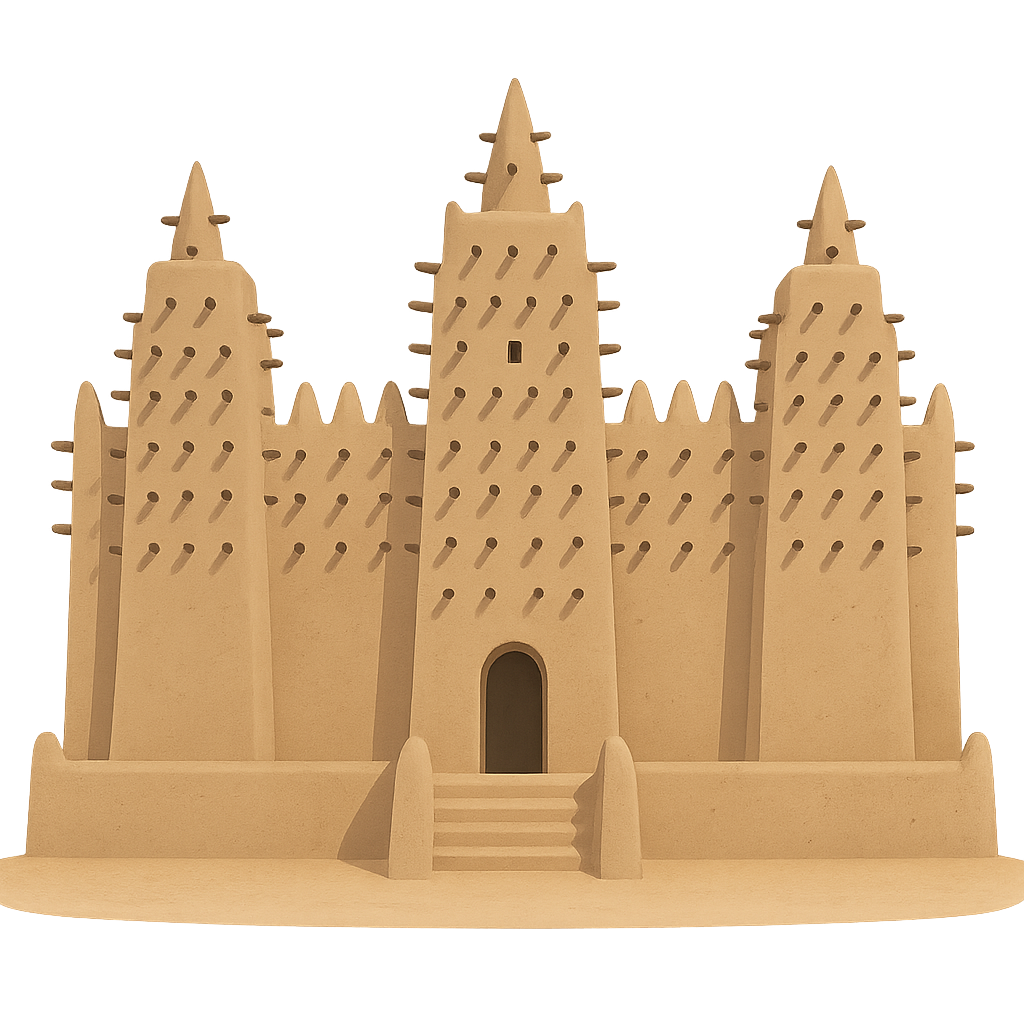
My most glorious era began in the early 14th century, when the powerful Mali Empire embraced me. The empire's famous ruler, Mansa Musa, was one of the wealthiest people in all of history. When he made his legendary pilgrimage to Mecca in 1324 CE, he traveled with a procession so vast and so rich with gold that he became known throughout the world. His journey put my name on the maps of Europe and Asia. But Mansa Musa understood that true wealth wasn't just about gold. He brought back brilliant architects and wise scholars to my city. Under his patronage, magnificent mosques of mudbrick, like the famous Djinguereber, rose toward the sky. Most importantly, he nurtured the growth of my University of Sankoré. I became a shining beacon of learning, drawing poets, mathematicians, doctors, and astronomers from across the Islamic world. My libraries swelled with hundreds of thousands of manuscripts on every subject imaginable, from law and philosophy to astronomy. It was then that I earned my proudest nickname: 'The Pearl of the Desert.'
Like all great empires, the golden age of the Mali and later the Songhai Empire could not last forever. After a devastating invasion following the Battle of Tondibi in 1591 CE, my time as a powerful political center began to fade. Invaders came and went, and trade routes shifted. My wealth declined, and my influence weakened. But my people never forgot what my true treasure was. They became the secret guardians of my knowledge. As chaos swirled around me, families took it upon themselves to protect the thousands of precious manuscripts. They hid these priceless books, containing centuries of wisdom, by burying them in chests under the floors of their homes or in sealed caves deep in the desert. For generations, these books were passed down in secret, a silent promise to keep the light of learning alive, even in the darkest of times.
Today, I am a UNESCO World Heritage site, a place recognized for its incredible history and unique earthen architecture. Though I have faced many modern challenges, my legacy shines on. Experts from around the world are working tirelessly with local families to preserve, study, and share the ancient manuscripts that were so bravely saved. These texts are a window into a brilliant past, revealing advanced knowledge of astronomy, medicine, law, and poetry from a time when my city was a global center of intellect. My story is a powerful reminder that while gold and power can fade, knowledge is a treasure that, when cared for, can enlighten the world forever. I stand proudly as a testament to the enduring spirit of my people and a time when a city in the heart of Africa was one of the brightest centers of learning in the entire world.
Wow facts
About
A historic city in Mali, West Africa, that was a major center for trans-Saharan trade and Islamic scholarship from the 14th to the 16th centuries, renowned for its universities and vast libraries of manuscripts.
Take a Quiz
Question 1 of 5
What is the main idea of the story about Timbuktu?
Explore next





Want to do even more?
Go beyond exploring. Unlock tools that turn every story into real learning.

Storypie Plus for families
Full stories, quizzes, and printables. Nights and car rides, sorted.
- Unlimited audio stories
- Create Mode: your child stars in the story
- Offline downloads
- Printable worksheets & coloring pages

Why Storypie for Schools
Students engaged. Prep in seconds. Evenings back to you.
- Worksheets & Quizzes
- Classroom Management
- Formative Assessment
- Custom Curriculum & Lesson Plans
- 27 Languages

Why Storypie for Homeschool
Curriculum done. They'll ask for more. Hours back in your day.
- Worksheet Generator
- First-Person Audio Stories
- Built-in Comprehension Quizzes
- Custom Curriculum & Lesson Plans
- Print & Go Activities