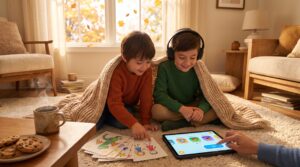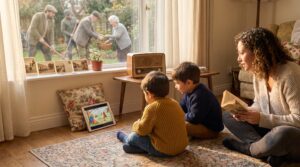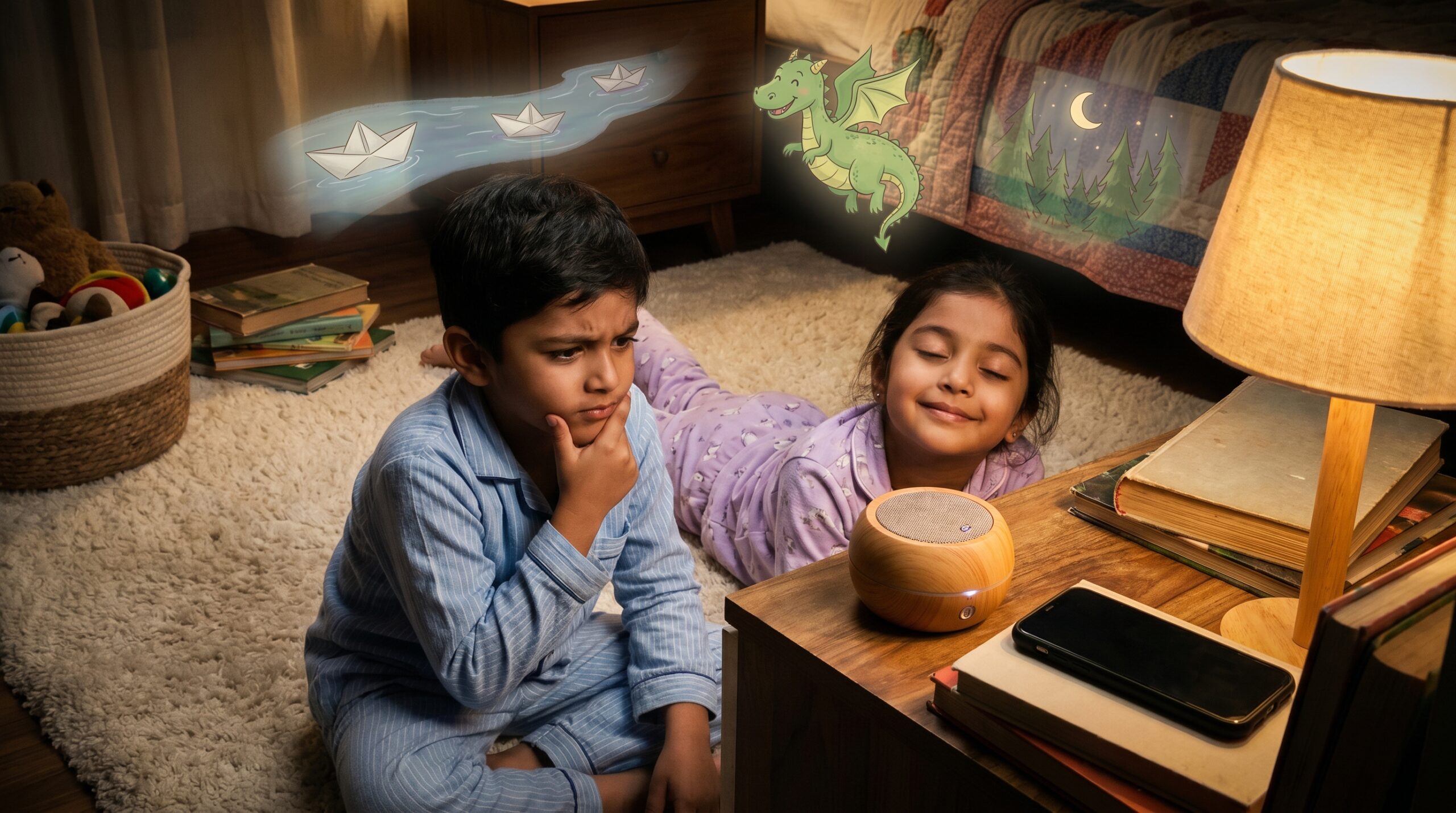
Audio-first bedtime routine changed our evenings. I swapped the tablet for ten calm minutes of audio and our bedtime became gentler. From frantic scrolling to a soft ritual, the change felt wonderful and surprisingly simple.
Why an audio-first bedtime routine works
First, audio removes visual clutter. Therefore the brain can build pictures from words. Cognitive Load Theory shows working memory has limited capacity. In short, when we remove the visual channel we free mental space for imagination. A 2024 study found that viewers reported significantly higher cognitive load when sound was turned off while watching subtitled videos, highlighting the critical role of audio in reducing cognitive load.
Also, models like Baddeley’s and dual-coding explain this effect. Spoken words plus imagined images make richer memories than visuals alone. In plain terms, children hear a voice and their minds draw the scene. This process fuels creativity and makes stories stick. Additionally, a 2024 Scientific Reports EEG study found strong, quantifiable neural signatures for imagined auditory experiences, providing scientific evidence for the cognitive engagement and imaginative capacity fostered by audio experiences.
What this looks like for kids
In practice, an audio-first bedtime routine gives several simple gains. Below are clear benefits that parents and teachers notice.
- Less visual processing. Audio lowers simultaneous sensory load and keeps working memory light, an essential factor since a 2024 review in Educational Psychology Review notes that comprehension costs tend to appear once playback speed exceeds about 2×.
- Active imagination. Without pictures, children create characters, settings, and action.
- Language gains. Listening boosts vocabulary, narrative skills, and later reading readiness.
For many kids, this is pure kid-brain fireworks. Moreover, it feels cozy and playful. Children often describe vivid scenes after a short story.
Research-backed perks
There are a few evidence-friendly perks to note. First, removing screens reduces blue light and mental hyperarousal. As a result, melatonin can do its job and sleep comes easier. Second, oral storytelling and radio drama show long cultural history. They worked for generations to teach and delight kids. Finally, calm, well-paced audio often holds attention more gently than bright, fast video. However, it’s important to manage playback speed, as experimental comparisons showed that an audio-only group listening at 2× speed scored on average ~12% lower than a 1× audio-visual group, indicating the increased cognitive load for audio-only at high speeds.
How to try an audio-first bedtime routine tonight
Start small. Pick ten minutes and keep it short. Short segments fit child attention spans and make the habit stick.
- Timebox it. Use a ten-minute segment to match short attention spans.
- Make it cozy. Dim lights and keep volume soft and safe.
- Co-listen. Ask one quick question after listening, like What color were the pirate’s boots?
- Add a tiny task. Draw a scene or act out a line together.
- Repeat nightly. Small rituals become comforting and predictable.
If you want a plug-and-play option, try Storypie audio stories. Or browse to Explore Storypie story library to find short bedtime gems that match your child’s age and mood.
Caveats and quality
Not all audio is equal. Fast, noisy, or ad-filled content can overstimulate. Therefore choose clear voices and gentle pacing. Also mind volume for hearing safety.
For kids with reading challenges, like dyslexia, audio can be especially empowering and inclusive. In addition, high-quality production helps the story land in a calm way. Remember, cognitive load can impair brain functioning during auditory and linguistic stimuli processing, emphasizing the importance of managing cognitive load to enhance engagement with audio content, as highlighted in a 2024 study.
Wrap up
Audio-first bedtime routine lowers cognitive load and trains imagination. It also supports language development and helps evenings feel quieter. Start small. Ten minutes. One shared story. A quick, joyful question.
Try it tonight and watch the polka-dot pirate delight appear in your child’s drawings. Then enjoy the calm.