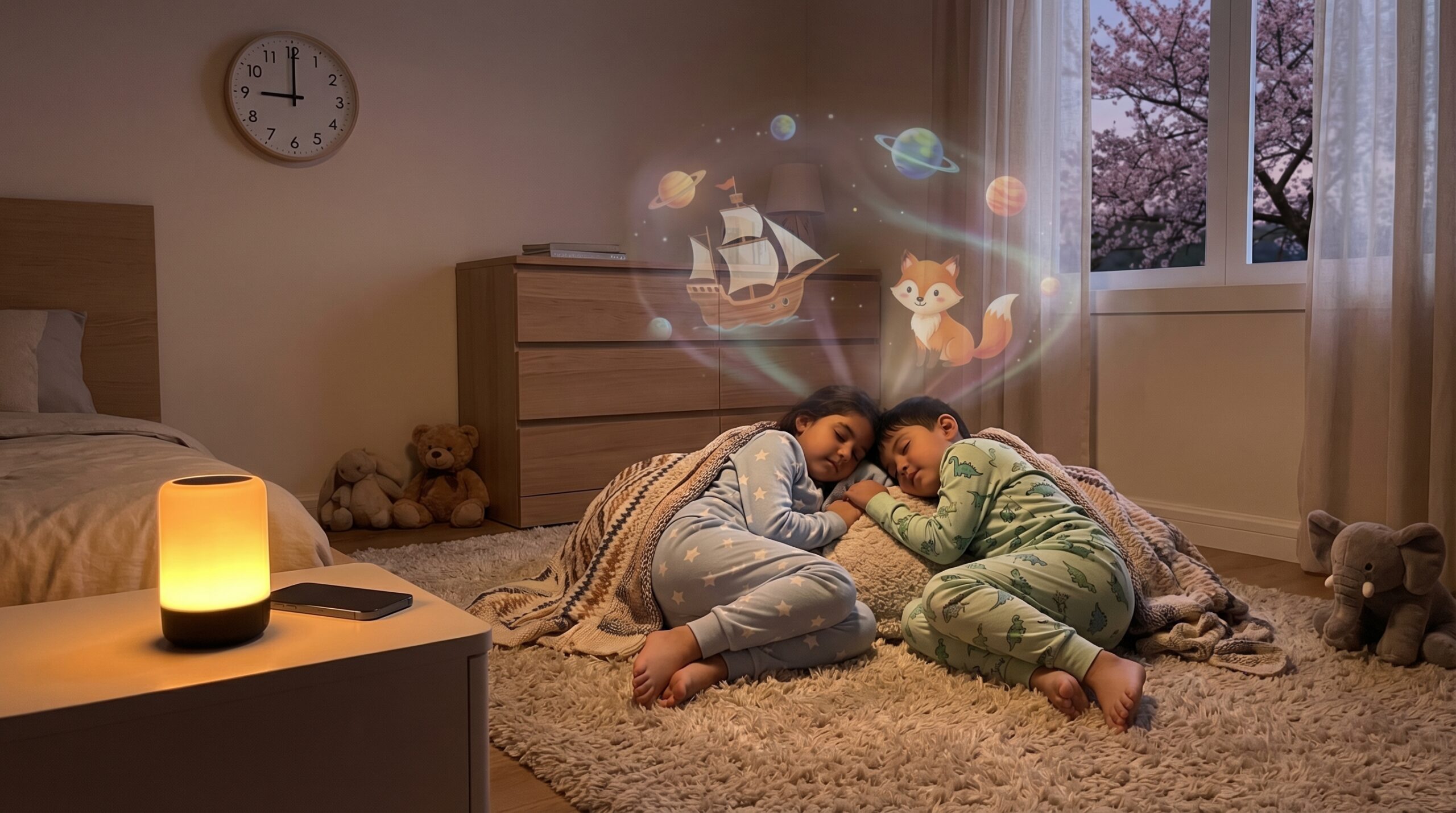
Audio-first bedtime stories create calmer nights and bigger imaginations. I build products and tell bedtime stories for a living. One spring evening I swapped the glowing screen for a Storypie audio story and watched the room exhale. My child closed their eyes, painted an internal movie, and fell asleep calmer than usual. That quick test shows the core idea: audio-first reduces visual cognitive load and frees up the imagination. In fact, a 2024 study found that viewers reported significantly higher cognitive load when sound was turned off while watching subtitled videos, illustrating how audio can effectively reduce cognitive strain.
How audio-first bedtime stories help
There are three simple reasons audio-first works. First, it reduces what a child must hold in working memory. Working memory is small. When you remove bright images and rapid visual change, you cut extraneous load. Therefore the brain has more space for the story. That leads to better comprehension and less bedtime resistance. Research from a 2024 review in Educational Psychology Review also reports comprehension costs when audio or audio-visual materials are accelerated beyond about 2× speed, highlighting the importance of pacing in audio formats.
Second, audio lets imagination run. When children listen, they build the picture inside their heads. Neuroscience shows that listening engages language areas and parts of the brain tied to visual imagery. A 2023 fMRI study indicates that information load in a spoken narrative correlates positively with the brain’s functional connectivity, suggesting that audio narratives can enhance mental imagery and cognitive engagement. So the child creates the scene. That boosts creativity and ownership of the story.
Third, audio supports better sleep cues. Audio avoids blue light that suppresses melatonin. In a dim room, low-volume audio is calming. As a result, children relax and wind down more smoothly. This aligns with the growing trend towards audio consumption; data from Edison Research shows that 47% of U.S. persons age 12+ had listened to a podcast in the past month, reflecting a shift towards audio formats.
Quick tips to try tonight
Audio-first is not a ban on visuals. Instead, it is a deliberate choice for calm, low load, and rich inner images. Short routines work best. Try these steps.
- Pick one short story. Keep it five to fifteen minutes.
- Dim lights and move screens away. Use a small speaker or a locked, dimmed device.
- Play the story. Then let silence follow for a minute or two.
- Repeat the routine most nights. Predictability builds the sleep cue.
Co-listening is especially lovely. When you listen together you can pause, explain a word, or smile at a funny detail. Also keep volume safe. For kids, keep levels well below hazardous thresholds and avoid headphones for long night listening.
Practical note on routines
Ten minutes of a spoken story gives the brain a clear, low-demand signal. In practice, this signal says: listen, imagine, relax. Audio-first bedtime stories fit neatly into short, predictable routines. Try the same short story for several nights. That repetition strengthens the calm cue and makes bedtime smoother.
Why this matters for learning
Audio is rich language input. Repeated exposure to spoken rhythms and vocabulary helps sentence structure and later reading comprehension. It is also inclusive. Children with dyslexia or visual impairment can meet the same narrative world as others. In short, audio continues a long human oral tradition in a modern, portable form.
If you want to give this a try, play a ten-minute Storypie audio story tonight. For example, try the Storypie app or browse the Storypie homepage. Small changes add up. Audio-first bedtime stories are surprisingly powerful for tiny imaginations and make bedtime extra cozy.