
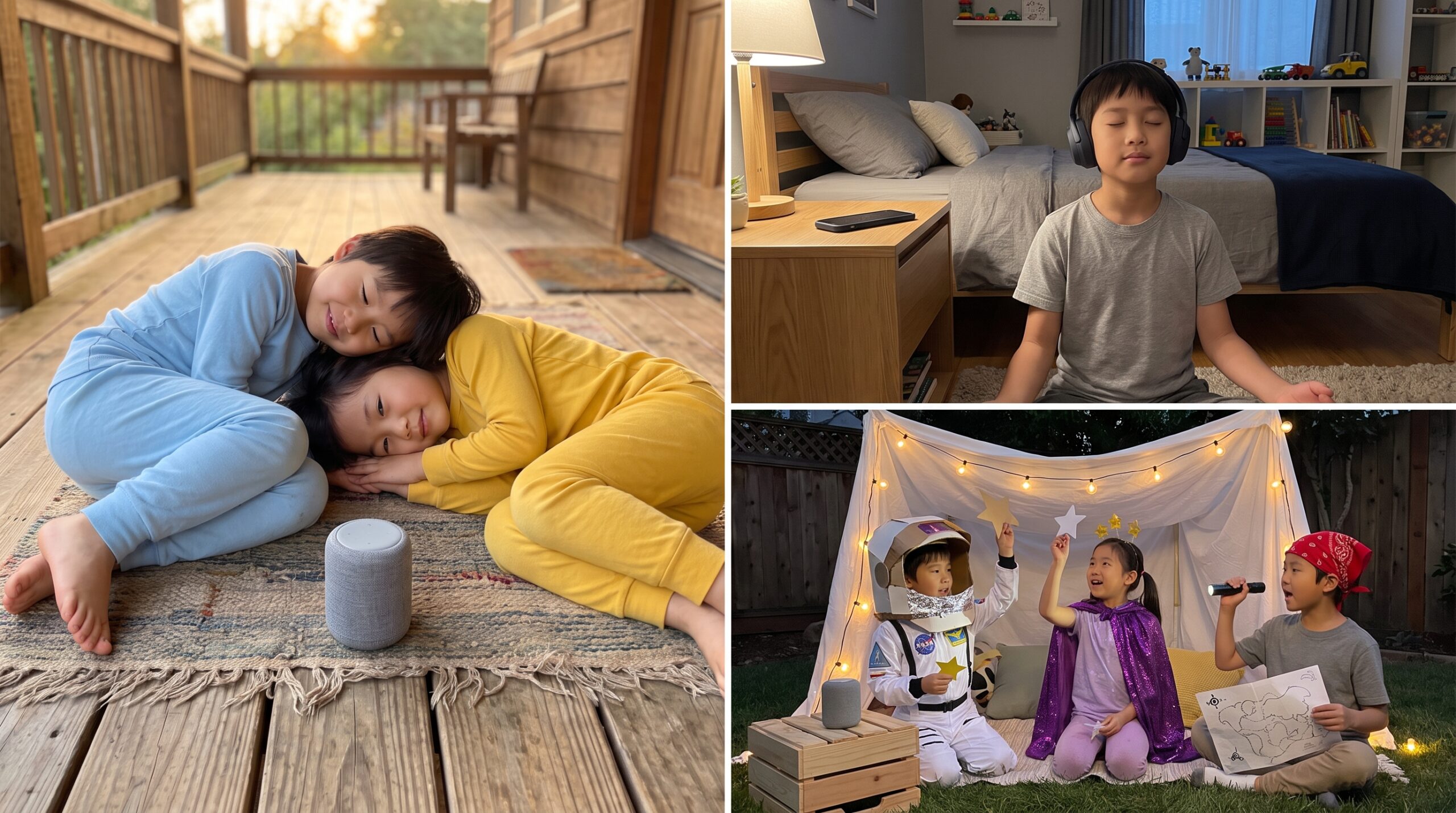
Audio-first cognitive load is a simple design choice that helps children listen and imagine more. By putting sound before screens, you lower visual clutter and free working memory. Parents and teachers notice calmer attention and richer play. In fact, a 2026 report by the National Literacy Trust found that 47.3% of children and young people aged 8 to 18 listened to audiobooks, podcasts, or both, with 56.4% of listeners engaging at least once a week, highlighting the growing trend of audio consumption among youth.
Audio-first cognitive load and imagination
When designers choose audio-first cognitive load they let a single voice open huge worlds. Listening asks the brain to build images from words. As a result, children create unique dragons, secret forts, or peppermint forests in their minds. Research indicates that students who listen to material they have also read retain 20–40% more on follow-up tests than peers who only read, underscoring the effectiveness of audio in enhancing retention.
Neuroscience shows that listening activates language, memory, and imagery centers. Therefore, mental simulation becomes the engine of creativity and play. A meta-analysis published in 2023 examining imagination strategies in multimedia learning found that using imagination strategies yielded moderate positive impacts on learning performance, indicating that engaging the imagination is beneficial for cognitive development.
Why this matters for learning
Audio-first cognitive load reduces extra inputs so children use more working memory for meaning. Also, hearing stories helps vocabulary and sentence processing. Finally, audio supports longer attention spans without bright screens pulling focus. In a physiological study comparing audiobook versus video-story formats, listeners exhibited average heart rates about 2 beats per minute higher, indicating greater engagement when listening to audio, which supports the idea that audio can create a more engaging experience.
- Lowered load: audio reduces competing visuals and frees mental space.
- Better language: children hear new words and natural sentence flow.
- Deeper focus: sound supports sustained listening and memory for stories.
Developmental and practical notes
Young children prefer human speech and respond to rhythm and tone. Oral storytelling is ancient and universal. As a result, it builds memory, values, and social connection in tender, powerful ways.
Audio is also inclusive. Children with visual impairment or dyslexia gain full access to rich stories. In addition, audio works anywhere: in a fort, on a car ride, or during quiet play. A study published in 2026 found that video-based multimedia learning environments resulted in greater cognitive load compared to audio-only presentations, reinforcing the cognitive advantages of audio over video.
A short scene
Imagine a five year old under a blanket with a small torch. The narrator says, “A moonlight fox guards the path.” The child draws the fox with glitter. Then the child becomes the fox in dramatic play. That leap from listening to doing shows why audio fuels imagination.
Design matters: how audio-first supports play
Good audio-first content uses clear narration and gentle pacing. Thoughtful soundscapes can hint at place without fixing images. Poorly paired audio and visuals may split attention and increase cognitive load. Thus, audio-only done well leaves space for vivid mental pictures.
For families and teachers, try a short Storypie tale on warm evenings to calm kids and spark play. Use a soft speaker rather than bright screens or small headphones for little listeners. Keep volume safe and choose age-appropriate stories.
Explore Storypie audio stories to find calm, playful listening and gentle pacing. Visit Storypie to browse tales and try family-friendly routines.
Final thought
Choosing audio-first cognitive load is both a design choice and a child development choice. It reduces visual overload, grows language, and gives children tools to imagine wildly. Listen together, pause for wonder, and watch play bloom.
Want to try this tonight? Play a short Storypie story, dim the lights, and let a single voice open a whole new world.