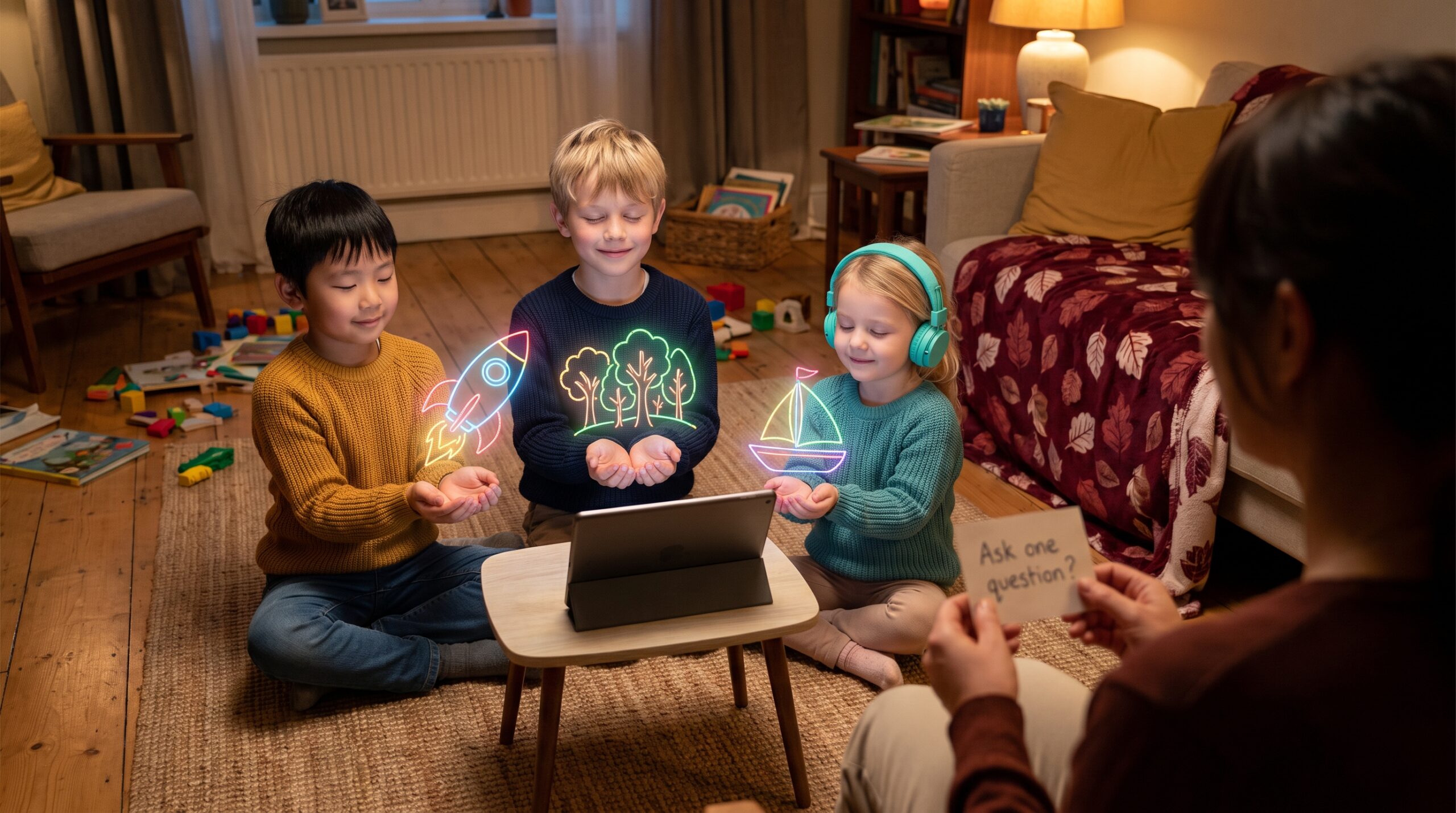
Audio-first storytelling for kids places sound at the center of a listening experience. Because the voice leads, children can follow plots and learn new words with less effort. This approach feels cozy and wonder-full.
Why audio-first storytelling for kids works
Audio-first means we prioritize spoken words, music, and effects over visuals. When narration carries the story, young listeners need not divide attention between text and pictures. Research shows that this can significantly reduce cognitive load; a 2024 study found that viewers reported a mean Effort score of 4.84 when watching subtitled videos without sound, compared to 3.07 with sound on, highlighting how audio can ease cognitive demands. So their brains use more space to hold meaning, vocabulary, and story beats.
How listening lowers cognitive load
Working memory is limited, especially for young children. When we reduce visual demands, extraneous load drops. A 2024 EEG-based study demonstrated that audio characteristics can reliably estimate cognitive load, achieving a peak F1-score of 0.98 when assessing psychoacoustic parameters, highlighting just how influential audio can be on our cognitive processes. As a result, the phonological loop focuses on language. Clear pacing, expressive tone, and gentle pauses help comprehension. In practice, this leads to stronger recall and easier word learning.
How sound sparks mental imagery
Without pictures to show every detail, listeners paint scenes inside their heads. For example, a narrator might say “Leaves crunched under tiny boots, and a bell chimed once.” Immediately, each child imagines a different path, a different bell, and different boots. This personal imagining strengthens creativity and emotional connection. A 2026 study found that when participants listened to unfamiliar music or speech excerpts and then described the imagined story, their neural activity patterns were highly similar, indicating that audio evokes shared imaginative representations.
Simple routines that fit daily life
Short audio moments slide into busy routines. Try these low-effort ideas.
- Bedtime: pick a calm, slow-paced episode.
- Car rides: let audio turn traffic into traveling theater.
- Kitchen play: a two-minute tale while snacks are ready adds delight.
- Nature walks: replay an episode and name sounds that matched the path.
- Co-listening: adults ask one open question after the story to boost language.
Accessibility and balance
Audio-first is powerful, but it is not one-size-fits-all. Children with hearing needs still benefit from captioned transcripts or visual supports that match the audio. Also, some skills need visual practice, like letter shape recognition. Think of audio-first as a complement in a balanced literacy mix. In fact, a 2026 report by the National Literacy Trust found that 47.3% of children and young people aged 8 to 18 are listening to audiobooks, podcasts, or both, with 56.4% of them engaging at least once a week, highlighting the growing trend of audio consumption among youth.
Try it tonight
Cozy up and press play. Storypie makes listening easy with persistent playback and age-appropriate narration. Try a short episode during your next routine to see small sparks of imagination grow.
Get the Storypie app to start an audio-first routine tonight.
Audio-first storytelling for kids reduces cognitive load and invites rich internal worlds. It combines oral tradition with modern narration to boost vocabulary, prosody, and listening comprehension. Finally, a simple way to make imagination bloom.