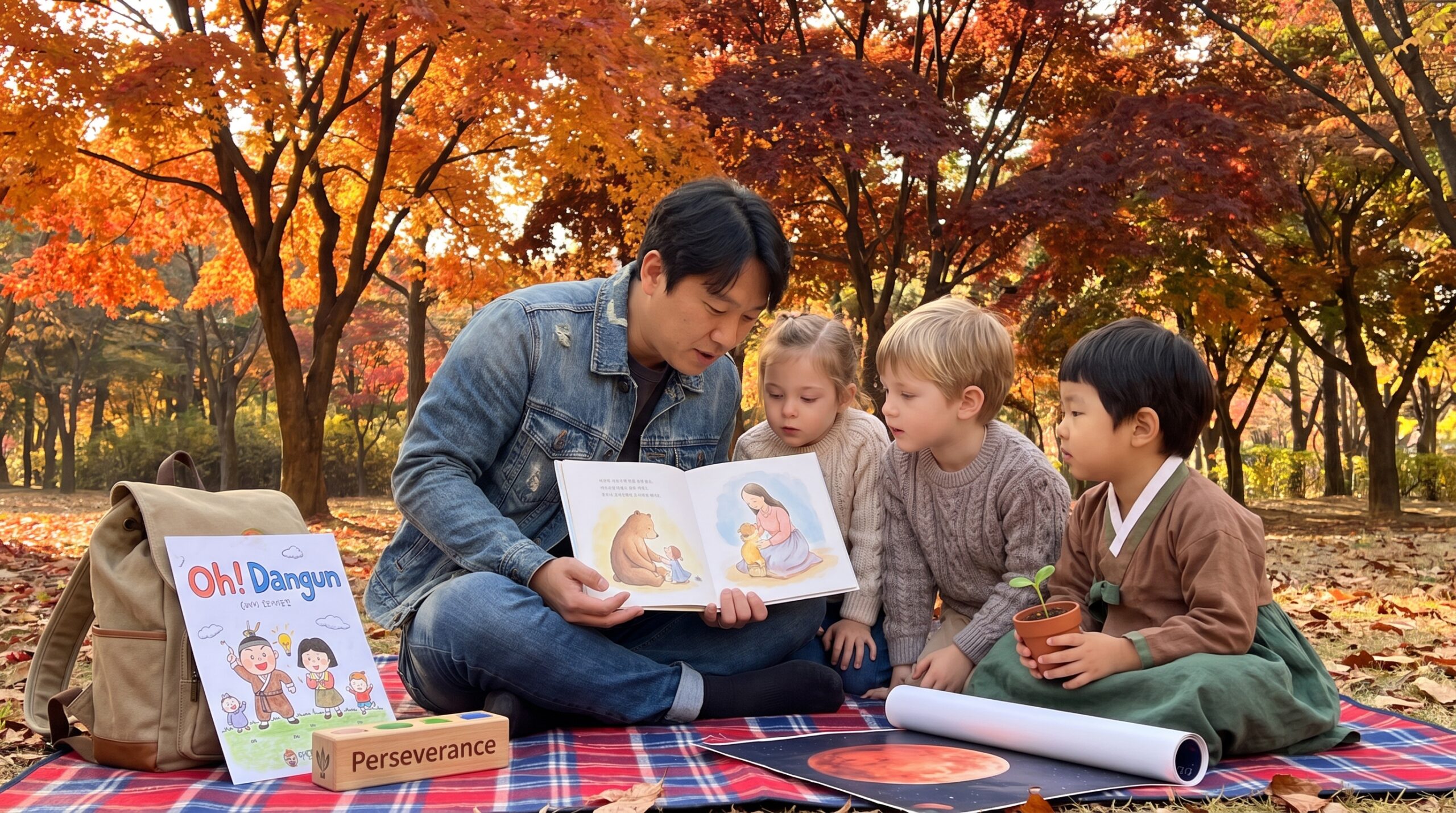
Ungnyeo origin myth begins with a cave, garlic, and a patient bear. Families and teachers will find it simple and vivid. The tale names Ungnyeo as the bear who becomes human, and it feels quietly powerful.
Ungnyeo origin myth: the story
In the oldest written record, a heavenly figure named Hwanung descends beneath a sacred tree. A bear and a tiger ask to become human. Then Hwanung gives them 20 cloves of garlic and a bundle of mugwort. He tells them to stay away from sunlight and to eat only those foods for a set time of 100 days. The tiger cannot endure. Meanwhile, the bear waits and keeps faith. After the trial, the bear changes into Ungnyeo and becomes a woman. Some versions of the tale even note that Ungnyeo transformed in just 21 days, emphasizing her remarkable endurance. Later, Ungnyeo prays for a child and births Dangun, who people call the founder of Gojoseon, a kingdom established in 2333 BC.
Ritual details and symbols
The ritual is simple yet striking. Often the story counts a waiting period of one hundred days. Garlic and mugwort appear as strong sensory markers. The cave setting feels like a cozy, safe place of transformation. Scholars see echoes of shamanic practice and clan origin myths in these images. Also the contrast between the restless tiger and the patient bear brings the lesson clearly into view. The earliest recorded account of the Ungnyeo myth appears in the Samguk Yusa, compiled by the Buddhist monk Iryeon in the late 13th century CE (specifically 1281 CE), making it the principal written source for this foundation myth.
Why the Ungnyeo origin myth matters for families
Parents and teachers share this tale for its gentle lessons. It highlights patience, change, and beginnings. For young listeners, the story offers bright rituals and clear characters. Also it helps children imagine perseverance in a safe way. Many families use the tale to spark questions about courage and hope. Interestingly, a 2025 academic study analyzed modern media and found that contemporary webtoons often focus more on Ungnyeo’s narrative than on Dangun’s, indicating a resurgence of her cultural prominence in modern reinterpretations.
Read or listen to a story about Ungnyeo now: For 3-5 year olds, For 6-8 year olds, For 8-10 year olds, and For 10-12 year olds.
Simple ideas to try
- Start with a sensory cue like garlic or mint to suggest mugwort.
- Ask a prediction question. Who will last in the cave, the tiger or the bear?
- Invite a drawing of Ungnyeo as a bear and then as a person.
Also try a short family activity: read or play an audio version of Ungnyeo, sit quietly for a brief breathing moment, and invite each child to name one small goal to practice. This small ritual echoes the tale and builds patient habit.
Finally, Ungnyeo is a small, mighty tale of patience, change, and roots. At Storypie we love Ungnyeo’s quiet courage. If you want, explore the Ungnyeo story or try more family myths on Storypie. Visit our app page for gentle story breaks and curated tales.
Read or listen to a story about Ungnyeo now
Tip: at your next story break, ask what your child might patiently work toward. Gentle questions like that can spark resilience and wonder.