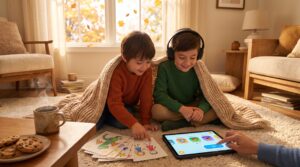
Audio-first stories for kids put voice before visuals. They free the eyes and use the ear. That small change matters a lot for young brains. When we lower visual clutter, children follow the plot more easily. They build their own pictures. Listening invites active imagining instead of passive watching.
How audio eases cognitive load
Cognitive load theory breaks mental work into three parts. First, intrinsic load is the story itself. Second, extraneous load is everything that distracts. Third, germane load is learning and meaning making. Audio-first stories for kids shrink extraneous load. For example, a single spoken line like “the wind rattles the shutters” lets a child layer color, sound, and motion. Meanwhile, no animated menu competes for attention. As a result, kids use more brain energy for imagining. A 2024 mixed-methods study found that viewers reported significantly higher cognitive load when sound was turned off while watching subtitled videos, illustrating the direct impact of audio on cognitive load.
Science made simple
The modality principle supports this idea. Speech travels down the auditory channel. Text and pictures use vision. When we avoid redundant visuals, comprehension improves. Also, dual coding shows words trigger mental images. Neuroscience finds listening activates parts of the brain used for perception and imagination. A 2023 neuroimaging study indicates that listening to narratives engages a wide, bilateral set of cortical regions, providing evidence that audio narratives support active meaning construction. In plain words, a narrated fox can smell like leaves and look like a hero in a child-made coat.
How audio fuels imagination
Audio hands imagination an open canvas. It gives outlines, not paint by numbers. Children fill in texture, color, and sound. Let a dragon wear a polka-dot scarf if that delights your child. That choice is valid and often magical. The act of building mental images also strengthens vocabulary and narrative skill. A 2024 study demonstrated that cognitive load can impair brain functioning during auditory and linguistic stimuli processing, further emphasizing the importance of managing cognitive load to enhance engagement with audio content.
Bedtime, calm, and routines
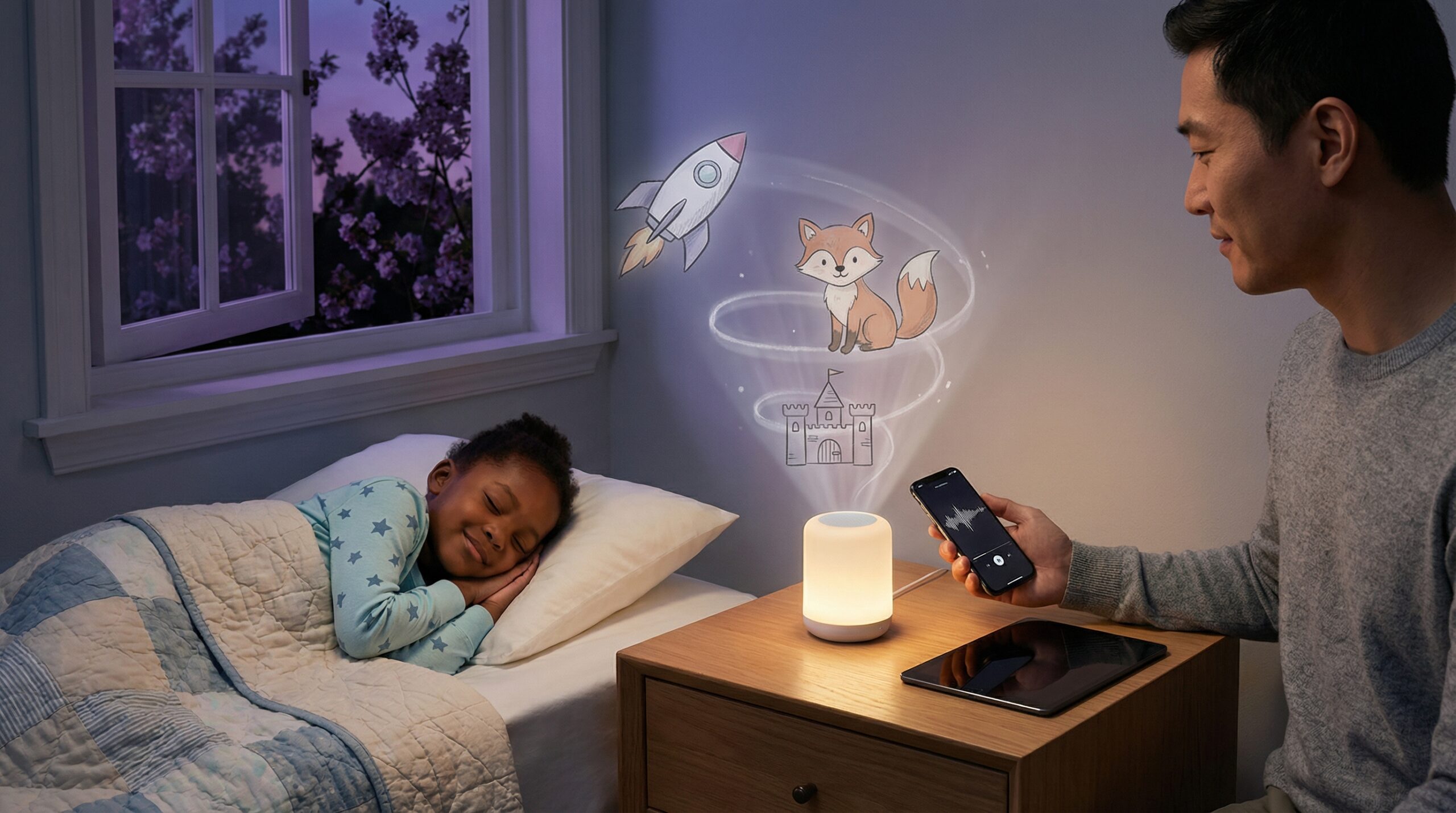
Audio fits bedtime routines beautifully. No bright screens interrupt melatonin. Play a 10 to 20 minute story under a warm lamp. Then tuck in soft linen and dim the light. A calm voice and light sound cues ease the transition to sleep. Shared listening creates tiny rituals that signal calm. A small ritual can have big calming power.
Accessibility and language
Audio supports young readers and learners with dyslexia. It helps multilingual homes and children who are visually impaired. Listening teaches cadence, intonation, and new words without decoding text. Also, audio builds sequential attention and reduces multitasking. In short, it asks for one thing: to listen along. A 2025 meta-analytic review reported that the modality principle, which emphasizes presenting words as spoken narration rather than on-screen text, is among the design principles showing some of the largest effects in enhancing learning environments.
Practical sensory tips
- Keep sessions short and steady. Try 10 to 20 minutes.
- Use sleep timers, airplane mode, and offline files to avoid interruptions.
- Choose calm stories and narrators with steady pacing.
- Create tiny playback cues: one soft bell, a page-turn sound, a hush signal.
A living tradition
Oral storytelling long predates writing. We are wired for listening, turn-taking, and imagining together. Audio-first stories for kids are not a fad. They return to a time-tested way to teach, soothe, and spark wonder.
For a gentle bedtime swap tonight, try a Storypie audio tale. Find cozy Storypie bedtime tales on our site and make listening a small, joyful ritual.