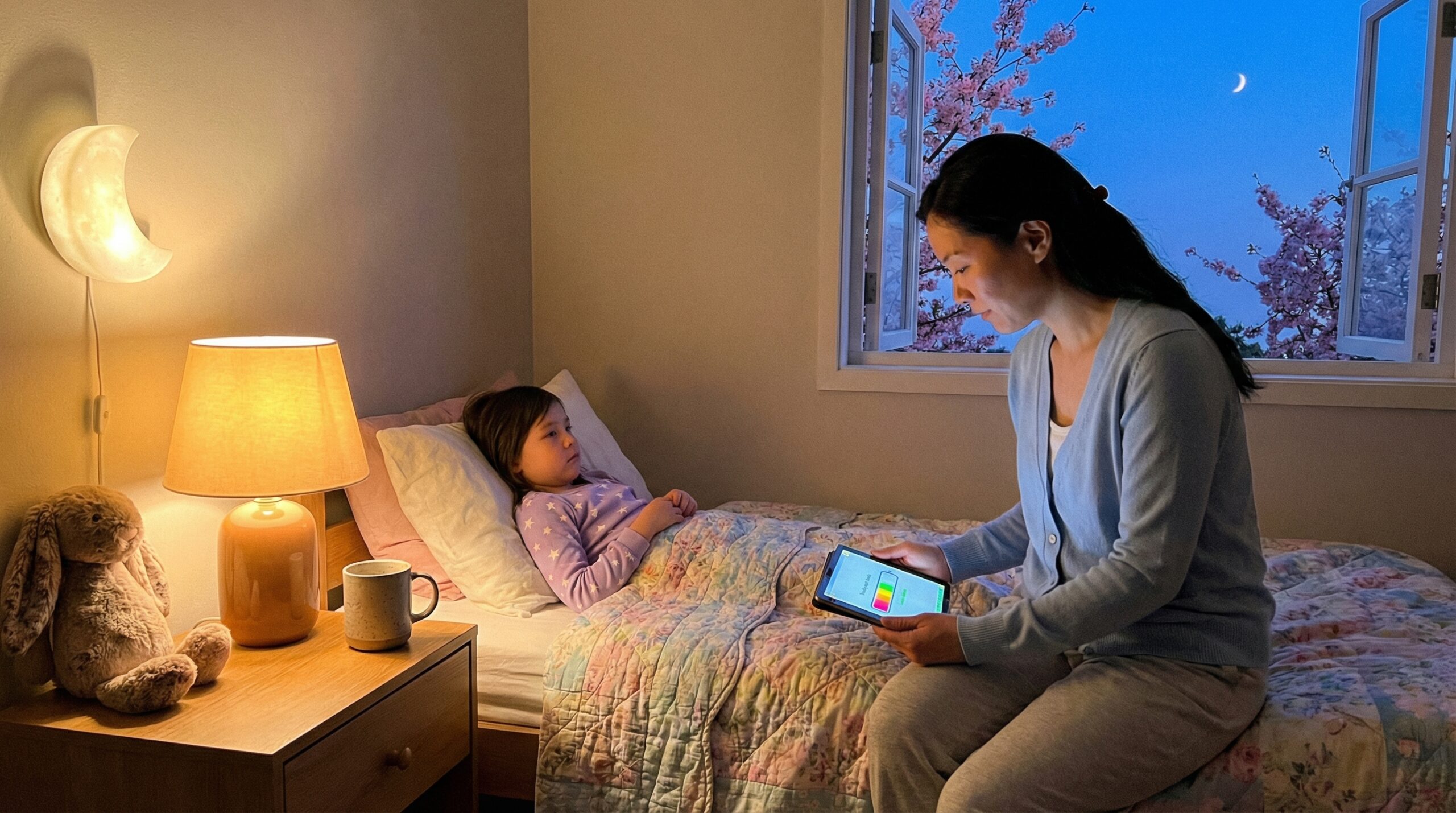
Bedtime mini story ritual helps kids calm down and signals sleep time. This short, predictable habit takes three to seven minutes. First, choose a calm tone and a simple scene.
What a bedtime mini story ritual does
The mini story slows arousal. It creates predictability. It gives a small dose of closure before lights-out.
Also, pediatric experts recommend predictable bedtime routines. Consistent cues lower physiological arousal and shorten time-to-sleep. Short, calm activities beat screens and rough play. In fact, a national C.S. Mott Children’s Hospital poll found that 90% of parents report having a bedtime routine for their young child, with 67% including bedtime stories.
Why brief stories work
Short stories fit attention spans. They repeat a gentle signal each night. Over time, the body learns to wind down faster.
Moreover, repeated micro-stories boost vocabulary and emotional regulation. Even a few minutes of calm language helps development. Research also shows that a two-week nightly bedtime reading routine can significantly improve empathy and creativity in children aged 6–8, enhancing cognitive empathy and creative fluency according to a 2026 study.
When to use the mini story ritual
Aim for the mini story in the final five to ten minutes before bed. Research suggests three to seven minutes works best. For many families, five minutes is perfect. In fact, in 2024, about 85.6% of U.S. children ages 2–17 had a regular bedtime most days or every day, highlighting the importance of establishing regular bedtime routines to improve sleep quality, as noted in a 2024 study.
If daylight lingers, dim lights earlier. Then play a short track or tell a tiny vignette. Repetition is the secret sauce.
How to shape a bedtime mini story ritual
Keep the shape simple. Use a calm voice, a short scene, and a predictable ending. Add sensory cues like a soft touch or a pajama zip.
Here is a micro-story example. Moon tiptoed over the roof, the cat curled, a lamp sighed, and the house exhaled. That small image gives clear closure.
Age-friendly timing
- Infants: use audio lullabies or caregiver hums for soothing.
- Toddlers and preschoolers: three to five minutes of a micro-story works well.
- School-age kids: five to seven minutes of a calm vignette fits their attention.
Also, formats vary. Live reading builds bonding. Recorded audio or app tracks give consistent length and quiet playback. Audio-only avoids blue light and still supports language exposure. A 2025 study reported that consistent bedtime routines, including storytelling started as early as 3 months, were associated with fewer night-time awakenings and longer sleep durations by age 3.
For a reliable short track tonight, try a gentle Storypie track on the app. Visit the Storypie app page for tracks and short bedtime pieces.
Signs the ritual is working
You will notice faster drifting, less fussing, and calmer mornings. If a child gets perked up, tweak timing, tone, or length. Every child is different, so observe and adapt.
Finally, the sweetest five minutes can become a daily calm spot. Small rituals settle nervous systems and grow closeness, one gentle story at a time.
Try it tonight: play a five minute track or tell a two minute vignette. For dependable short tracks and quiet playback, see the Storypie get-app page.