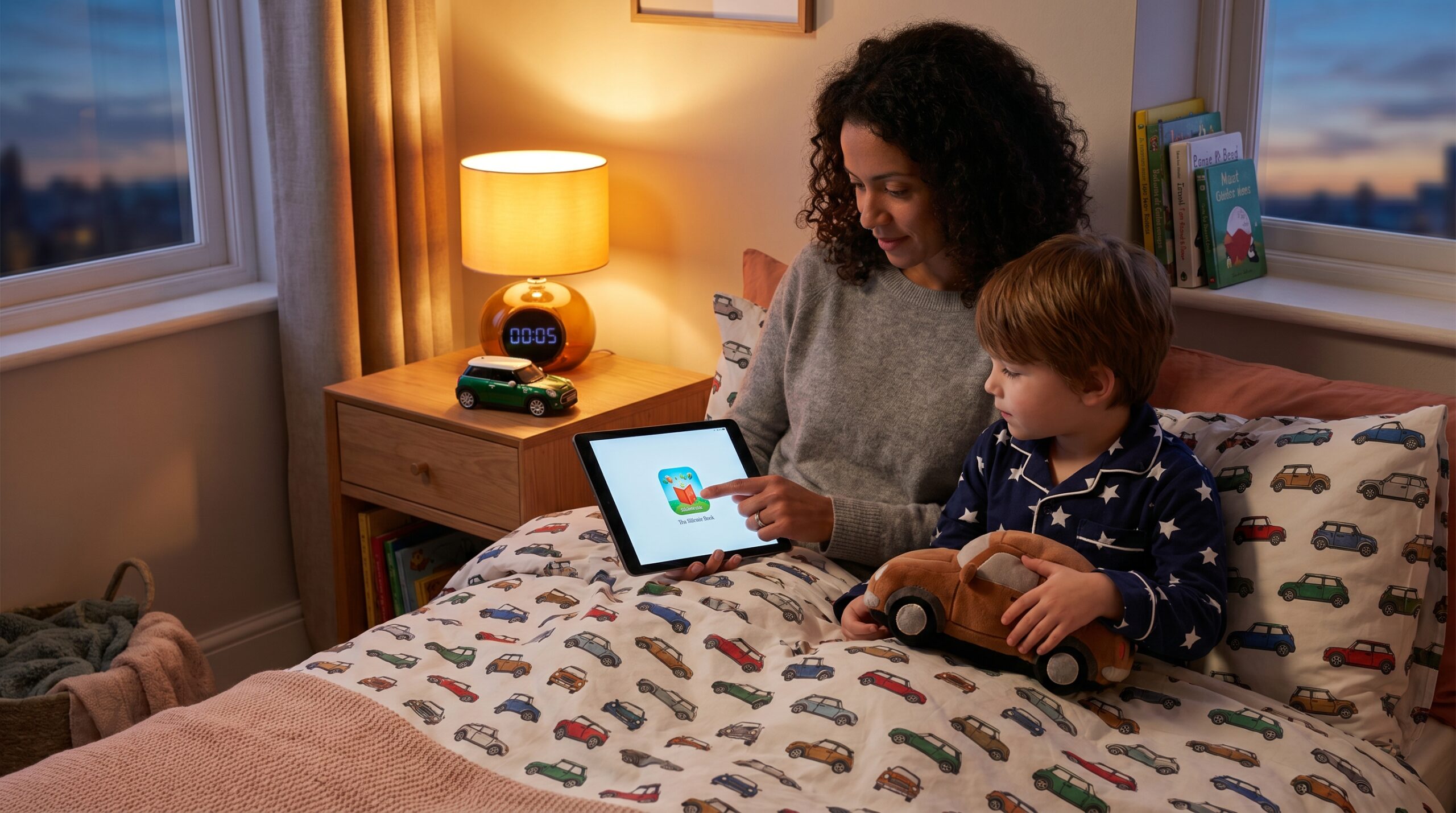
I tell bedtime stories for a living. Tonight I recommend the bedtime mini story ritual to busy families. It lasts three to seven minutes. It signals sleep. It calms bodies and minds.
Why the bedtime mini story ritual works
Short, simple routines are powerful. For example, dimming lights and lowering voices reduce physiological arousal and support melatonin rhythms. Brief, familiar tales create a predictable boundary between play and sleep. Research and pediatric guidance agree that consistent bedtime routines help children fall asleep faster and sleep more soundly. A 2025 study reported that consistent bedtime routines, including storytelling started as early as 3 months, were associated with fewer night-time awakenings, reduced sleep problems, and longer sleep durations by age 3.
Also, the ritual gives a moment of physical closeness. This soothes separation anxiety and strengthens attachment. Even a tiny, predictable story helps language and attention by offering words and structure in a calm context. Notably, a 2025 survey indicated that 90% of parents of 1–6-year-olds reported having a bedtime routine for their child, with 67% including reading bedtime stories. This underscores the prevalence of bedtime routines and the role of storytelling in them, reinforcing its importance for families.
How to use the bedtime mini story ritual tonight
Start small and repeat. The bedtime mini story ritual works best when you keep it short and steady. Try these simple steps.
- Dim lights five minutes before storytime to cue calm.
- Choose a 3 to 7 minute cozy tale or an audio that stays soft.
- Keep the voice steady and the pace slow.
- Sit close or hold hands for a comforting touch.
- End with the same closing line each night so the cue sticks.
Tiny example: moon, blanket, same goodnight line. That is it. No plot gymnastics. No rousing twists. Just the same gentle finish that whispers sleep.
Adjustments by age
This ritual fits toddlers through early school age. For infants and toddlers, use rhythmic words and extra touch. For preschoolers and early readers, choose slightly richer language but keep the mood contained. Formats can be live reading, a short audio tale, or a quiet app narration when a parent cannot read aloud.
A note on screens and consistency
Limit screen brightness and interactive content in the hour before bed. In fact, a 2024 randomized clinical trial showed that removing screen time in the hour before bed resulted in small-to-medium improvements in sleep efficiency and reductions in night awakenings. If you use an audio story from an app, choose audio-only and avoid bright images. Consistency matters more than perfect content. A steady, short bedtime mini story ritual on most nights builds sleep-friendly habits far better than an occasional long session. A clinical review from Sleep Foundation states a child’s bedtime routine usually consists of three or four activities (for example: snack, brushing teeth, pajamas, and reading a book) and recommends keeping routines short — around half an hour, or a little longer if there’s a bath included.
Finally, for hectic evenings try a five-minute cozy tale and notice how quickly the house softens. For easy options, explore cozy 5-minute tales in the Storypie story collection. Or gently try the Storypie app when you need an audio ready to go.
On a spring evening I dim the lamps, ask for a moon tale, and let those few minutes do their magic. Tiny ritual, huge payoff. Sweet dreams start small.