
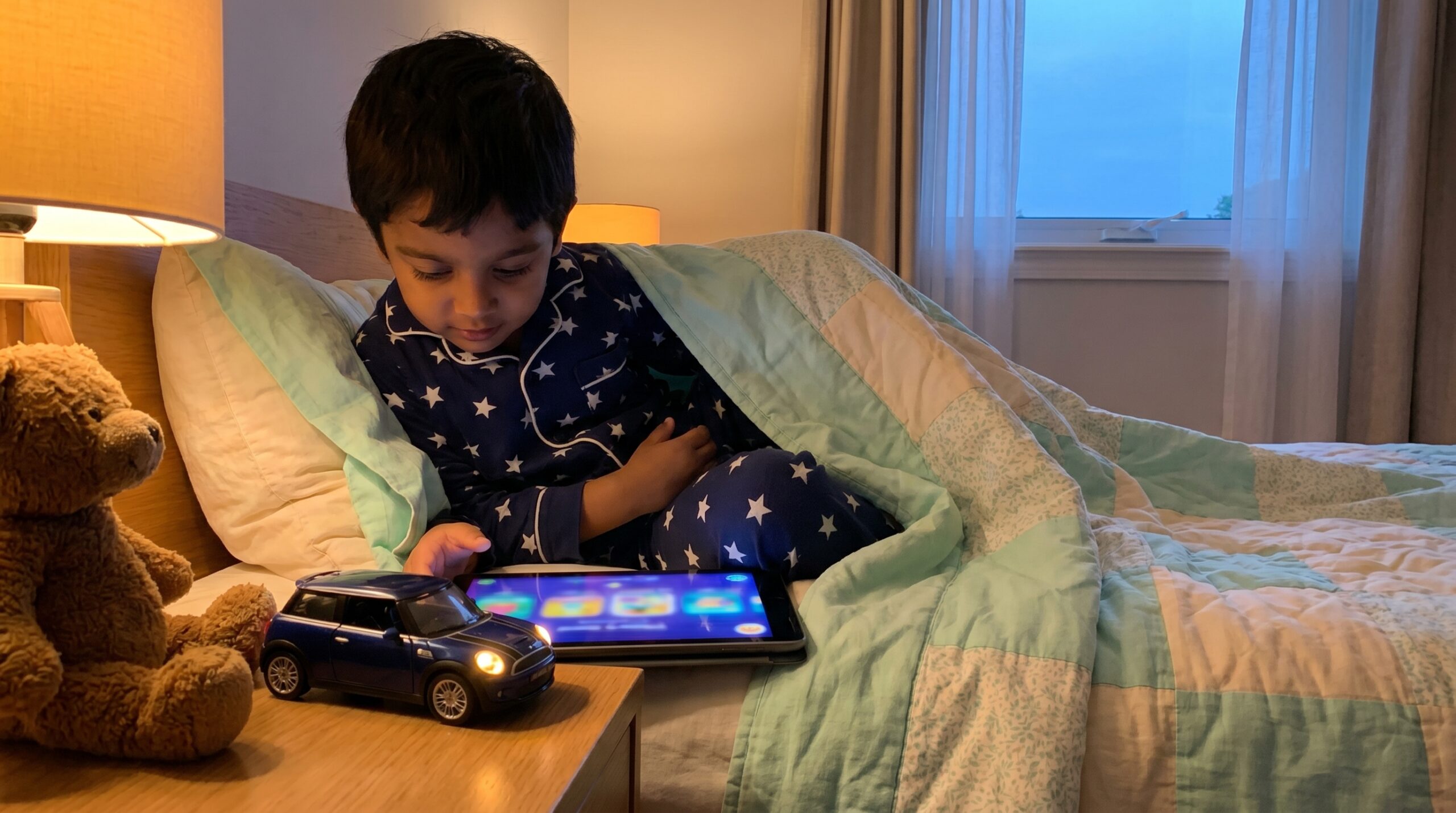
Bedtime mini story ritual slips into the last five minutes before sleep. This short, steady cue tells the brain: time to calm. Try a five-minute mini tonight and see what a tiny ritual can do. In fact, a 2025 survey found that 71% of parents agreed that storytelling helps their children wind down at bedtime, with 49% naming it their preferred method.
What is a bedtime mini story ritual?
A bedtime mini story ritual is a short, repeatable wind-down. It usually lasts three to seven minutes. Five minutes hits the sweet spot for many families. The mini uses a small story and soft cues to signal rest. Research shows that 90% of parents reported having a bedtime routine for their child, with 67% including reading bedtime stories, highlighting the significance of storytelling as part of these routines.
Why the bedtime mini story ritual works
Short routines become learned signals. For example, dim lights and soft voices help melatonin rise. Over time, the mini prompts lower attention and easier sleep. Spoken stories also support language and emotional connection. Additionally, a 2024 randomized clinical trial showed that removing screen time in the hour before bed resulted in small-to-medium improvements in sleep efficiency and reductions in night awakenings, supporting the idea of a screen-free wind-down period.
Set the scene
Keep the space simple. Sit on a low chair or a floor cushion. Use a soft throw and a small lamp with warm light. Linen or cotton feels quiet against little hands. Reduce screen light and quiet the house when possible.
Sensory cues that help
- Warm lamp or night light
- Soft blanket or favorite cloth
- Low, steady voice
- Same spot each night
A tiny but mighty script
Keep words short and predictable. Repeat a two-line opener each night. Then tell a two-sentence scene. Finally, end with a soft goodnight. Here is a pocket-sized example:
Dim the lamp. Tuck a blanket. Say: “One little star, one slow breath.” Pause. Then say: “A small boat rocks under a moon that hums. The fox snuggles in and closes its eyes.” End with a soft goodnight.
Age adjustments and safety
Infants need safe sleep: firm mattress and no loose bedding in the crib. Toddlers respond best to simple words and gentle cues. School-age children can enjoy a slightly longer mini with one extra detail. For neurodiverse kids, keep words highly predictable and sensory cues steady. A 2023 longitudinal study published in Frontiers in Sleep reported that the proportion of families with a consistent bedtime routine rose from 63% at 12 months to 86% at 24 months, linking consistent routines to fewer social-emotional problems in children.
Summer evenings and practical tips
Long summer light can blur bedtime. Use blackout curtains or set a fixed clock time. Dim lights earlier and stick to the mini. Also, try Storypie for calm five-minute minis and sleep-friendly stories. Explore calming options on the Storypie stories page. A 2025 study reported that consistent bedtime routines, including storytelling started as early as 3 months, were associated with fewer night-time awakenings and longer sleep durations by age 3, emphasizing the importance of starting early with these rituals.
A tiny test and checklist
Try this test for three nights. If your child drifts toward sleep after the mini, it works. Use a short checklist to stay steady:
- Same time each night
- Warm, dim light
- Short, repeatable opener
- No screens right before
Wrapping up: keep it short and steady
The bedtime mini story ritual is simple and timeless. It fits busy lives and tiny attention spans. Keep the routine short. Keep it steady. Let this little ritual do soft, steady work for sleep.
For more gentle bedtime stories and five-minute minis, visit Storypie for calm listening options.