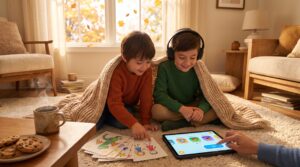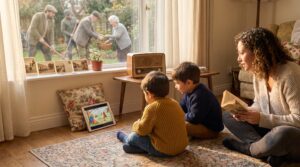
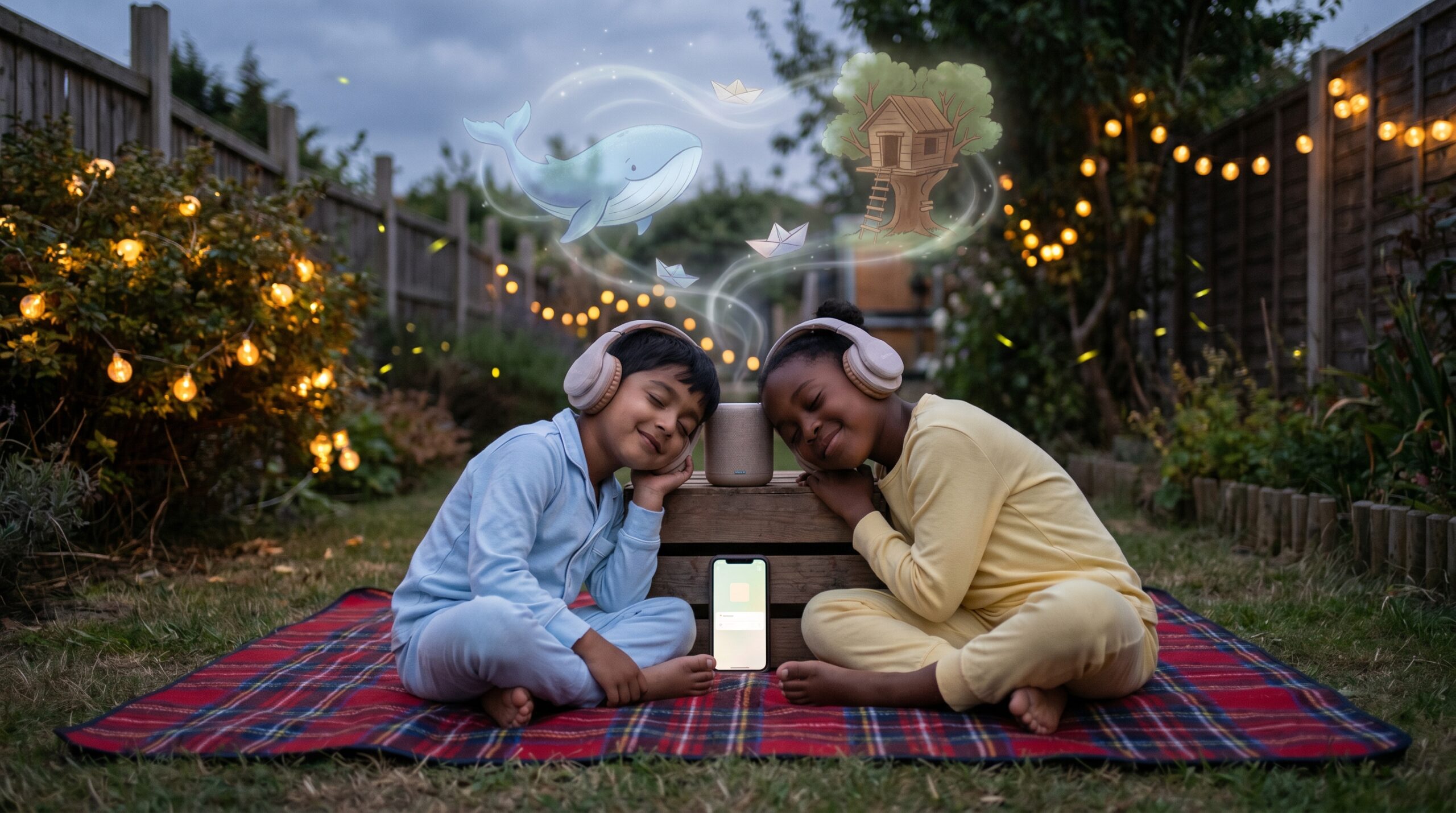
Audio first for kids reduces visual demand and frees working memory. In short, listening clears mental clutter and invites creative play. I build products and tell bedtime stories, and this choice changed our evenings. In fact, a 2024 study found that viewers reported significantly higher cognitive load when watching subtitled videos without sound, highlighting the cognitive load differences between audio and visual content.
Why audio first for kids lowers cognitive load
Working memory has limits. When a child must read and examine pictures at once, their cognitive load jumps. Consequently, comprehension can drop and attention scatters. Research indicates that cognitive load can impair brain functioning during auditory and linguistic stimuli processing, further emphasizing the importance of managing cognitive load to enhance engagement with audio content (Scientific Reports, 2024).
By contrast, audio removes most visual pressure. Therefore the brain has more space to follow plot, notice words, and imagine scenes. Also, audio simplifies input. Kids can focus on meaning instead of decoding letters and scanning images. Additionally, a 2024 study found that EEG-based cognitive load estimation achieved a peak F1-score of 0.98 when assessing psychoacoustic parameters, indicating a strong correlation between audio characteristics and cognitive load.
How listening builds imagination
When a narrator describes a moonlit forest but leaves faces and colors open, each child paints their own picture. That creative gap is pure gold.
Dual coding theory supports this. Verbal input plus self-made imagery creates stronger memory traces. As a result, audio encourages visualization and creative thinking. In practice, children who listen often create richer mental scenes than those given fully illustrated text.
Language gains from listening
Well-produced narration exposes kids to wider vocabulary and natural sentence rhythms. For young listeners, this exposure builds vocabulary and narrative sense without the decoding burden of print.
Also, audio helps children with dyslexia, visual impairments, or early readers. It gives them equal access to rich stories and spoken language models.
Bedtime, calm, and short forms
Audio fits bedtime especially well. Screen light can suppress melatonin and keep kids wired. Instead, a calm audio episode of ten to fifteen minutes removes blue light and supports winding down.
Short episodes hit the sweet spot. They are long enough to tell a complete scene yet short enough to match attention spans. Therefore they help children drift toward sleep while still offering a satisfying story arc.
Cognitive side benefits
Focused listening trains auditory attention and working memory. Following a story asks a child to hold characters and events in mind and link them across time. Also, hearing tone and pacing models social-emotional cues.
Shared listening becomes a gentle ritual. Later, simple questions deepen understanding and spark conversation. For example, ask what a character sounded like or what color the river might have been.
Try a cozy experiment
Here is a tiny plan you can test tonight. These are small, friendly steps. They keep things simple and magical.
- Pick a 10 to 15 minute Storypie episode that fits your child. (Storypie)
- Dim the lights and put screens face down.
- After listening, ask one imaginative question: What did the hero look like? What sound did the river make?
Audio first for kids is not against visual media. Instead, it reduces extraneous load, frees working memory, and invites personally crafted imagery. Try it tonight. Turn off the glow, press play, and watch imagination do its thing. It really is a tiny bedtime miracle. According to Edison Research’s The Infinite Dial 2024, 47% of U.S. persons aged 12 and older listened to a podcast in the past month, further illustrating the growing trend toward audio-first experiences.
Want more episodes and ideas? Explore Storypie for short audio stories made for children.