
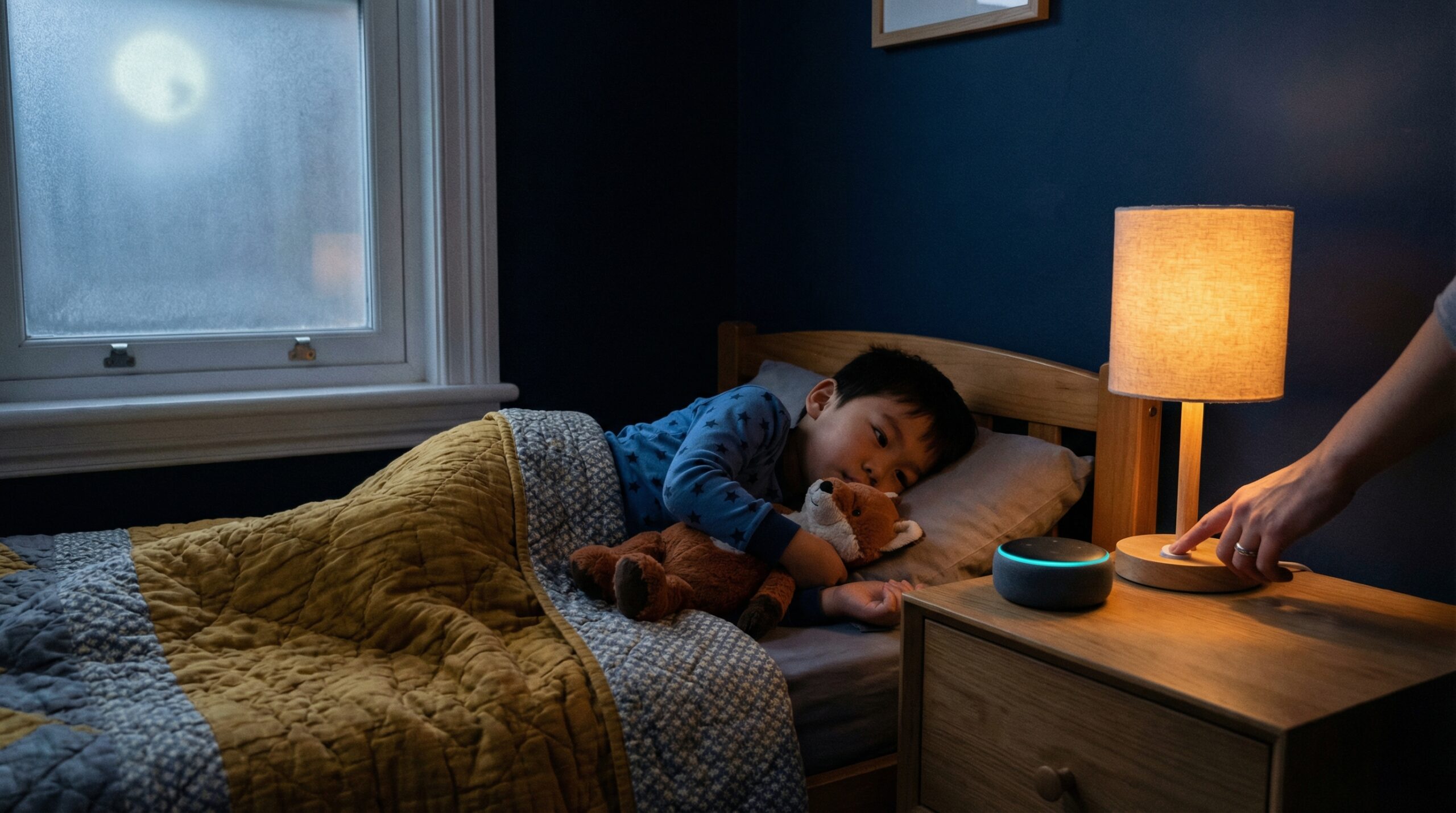
Bedtime wind-down mini story ritual names a short, repeatable five-minute cue for calm evenings. It signals sleep and creates a cozy, predictable ending to the day.
What is the bedtime wind-down mini story ritual?
This mini story ritual is a very short story used as the final cue before sleep. Typically it lasts three to seven minutes. Five minutes is a sweet spot. The ritual aims to lower arousal and create a gentle anchor. Also, it supports language growth and soft bonding. According to a 2025 study, consistent bedtime routines, including storytelling, started as early as 3 months, were associated with fewer night-time awakenings and longer sleep durations by age 3. Parents and caregivers call it a pocket-size magic moment.
Typical sequence and characteristics
The sequence stays simple and steady. First, caregivers move from activity to routine. Then, they dim the lights and offer quiet tasks like pajamas or teeth. Next, they share the mini story. Finally, they offer a brief goodnight. This short, predictable pattern reduces alertness and teaches the brain to expect sleep. A longitudinal study published in Frontiers in Sleep reported that a majority of families used a consistent bedtime routine by 24 months, highlighting the growing importance of such rituals.
Key features
- Short duration: three to seven minutes.
- High predictability: same story or style nightly.
- Low stimulation: soft light and quiet voice.
- Repeatable: works as a consistent sleep cue.
Formats and delivery
Families use live reading or short audio. Audio keeps the voice consistent when caregivers rotate. Also, apps like Storypie provide short, calming audio stories that fit this ritual. Prefer a small speaker near the bed instead of a phone in the mattress. For safety, keep devices at a distance from infants.
Age tweaks for the mini story ritual
Infants respond to slow, low vocal snippets and lullaby tones. Toddlers prefer predictable phrases and repeating lines. Early school age children enjoy a tiny arc or gentle twist. Across ages, the ritual stays brief, warm, and familiar. A 2025 study found that a two-week nightly bedtime reading routine improved empathy and creativity in children aged 6–8, showing significant gains in cognitive empathy and creative fluency, further supporting the benefits of bedtime storytelling.
Sleep science in a sentence
Lower light helps melatonin rise, and steady routines reduce anxiety. In short, short repeatable cues teach the brain that sleep is next. That simple physiology underlies the bedtime wind-down mini story ritual.
Tech and safety notes
Keep volume low. Also, use night or blue-light filters. Disable autoplay so one story does not roll into an exciting playlist. Finally, consider airplane mode to prevent interruptions.
Measure and tweak
Try the same mini story for a week. Then, note three things: bedtime fuss, minutes to sleep, and morning mood. Small wins matter. If resistance or night waking persists, consult a pediatrician or sleep specialist.
A cultural note
Bedtime stories and lullabies are ancient. This mini ritual is a modern, time-efficient version. It borrows from long family traditions and adapts them to busy life. The American Academy of Pediatrics updated its literacy policy in 2024, recommending shared reading beginning at birth to weave joyful language and rich interactive moments into daily life.
Gentle next step
If you want short audio options, explore Storypie for calm five-minute stories. Also, preview content to match your family’s needs. A 2025 survey found that 71% of parents agreed that storytelling helps their children wind down at bedtime, with 49% naming it their preferred method. Tiny rituals can lead to huge calm. Try a mini story ritual and watch the room learn to whisper goodnight.