
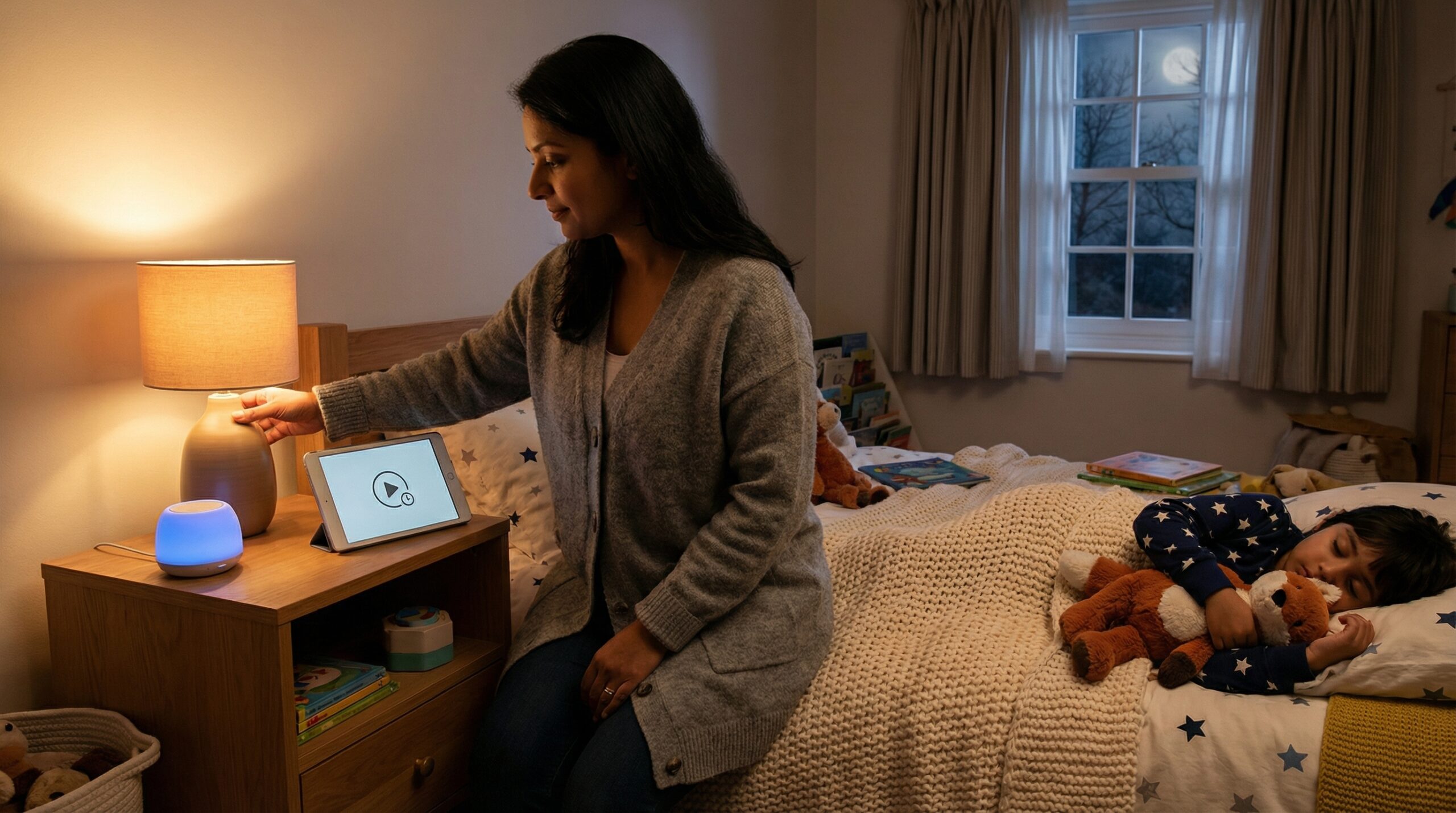
Bedtime wind-down mini story ritual is a short, gentle audio cue used at the end of an evening routine. It lasts three to seven minutes. Parents and teachers use it to signal that sleep is next.
What is the bedtime wind-down mini story ritual?
The ritual is a tiny, repeatable sequence. First, caregivers play a calm audio track. Then lights dim and the child settles. Over time, that small cue becomes a dependable bedtime trigger.
Why it works
Predictability matters. Also, a consistent cue trains the brain to prepare for rest. Calm content lowers arousal. In addition, a brief story gives language exposure. Research shows that consistent bedtime routines, including storytelling started as early as three months, are associated with fewer night-time awakenings, reduced sleep problems, and longer sleep durations by age three, highlighting the effectiveness of bedtime routines in improving children’s sleep quality. Finally, sleep soon after helps memory and learning.
What to expect from this mini story ritual
Keep it short and steady. Aim for three to seven minutes. Slot this cue into the last part of the routine. Many children respond within days, though some families need weeks of consistency. In fact, a 2025 survey found that 71% of parents agreed that storytelling helps their children wind down at bedtime, with 49% naming it their preferred method.
Age notes
- Toddlers often prefer three minutes and a gentle tuck.
- Preschoolers like familiar characters and steady phrasing.
- Early elementary kids enjoy five to seven minutes and richer language.
Sensory, neurodiversity, and safety
Not every child finds the same sounds soothing. Therefore, lower volume for children with sensitivities. Also, remove background music if it distracts. Choose calm, non-activating content. Avoid suspense and sudden noises.
Tech and privacy notes
If you use an app, preview tracks first. Also, check for ads and account privacy settings. Download tracks for offline play to avoid interruptions. For a child-friendly source, try Storypie and preview before use. Get the app at Storypie app download.
Realistic expectations and emotional payoffs
This ritual is not magic. However, it supports emotional regulation, attachment, and steady bedtime cues. A recorded voice can feel kinder and calmer than an excited parent. Over time, tiny rituals become the gentle bridge between day and sleep. Interestingly, a 2025 study found that a two-week nightly bedtime reading routine improved empathy and creativity in children aged 6–8, showing significant gains in cognitive empathy and creative fluency. This highlights the broader developmental benefits of bedtime reading, making a case for the mini story ritual’s positive impact beyond just sleep.
Quick checklist to try tonight
- Timebox: three to seven minutes.
- Environment: dim lights, cozy blanket, soft volume.
- Phrase: use the same short cue each night.
- Content: calm, predictable, and non-surprising.
- Tech: offline or ad-free tracks.
Keep it small. Keep it steady. Over time, the bedtime wind-down mini story ritual becomes a comforting final step of the night. In fact, a 2025 survey indicated that 90% of parents of 1–6-year-olds reported having a bedtime routine, and 67% reported that their child’s bedtime routine includes reading a bedtime story. This demonstrates the prevalence of bedtime routines and the role of storytelling in them, reinforcing the relevance of the mini story ritual. Additionally, 81% of parents reported that reading to their children helps them fall asleep, supporting the concept of the bedtime wind-down ritual.