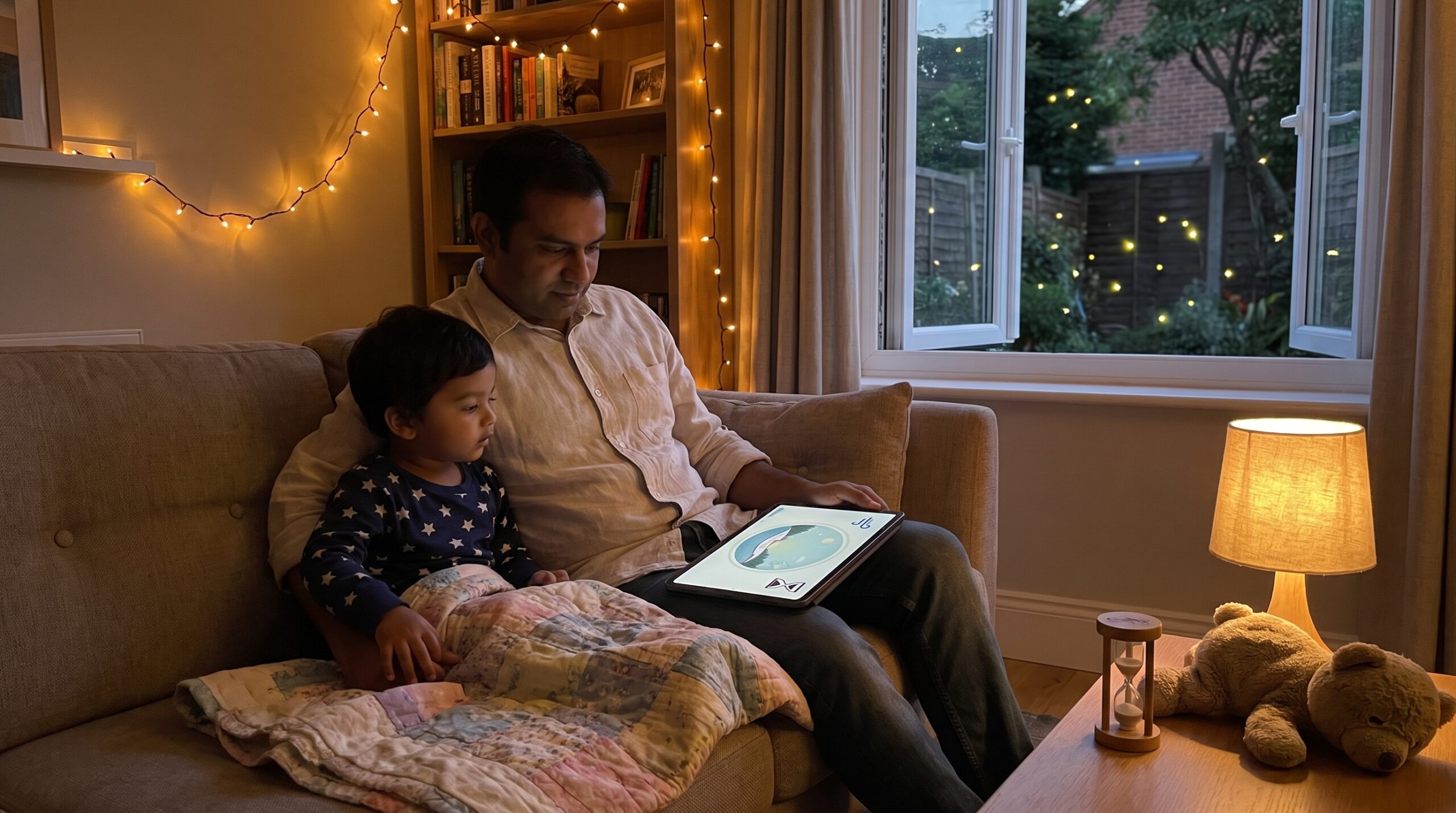
A bedtime wind-down mini story ritual offers five calm minutes to close the day. Families use this short, predictable moment to cue sleep, connect, and end evenings gently.
What the ritual is
The bedtime wind-down mini story ritual is simple. It lasts about three to seven minutes. It sits at the end of the evening routine. Parents often place it after bath, teeth, and pajamas. The ritual repeats the same closing phrase or tune. That steady predictability becomes a signal for children.
Core characteristics
This ritual has clear, repeatable parts. It relies on timing, tone, and familiarity. For many families, the ritual uses one spot and one speaker. In practice, a calm voice and soft light make it soothing. Also, a single closing line marks the end. These features lower resistance and create a reliable ending.
Predictability and portability
Predictability matters most. Children learn the cue quickly. Moreover, the mini story ritual travels well. So even on late nights or during travel, families can keep a pocket-sized calm. A single book or short audio clip moves easily between homes and hotels.
Why it helps
Researchers link consistent bedtime routines to earlier bedtimes and better sleep. In fact, a multinational study published in 2015 found that children with a consistent nightly bedtime routine—including stories—slept on average more than one hour longer per night compared to children without any routine. Short rituals reduce negotiation. Repetition supports language and attachment as well. For example, brief shared reading builds vocabulary and listening skills over time. In short, small repeated actions add up to lasting benefits. Additionally, a 2021 study indicated that consistent bedtime routines, including storytelling, established as early as 3 months, led to fewer night-time awakenings, reduced sleep problems, and longer sleep durations by age 3.
Age friendly features
The ritual adapts to developmental needs. Newborns respond to calm touch and recorded family voices. Toddlers enjoy a repeating line or picture cue. Preschoolers like a tiny picture book with a familiar character. Early school age children may accept a very short chapter or a reflective two-sentence wrap up. These age-friendly shifts keep the ritual useful across years.
Practical elements parents notice
- Same spot and same speaker increase calm.
- Calm tone and minimal stimulation work best.
- A single closing phrase signals bedtime clearly.
- Portability keeps the ritual realistic on busy nights.
Environmental supports
Soft fabrics, a cool room, and low background sound reinforce the cue. Blackout curtains help in long summer evenings. Families often dim lights before the ritual to support sleep signals. Also, limiting bright screens in the hour before bed makes the ritual more effective.
Safety and equity
Caregivers should follow safe sleep guidance for infants under 12 months. Keep cots and beds free of loose bedding. The mini story ritual also lowers barriers. It needs little preparation, which helps busy caregivers and shift workers. In this way, the ritual becomes an equity win.
What families say
Many parents call the mini story ritual magical. They report fewer negotiations and faster settling. Children learn to listen for the ending line. Above all, families appreciate a calm, brief ending to the day.
Learn more
Explore ready five-minute options and pocket-sized tales on Storypie. Try summer-night tales and gentle wraps that help evenings land sooner. Visit our Explore page to discover short stories and app features.
For ideas and resources, visit Storypie and find small rituals that fit your family.