
Meet Decimal
Decimal numbers for kids begin as a simple idea. A decimal shows parts of a whole using base 10, which utilizes ten digits: 0, 1, 2, 3, 4, 5, 6, 7, 8, and 9, forming the foundation of the decimal number system. Digits left of the separator count tens, hundreds, and thousands. Meanwhile, digits right of the separator count tenths, hundredths, and thousandths. The decimal point or decimal comma separates the whole from the fraction.
Why decimals matter
Decimals are tiny but mighty. They make measurements precise. For parents and teachers, decimal numbers for kids become friendly and tangible. Also, decimals shaped trading, science, and invention over centuries. In fact, the decimal system is the most widely used numeral system in the world, adopted globally for various applications including commerce, science, and education, which further highlights the importance of understanding this concept.
A short timeline of decimals
First, ancient India gave us place value and zero. Those ideas built the base for decimals. Then, scholars in the Islamic world preserved and extended decimal fractions. Next, in 1585, Simon Stevin published De Thiende. Consequently, decimals spread through Europe. Later thinkers like Napier refined notation and ways to calculate.
What decimals are and how they behave
Decimals are base 10 numbers. Positions right of the point are 10 to the minus 1, minus 2, minus 3, and so on. Some decimals stop. For example, 0.5 or 0.25 are terminating decimals. Some repeat, like 0.333. Others never repeat and never stop, such as pi and the square root of 2. Fun fact: 0.999 repeating equals 1. Yes, really. Older kids often love that neat math trick.
Where you spot decimals every day
Decimals appear everywhere. Money uses two decimal places for cents. Also, the metric system uses decimals to make conversions tidy. Baking, science, thermometers, GPS, and digital displays all show decimals. In computing, binary floating-point stores numbers approximately, so tiny rounding quirks can pop up. For finance, systems often use special decimal types so pennies stay exact.
Hands-on ideas and a simple baking activity
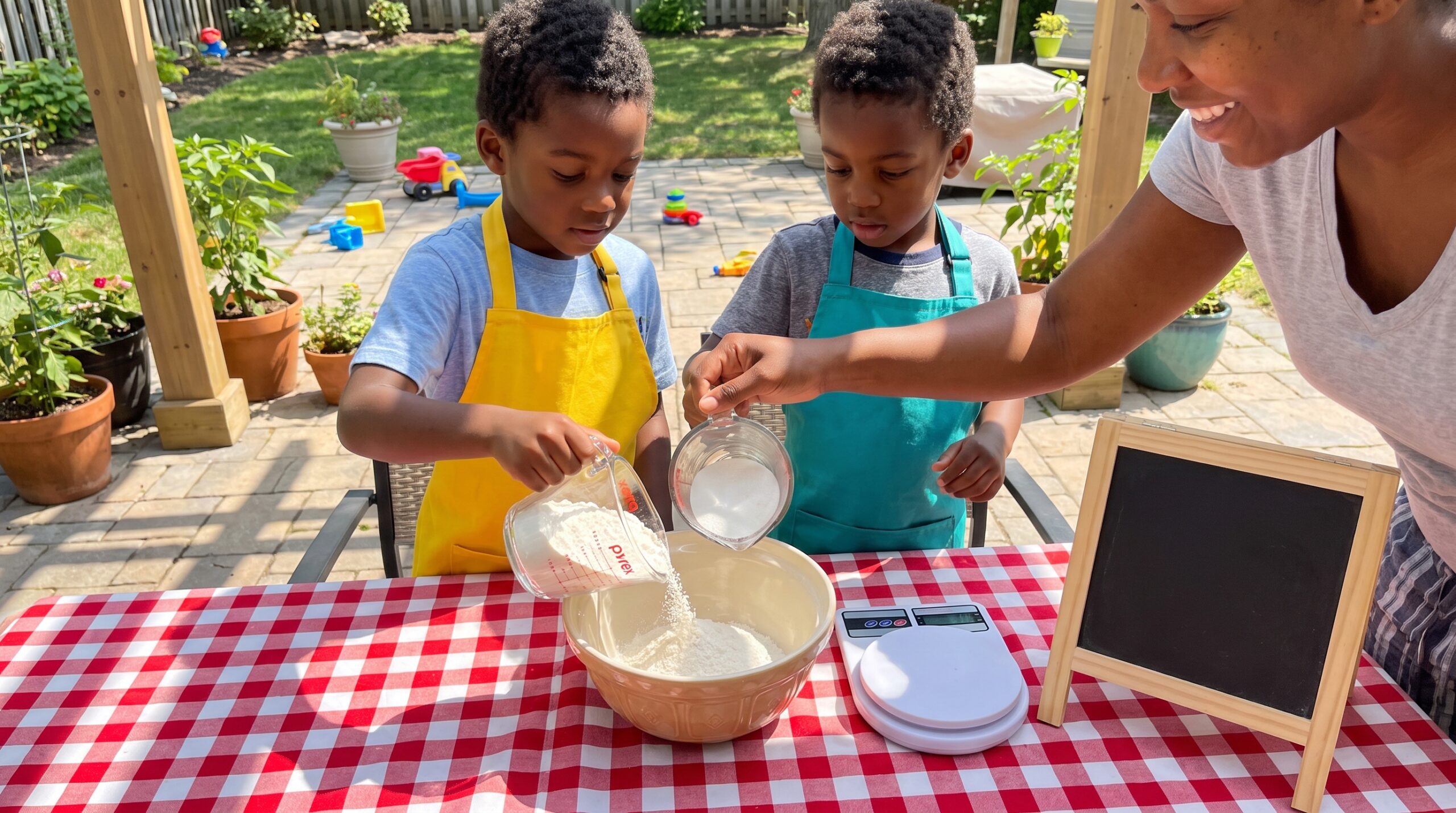
Make decimals visible with measuring cups, ten-frames, and a 10 by 10 grid. For example, compare 0.5 cup and 0.25 cup. Use a clear 1 cup measure so kids can see the levels. Then explain that 0.5 equals one half and 0.25 equals one quarter. Finally, taste the treat and celebrate the discovery.
- Fill a clear 1 cup measure to 0.5 and show it.
- Then fill to 0.25 and compare side by side.
- Count tablespoons if you like and talk through fractions.
A tiny technical note for curious learners
Computers sometimes show 0.1 plus 0.2 as 0.30000000000000004. That is a floating-point quirk, not bad math. As a result, finance programs use decimal formats to avoid such surprises.
Final thought and where to explore more
Decimals connect history, measurement, and everyday wonder. They are simple, powerful, and a little magical. Want guided prompts, stories, and audio to make decimal play even richer? Read or listen to a story about Decimal now: For 3-5 year olds, For 6-8 year olds, For 8-10 year olds, and For 10-12 year olds. Or visit the concept page directly at Read or listen to a story about Decimal now.
Tip: Keep explanations short and playful. Short sentences land best with little learners.