
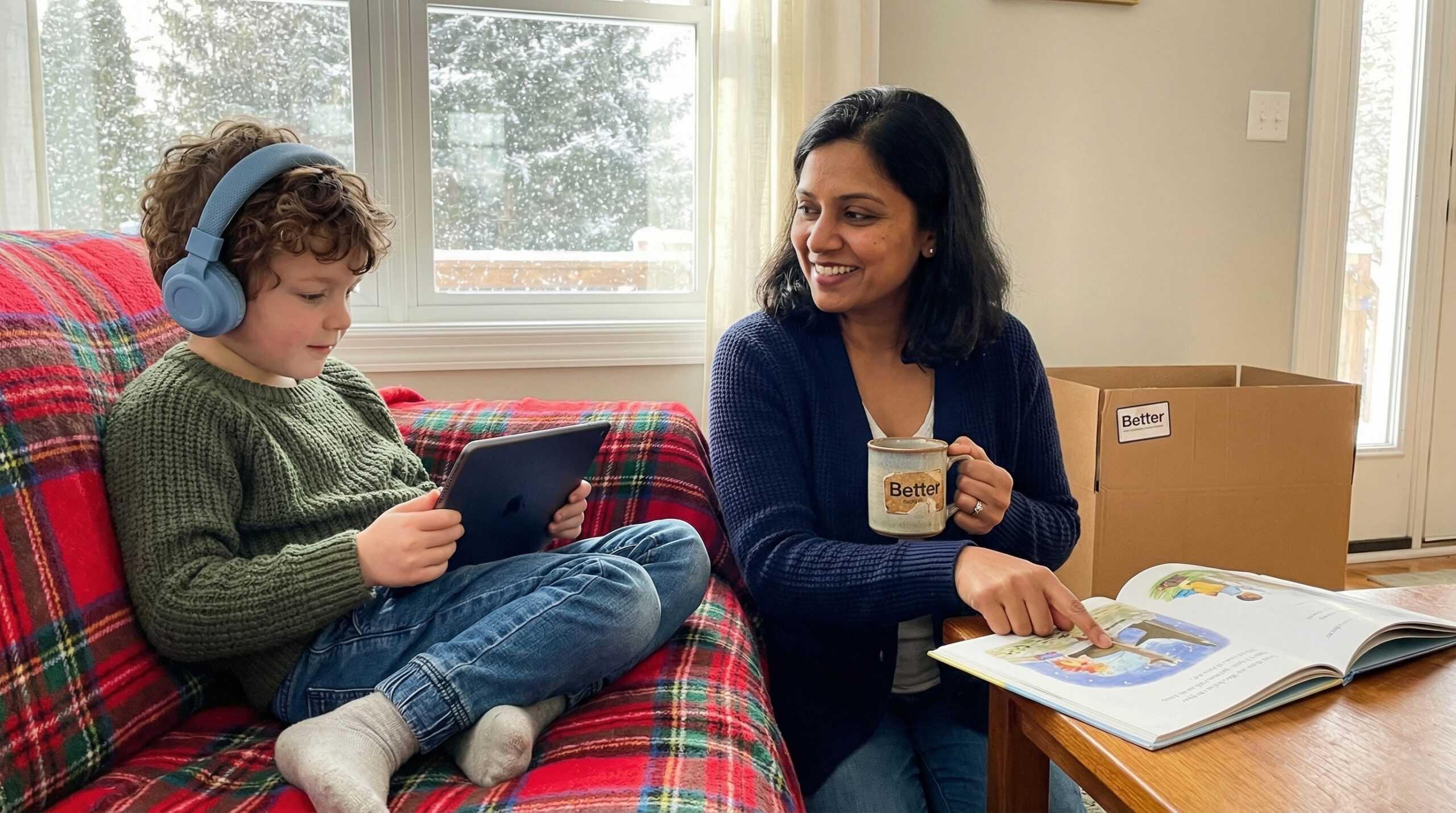
Better screen time for 7 year old starts with one simple truth: not all screen time is equal. In fact, a 2025 Common Sense Census revealed that caregivers reported children aged 5 to 8 averaged 3 hours and 28 minutes of screen media daily, highlighting the pressing need for better management of this time.
Set a clear daily target
For many families, a practical guideline is 60 to 90 minutes of recreational screen time. The American Academy of Pediatrics recommends that children aged 6 and older have consistent limits on daily screen time to ensure it does not interfere with sleep, physical activity, and other healthy behaviors. First, separate homework and communication time from that total. Then, structure sessions to match a 7 year old attention span. Aim for 20 to 30 minutes at a time. Short bursts make transitions easier and evenings calmer.
Swap one solo screen for an audio story
Swap one 20 to 30 minute solo video each day for a shared audio story. Listening supports vocabulary and imagination. Afterwards, spend three to five minutes asking gentle questions. Try prompts like:
- What part did you like best?
- Who was your favorite character and why?
- What do you think happens next?
For a quick, cozy swap, try Storypie audio stories. They are calm, short, and perfect for bedtime or a quiet afternoon.
Co-engage and talk
Co engagement multiplies the benefits. When adults watch, listen, or play with kids, learning deepens. Research shows that children aged 8 to 11 who met guidelines for screen time, sleep, and physical activity had better cognitive function, including memory, attention, and language skills, according to a study published in The Lancet Child and Adolescent Health. Ask open questions. Make real-life connections. Pause to talk about a new word. These tiny acts build comprehension and social skills.
Simple rules that actually work
Make rules clear and kind. Keep them short. Decide on a total recreational target. Choose tech-free zones like the dinner table and bedrooms. Use device timers and kid profiles.
Also, turn off in-app purchases and use night mode. Finally, set a screen curfew 30 to 60 minutes before bed. Consistency helps. So does practicing rules together.
Pick better content
Good content is age appropriate and low on ads. Prefer apps and shows that invite making, thinking, or playing together. Check privacy and permissions. Safety checks now avoid headaches later.
Watch for problem signs
If limits cause tantrums, sleep loss, or slipping grades, adjust and ask for help. Balance is thoughtful tuning, not strict policing. Model balanced behavior yourself. Kids learn more from what we do than from what we say.
A tiny family media plan to try this week
- Recreational target: 60 to 90 minutes a day.
- Swap: one 20 to 30 minute solo screen session for an audio story plus 3 to 5 minutes of chat.
- Active time: 20 to 30 minutes outdoor or active play daily.
- Zones: no screens at the table or in bedrooms.
Six easy alternatives to screens: outdoor play, drawing, board games, read aloud, building projects, and small baking tasks. Pick one and make it fun and easy to choose.
Try this swap for a week. Tiny ritual, huge calm. You may notice better sleep, calmer evenings, and fresh words at breakfast. Cozy wins every time. For more calm audio options, visit Storypie.