
Education through storytelling ages 3-12 helps children learn facts, skills, and values by using tales that feel alive. Story-based learning uses characters, problems, and cause and effect to make meaning. In short, narrative makes learning stick.
What education through storytelling means
First, it uses tales, picture books, read alouds, audiobooks, and dramatized scenes as the main learning vehicle. It is not bells and whistles. Instead, it is a purposeful story with a character, a problem, a sequence, and clear cause and effect. Those bones give children something to hold.
Quick history and today
Storytelling is one of the oldest classrooms. For centuries, oral folktales passed along practical knowledge and social rules. Today, classroom read alouds and digital stories carry that same power into schools and homes. Moreover, apps and audio make stories portable and playful.
Why stories stick for ages 3-12
The brain loves pattern. A narrative creates sequence and causal links. As a result, facts bundle into memorable chunks. Also, emotion anchors detail. If a child cares about a character, that moment is more likely to be stored. Research supports this. Studies show narrative methods boost recall and vocabulary. In some tests, children recall more facts from stories than from lists. In short, stories help memory and language grow. A 2025 systematic review found a strong relationship between home-based shared book reading and child developmental outcomes, emphasizing the significance of storytelling in vocabulary enhancement.
How story structure supports learning
Characters model goals and choices. Sequence teaches order and time. Cause and effect helps children understand why things happen. Retelling a story exercises working memory and planning. Asking a child to summarize, predict, or explain keeps those muscles strong.
Language and literacy benefits
Repeated exposure to rich vocabulary and varied sentences improves language. Narrative skills early on predict later reading comprehension. For the youngest listeners, short refrains build confidence. For older kids, layered plots invite abstract thinking and new words. A longitudinal study found that storytelling connectedness in children ages 5–8 predicted phonological awareness and reading comprehension measured a few months later, showcasing the long-term benefits of storytelling.
Social and cognitive gains
Stories grow empathy and theory of mind by letting children see through another person’s eyes. Research shows that storytelling contributes significantly to the development of early childhood empathy skills, particularly in the age group of 5-6 years. They provide a safe space to practice moral judgment. Plus, attention and motivation rise because a good tale is more interesting than rote drills. In addition, executive skills improve when children sequence events and plan retells. A 2025 neuroimaging study revealed that listening to narratives activates brain regions associated with theory of mind, highlighting the cognitive engagement that storytelling can stimulate in children, enhancing their social understanding.
Age notes: what to expect
- 3 to 5 year olds learn beginning, middle, end and core vocabulary.
- 6 to 8 year olds infer motives and use stories to learn curriculum content.
- 9 to 12 year olds follow multi-thread plots and link narrative to broader ideas.
Why multimodal storytelling helps
Pictures, audio, and read alouds give multiple memory cues. Bilingual and culturally relevant stories support identity and access. Equity matters. When children see themselves in stories, they engage more deeply.
Practical markers of quality
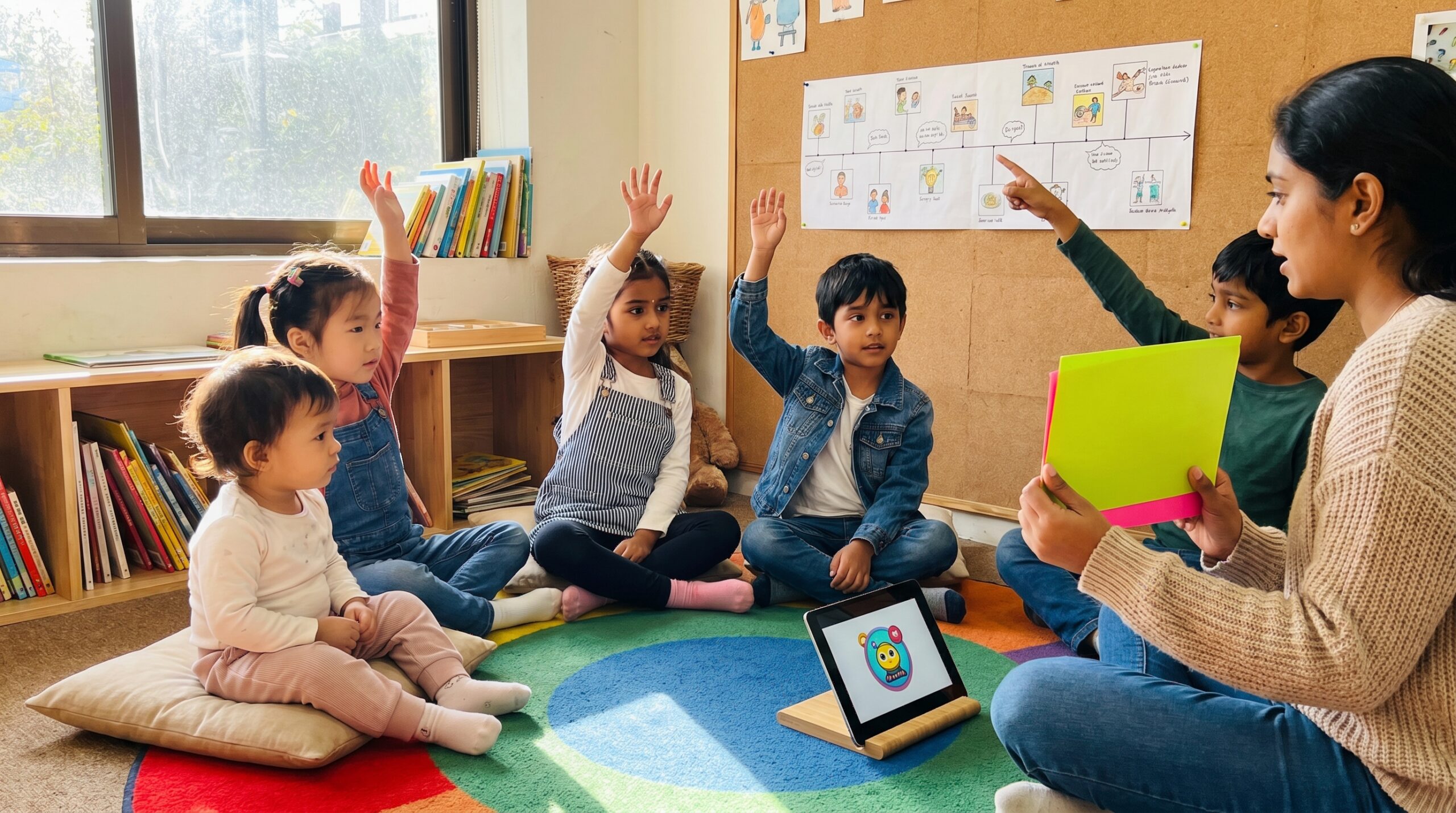
Choose stories with clear structure, age appropriate language, useful repetition, and cultural relevance. Make reading tactile. For example, point at images, pause, ask one open question, and let the child retell.
Tip: ask one open-ended question after each Storypie tale to boost recall. Try it in the app: Open Storypie.
Playful closing. Stories are tiny engines. They move words, feelings, and ideas into children s heads with gentle force. Dive into Storypie collections. Read. Ask. Play. Repeat. Happy exploring!