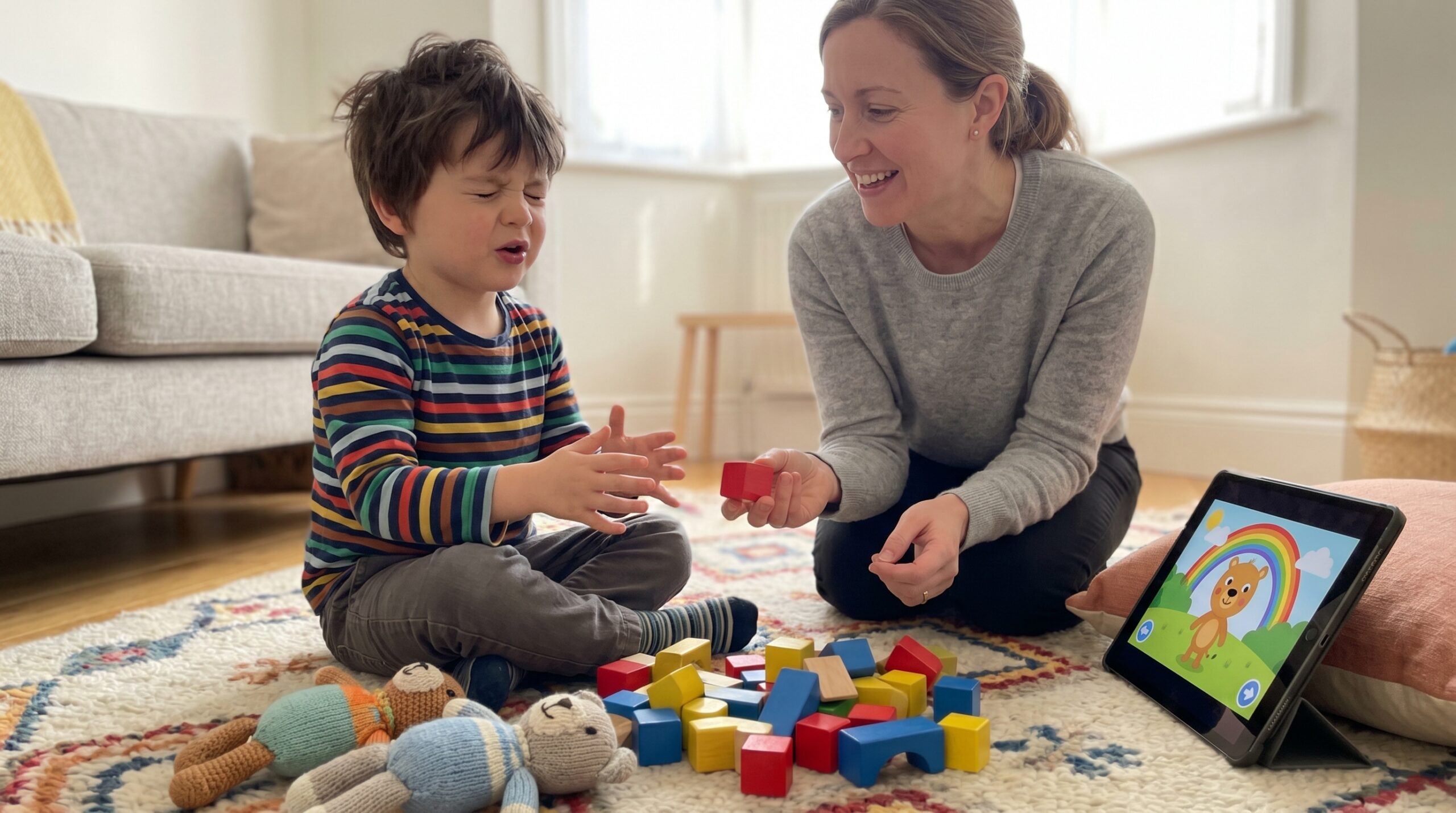
Managing child frustration shows up first when a plan falls apart. For example, a block tower tumbles and feelings rush in. I notice the moment and stay calm. Then I breathe with them and offer one clear choice.
What is child frustration?
Frustration is a normal emotional response when a goal is blocked or expectations change. Kids meet it all the time. Common triggers include a toy taken, a hard puzzle, sudden change, waiting, social conflict, or noisy rooms. Interestingly, in 2024, 49% of Americans reported feeling frustrated when thinking about global warming, which illustrates how common frustration can be, even on larger scales, as children become aware of these issues too, according to Yale Program on Climate Change Communication.
Children show frustration differently by age. Toddlers cry or tantrum. Preschoolers may yell or push. School-age kids use words yet can still lose it. Teens might withdraw or act irritable. The brain area that helps control emotions keeps developing, so practice and language help. In fact, a recent survey revealed that in 2024, 60% of U.S. adults reported feeling frustration toward the federal government, demonstrating that frustration is a widespread emotion that can mirror children’s reactions. This survey was conducted by the Pew Research Center.
Quick calm steps for managing child frustration
First, name the feeling. Say I see you are frustrated. Then pause and breathe together for three slow counts. Next, offer one small choice: try again or ask for help. Finally, give a tiny hint, not the whole solution.
These four moves calm the body and teach problem-solving. They create tiny wins. Small wins lead to bigger confidence over time. Also, short scripts help kids learn what to do next. According to a 2024 study, 37% of adults worldwide reported experiencing a lot of stress the previous day, highlighting the importance of helping children manage their emotions, as they often mirror the emotional states of adults around them, as noted by Gallup.
Simple scripts to say
- I can see you are frustrated.
- Want to breathe with me?
- Do you want my help, or would you like to try one more time?
- Great try. That was brave.
Age friendly tweaks
For toddlers keep words very short and offer one concrete step. For preschoolers, turn the strategy into a tiny game and add a hug. For school-age kids, label the feeling, coach a plan, and praise effort. For teens, respect space, then offer a brief check-in later.
Activities that build frustration tolerance
Practice makes a big difference. Try slightly too hard puzzles or waiting games with a small reward. Also plan tiny setbacks where you model trying again. Celebrate the attempt. Praise effort, not just the outcome. Research shows that in 2024, 64% of customers who experienced a product or service problem felt rage about it, with 50% raising their voice to express displeasure. This highlights how frustration manifests in adults, which can help us understand similar behaviors in children. This information comes from the W. P. Carey School of Business at Arizona State University.
How parents can model coping
How you act matters a lot. Name your own feeling when you get annoyed. Then use the same breathing trick. Kids learn from your moves more than from lectures. Be playful, be warm, and stay steady.
When to seek extra help
Talk to your pediatrician or a mental health professional if frustration leads to frequent hitting, long withdrawal, big sleep changes, or if it blocks school and friendships. Children with ADHD or language delays may need tailored supports.
Read a story
Read or listen to a story about Frustration now: For 3-5 year olds, For 6-8 year olds, For 8-10 year olds, and For 10-12 year olds.
Small steady practice makes frustration manageable. Celebrate tiny wins, keep your voice calm, and notice each brave try. Those small changes lead to big, joyful growth. For more ideas, visit Storypie.