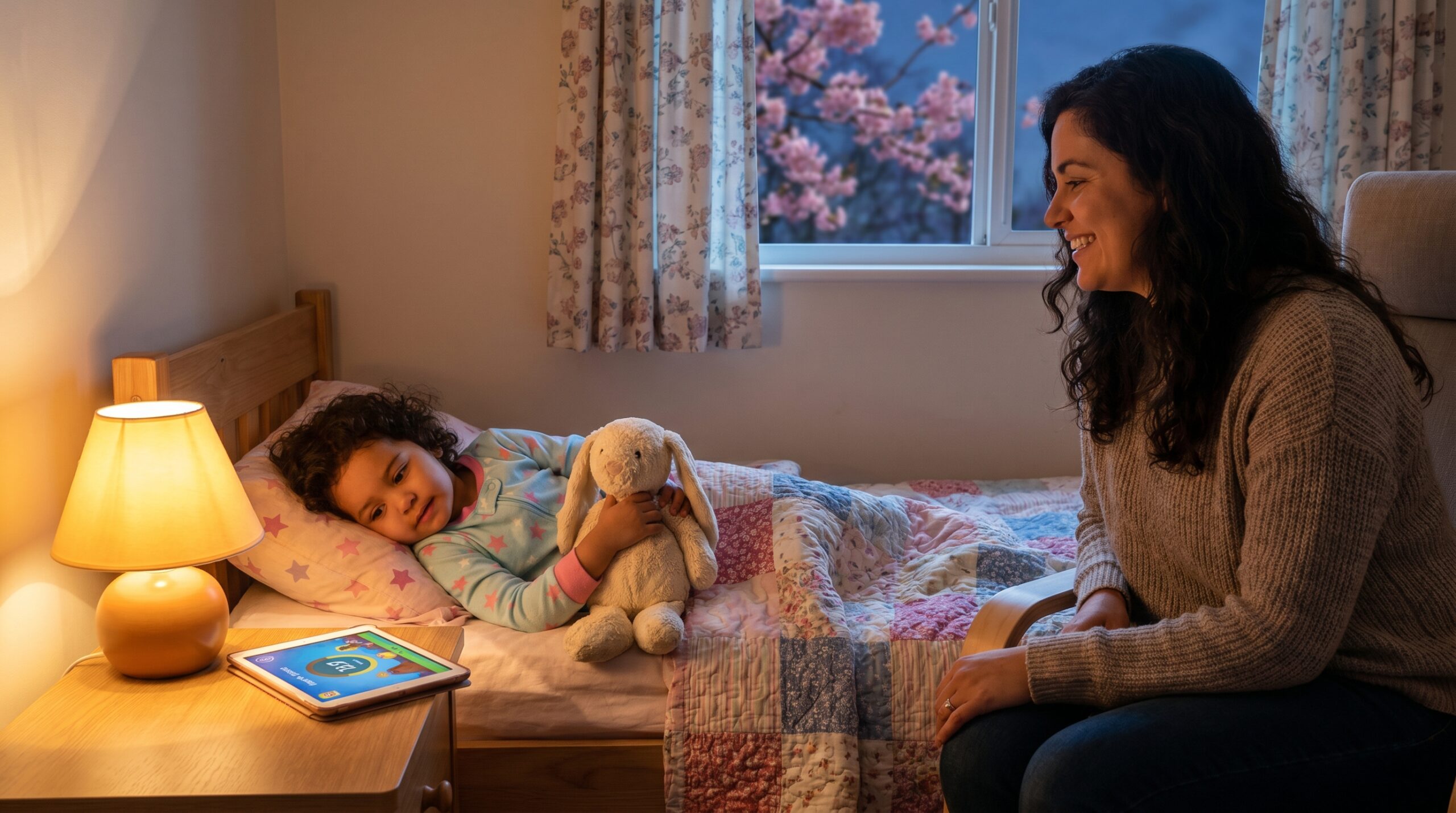
I build bedtime tools and tell stories for a living. Tonight, I’m sharing the bedtime wind-down mini story ritual that really helps families. It is a short, consistent closing tale that tells the brain sleep is next.
Why the bedtime wind-down mini story ritual works
Kids need predictability more than novelty. So a single 3 to 7 minute tale, given 5 to 20 minutes before lights-out, becomes a clear cue. Repetition matters. A calm voice, low light, and physical closeness help. Research shows short, predictable rituals lower arousal and speed sleep onset. In fact, a 2024 systematic review identified that routine-based therapies are the primary empirically supported treatments for addressing sleep issues in young children.
Quick checklist for tonight
Try this tiny routine and watch it work. It is simple, tiny, and mighty.
- Pick one 5-minute Storypie tale as the closing story.
- Dim lights and switch screens to audio-first or night-mode.
- Read or play the same closing story for a week.
How I use it at home
On a soft spring evening, I close the night with one Storypie tale. The scramble softens. I tell the same little story three nights in a row. By the third night, the child yawns before the last sentence. That felt like a quiet little victory. This is a common experience; a 2025 study found that 71% of parents agreed that storytelling helps their children wind down at bedtime, with 49% naming it their preferred method.
Simple template to follow
Keep it short and cozy. For example:
- Setting: calm place, blanket, and low light.
- Story: calming, familiar, and short. No action peaks.
- Close: a consistent phrase that signals lights-out.
Three reasons to pick one mini story
- Predictability: Kids learn the endpoint and stop negotiating.
- Development: Short tales still boost language and attention; in fact, a 2025 survey indicated that 90% of parents of 1–6-year-olds reported having a bedtime routine, with 67% including reading bedtime stories.
- Bonding: Close time releases oxytocin and lowers stress.
Age tips
Adjust the ritual to fit your child.
- Infants and toddlers: repeat a short rhythmic phrase. Stay close.
- Preschoolers: a 3 to 5 minute calming tale works best.
- Early school-age: allow a 5 to 10 minute quiet chapter extract.
Live voice versus audio
Live storytelling wins for immediacy and bonding. Also, audio-first apps can match the calming cue. If you use a device, set it to night-mode, airplane mode, or audio-only playback. Keep interactive features off. The point is calm and consistency, not a last-minute surprise. This practice is reinforced by findings from a 2024 randomized clinical trial showing that removing screen time in the hour before bed resulted in improvements in sleep efficiency and reductions in night awakenings.
Measure success and try it tonight
Track shorter settling time, fewer negotiations, and smoother transitions. Many parents report faster sleep onset within a week when they end with one predictable mini story. A 2025 study also reported that consistent bedtime routines, including storytelling started as early as 3 months, were associated with fewer night-time awakenings, reduced sleep problems, and longer sleep durations by age 3. Try one 5-minute Storypie tale tonight after bath, pjs, and teeth. Say the same closing line each night and celebrate the quiet little victory.
Explore calming closing tales on Storypie: Storypie bedtime tales.