
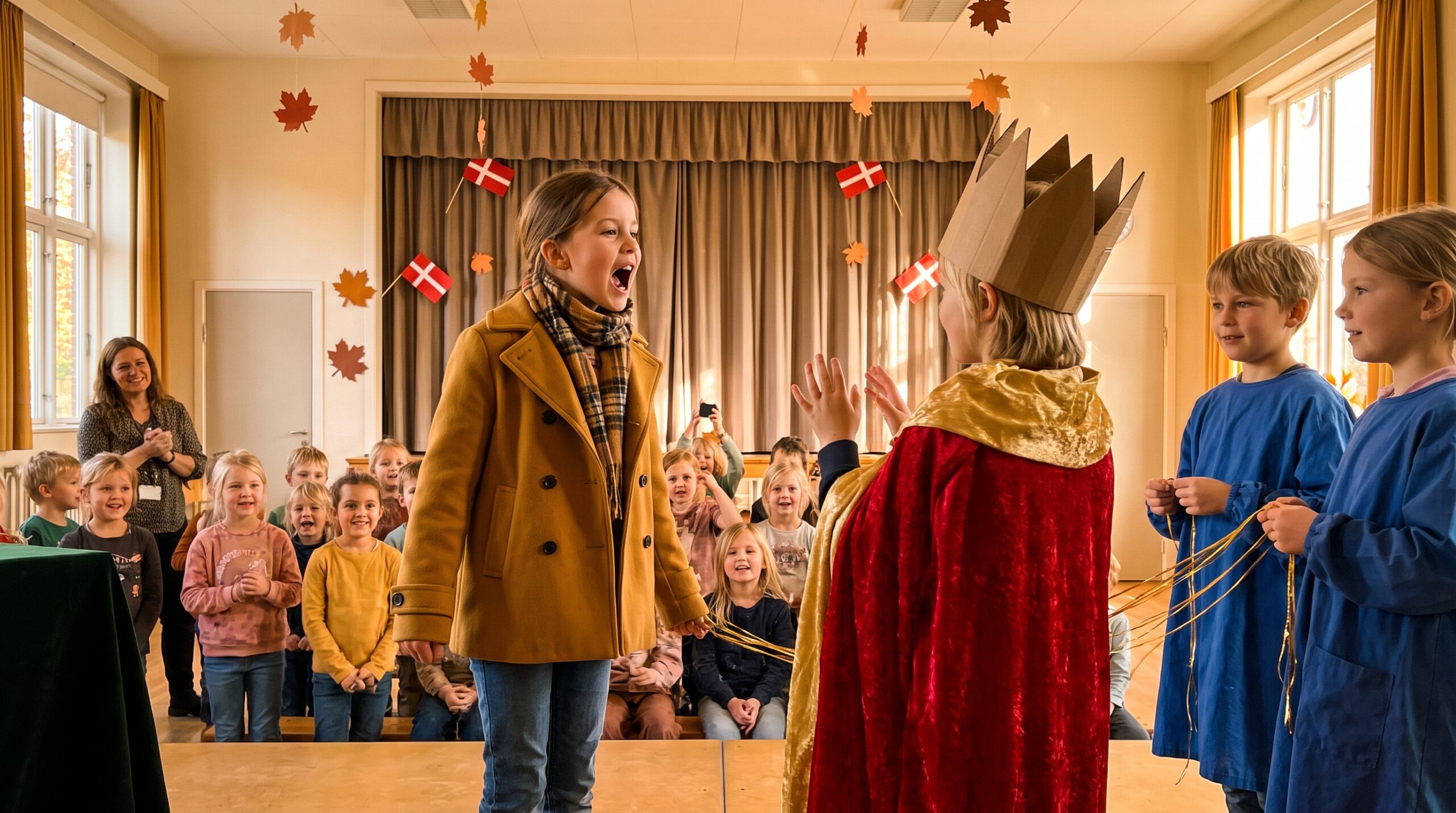
The Emperor’s New Clothes – Danish is a short, delightfully direct tale by Hans Christian Andersen. In plain language Andersen tells of two swindlers who promise an emperor a magical cloth. Also, the cloth is invisible to anyone who is unfit for their job or hopelessly stupid. The court and townspeople pretend to admire the invisible finery. Then a child blurts the truth: Men han har da ikke noget på! That candid cry cuts through vanity and social pretense like a tiny thunderbolt.
The story and its place in Danish culture
Andersen published The Emperor’s New Clothes – Danish on April 7, 1837, in Copenhagen, Denmark, as part of his *Fairy Tales Told for Children. First Collection. Third Booklet.* This collection became central to Danish literary life. In simple lines he made a sharp satire that children can follow and adults can savor. In addition, the tale’s themes are clear: honesty, the courage to speak up, social conformity, and the ridicule of vanity and authority. Over time the title became an idiom in many languages. The story has been translated into over 100 languages, demonstrating its global reach and enduring popularity.
Why the Danish phrasing matters
The original Danish line Men han har da ikke noget på! shows how economy of language can carry tone. Also, it gives a lively local color to Andersen’s work. For teachers and parents the phrase points to translation choices and cultural rhythm. Comparing translations can reveal how different retellers shift emphasis and voice.
Practical listening options on Storypie
Read or listen to a story about The Emperor’s New Clothes – Danish now: Read or listen to a story about The Emperor’s New Clothes – Danish now. For 3-5 year olds, For 3-5 year olds, For 6-8 year olds, For 6-8 year olds, For 8-10 year olds, For 8-10 year olds, and For 10-12 year olds. Visit Storypie for more listening features.
Classroom and family conversation ideas
Begin with a short read aloud and pause before the child speaks. Ask open questions like Why did everyone pretend? or What would you do? Also, invite brief role play of the procession to practice speaking up. Simple drawing prompts work well too. For example, ask children to draw the emperor in his invisible outfit and then draw how to say a hard truth kindly.
Three classroom-ready tips
- Model respectful honesty with short, vivid examples.
- Role-play the procession and the child’s line, then switch roles.
- Compare a classic translation with a modern retelling to spot emphasis shifts.
Why Storypie audio helps
Stories like this live when heard aloud. Storypie offers clear narration with play and pause controls and adjustable speed. Also, the audio helps listeners notice phrasing and ironic beats. In shared listening moments Andersen’s irony and the child’s tiny thunderbolt of truth come alive.
Final thought
The Emperor’s New Clothes – Danish is both a compact moral lesson and a clever satire. Read it aloud, ask gentle but bold questions, and give children practice saying what they think. Finally, remember that courage and kindness can grow together, one honest sentence at a time. Notably, the third booklet containing *The Emperor’s New Clothes* was published on the same date as *The Little Mermaid*, marking a significant moment in Andersen’s literary career, as these were the only two tales in that installment. Furthermore, on the eve of the third booklet’s publication, Andersen revised the ending of *The Emperor’s New Clothes* to include the now-famous climax where a child exclaims that the emperor is wearing nothing, underscoring the pivotal role of the child’s revelation in the story’s moral lesson, as catalogued as number 303 in the Hans Christian Andersen Center’s register.