First Thanksgiving 1621 is a short, sensory story of food, help, and sharing. It happened in Plymouth in autumn of 1621. Pilgrims and Wampanoag people gathered for three days of feasting. This meeting celebrated a successful harvest and a fragile peace.
First Thanksgiving 1621: who and where
Plymouth sits in present-day Massachusetts. About 50 to 60 Pilgrims attended, which included roughly 50 surviving Pilgrims (about half of the Mayflower’s 102 passengers), and approximately 90 Wampanoag men joined them according to Smithsonian Magazine. Those numbers come from Edward Winslow and William Bradford, who wrote the main English accounts. Historians rely on only two contemporary primary accounts for the 1621 event: Edward Winslow’s letter and William Bradford’s manuscript as noted by the Gilder Lehrman Institute. The gathering followed a peace agreement with Massasoit. It felt like cooperation in a hard, complicated time.
Squanto and the fish trick
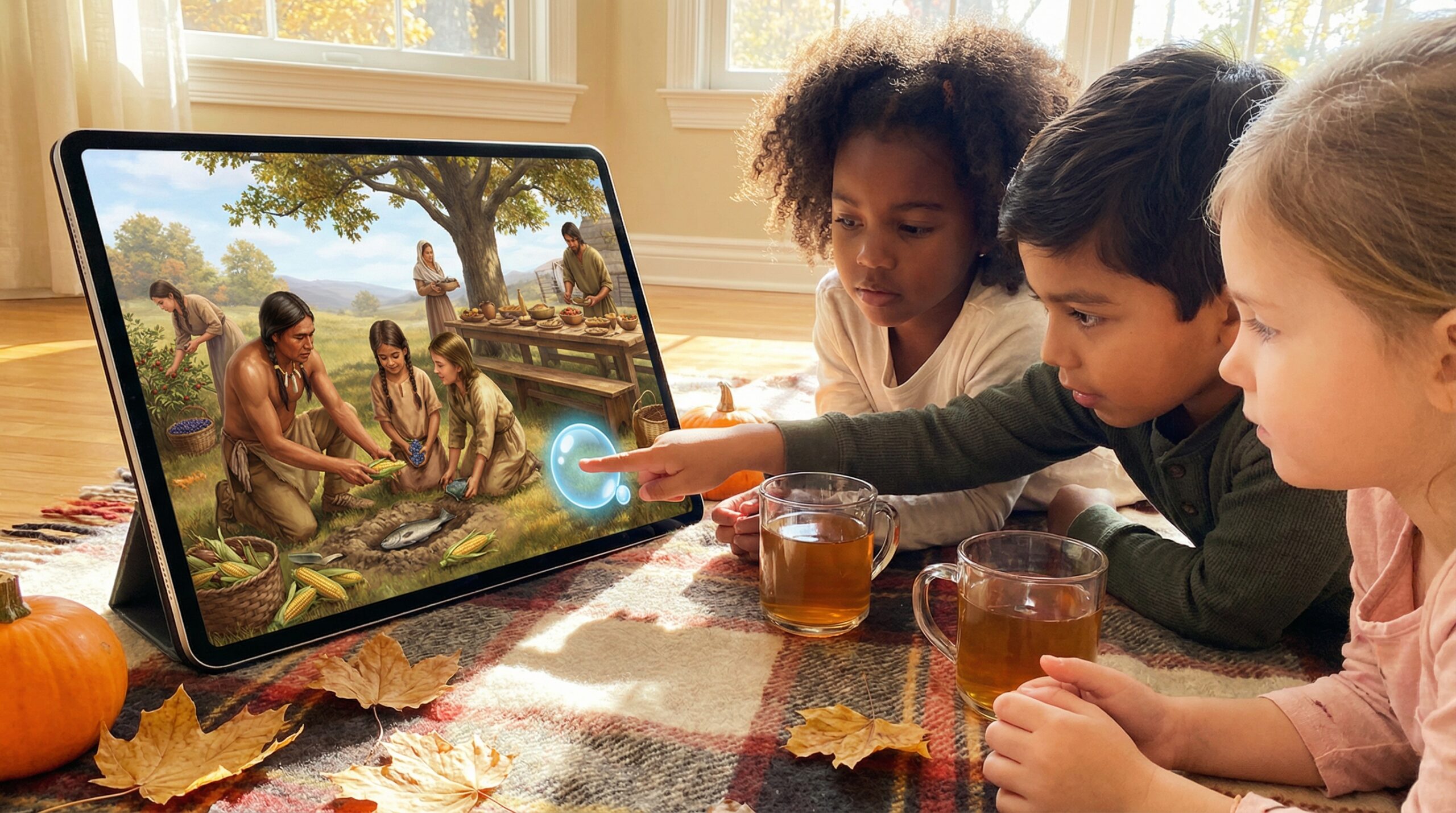
Tisquantum, known as Squanto, helped the Pilgrims survive. He spoke English and taught planting techniques. For example, he showed how to plant corn with fish to feed the soil. He guided, fished, and interpreted. That practical teaching mattered as much as any speech. Because of him, the harvest became possible.
Food, play, and what actually happened
Contemporary notes say the meal lasted three days. The Wampanoag brought venison; Winslow mentions five deer, highlighting their significant contribution to the feast according to History.com. There was wild fowl, fish, corn, vegetables, fruits, and nuts. The First Thanksgiving meal likely included seafood such as mussels, lobster, and eels, which were abundant in the region as reported by History.com. There was no recorded pumpkin pie or cranberry sauce. Those foods came much later. Hunting, games, and communal sharing joined the meals.
Myths versus facts
People often picture a single-family table with a big roast turkey. That image came later. Indigenous peoples had rich harvest traditions long before Europeans arrived. The 1621 gathering is one moment, not the whole story. Later relations between colonists and Native peoples grew complex and often tragic. It is right to celebrate cooperation while also learning fuller histories and listening to Native voices.
How the story became a holiday
The memory of 1621 changed over centuries. By the 1800s, writers and artists reshaped the tale. President Abraham Lincoln declared a national Thanksgiving in 1863. What began as a local harvest celebration turned into a yearly national observance. Even so, the 1621 event stayed a small, human moment in history.
Family-friendly ways to share the story
Read together and ask, What are you thankful for? Let each child name one thing. Try planting seeds in small pots and talk about local knowledge. Also pick retellings that include Wampanoag perspectives. Read with curiosity and invite questions.
Read or listen to a story about First Thanksgiving (1621) now: For 3-5 year olds, For 6-8 year olds, For 8-10 year olds, and For 10-12 year olds.
A short, sensory close: imagine cool grass underfoot, the smell of wood smoke, and the quick bright taste of fresh corn. Small details make history feel near. Be curious, listen to many voices, and keep the story open for questions.
Want more Storypie stories? Visit Get the app for gentle, child-friendly retellings.