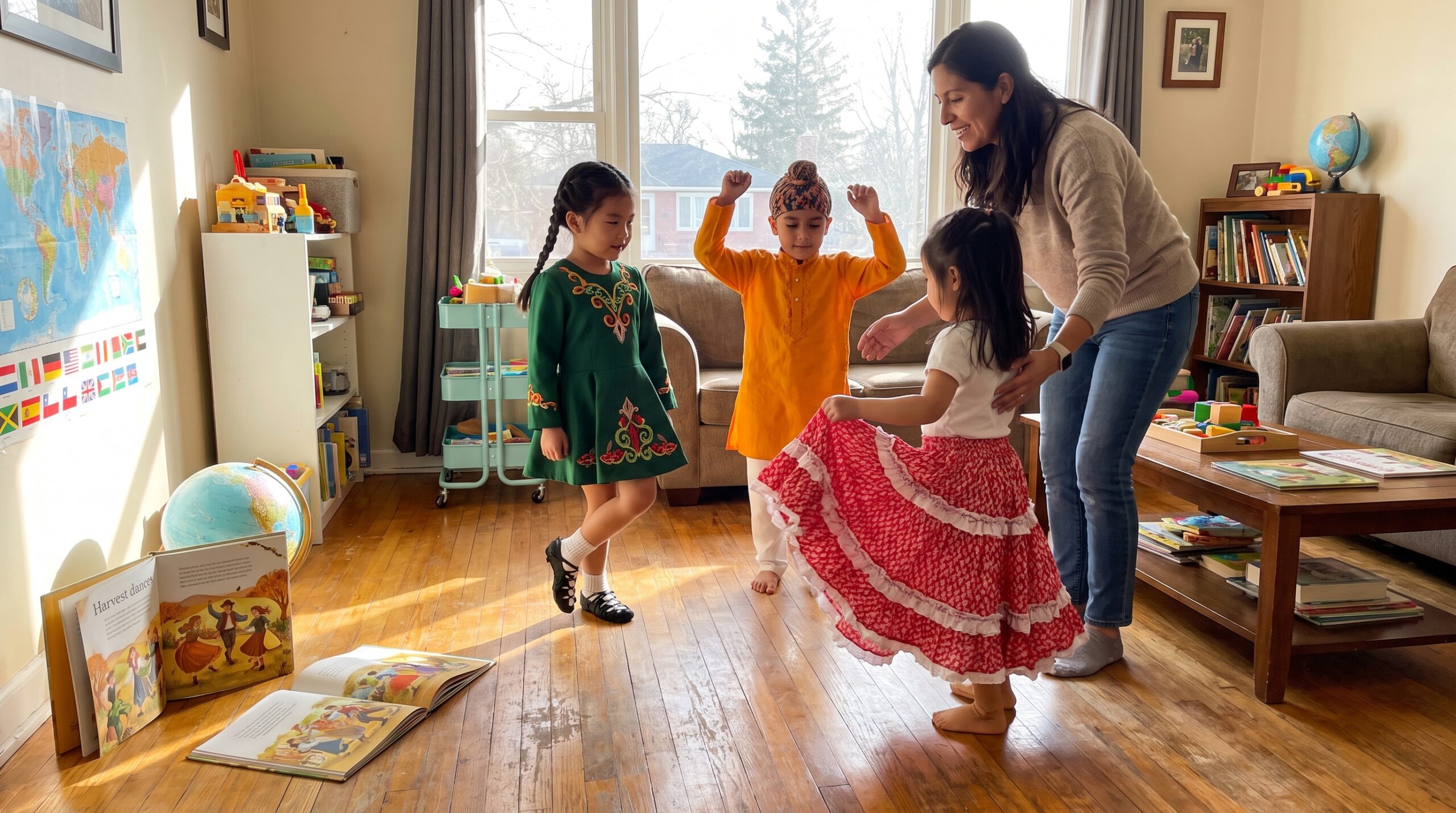
Folk Dances Around the World bring communities together through rhythm, costume, and story. Today families tap toes and share memory. For parents and teachers, this simple guide warms the heart and sparks curiosity.
History and purpose of Folk Dances Around the World
Many folk dances began as seasonal rites and harvest celebrations. Over time they stayed close to local tunes, steps, and costume details. Today some dances remain village customs. Also some travel to global stages. In short, folk dances teach identity and joy. As of April 2026, the number of folk dance groups worldwide is estimated at 250,000, illustrating the vast scale of this cultural phenomenon.
Examples to meet and try
Below are lively examples from different regions. Each one shows how music and movement shape culture.
Irish stepdance
Irish stepdance is famous for quick, precise footwork. For example, shows like Riverdance brought it worldwide fame. Yet the upper body stays mostly still. It feels like a tiny stomp of magic.
Jarabe Tapató (Mexican Hat Dance)
Mexico’s Jarabe Tapató began as a courtship dance. Also it later became a national symbol. Dancers wear charro suits or embroidered skirts. They spin and step with playful flair.
Bhangra
Bhangra comes from Punjab and honors the harvest festival Vaisakhi. It uses big jumps, strong shoulder and arm moves, and a driving dhol drum. Families can bounce and clap along to its joyful beat.
English Morris and country dances
Morris dancing uses sticks, handkerchiefs, or bells. Country dances are neighborly line and couple dances. In addition both types aim for group fun and community at festivals.
Common features of folk dances
Folk Dances Around the World often use repetitive steps and clear rhythms. Circle dances are common because they build group cohesion. Also simple patterns help everyone join in quickly.
Music, costume, and meaning
Costumes use local materials and symbolic colors. For example embroidered skirts, turbans, waistcoats, bells, and ribbons all tell a regional story. Beyond clothing, dances tell stories of courtship, harvest, victory, or mourning. In short, they are living culture that evolves with each generation. Since its founding in 1970, the International Council of Organizations of Folklore Festivals and Folk Arts (CIOFF) has grown to connect over 1 million people and more than 30,000 folklore dance and music groups and folk arts organizations worldwide, emphasizing the importance of cultural exchange through these art forms.
Teaching children: a five-minute try-it activity
Keep steps short and playful. Also keep instructions clear and friendly. Try this quick family activity to bring the music to life.
Simple step-touch-clap circle
- Step right, touch left, and clap.
- Step left, touch right, and clap.
- Repeat twice, then turn a quarter.
- Repeat for five minutes while smiling and listening to the beat.
Benefits for kids
- Movement and rhythm
- Cultural awareness
- Social connection and cooperation
- Confidence in trying new things
Safety, inclusivity, and respect
Clear space, wear non-slip shoes, and supervise young children. Also offer seated alternatives for kids who need them. Explain origins and avoid costume stereotyping. If you plan a performance, ask community sources for guidance and permission.
Where to learn more
Read or listen to a story about Folk Dances Around the World now: Read or listen to a story about Folk Dances Around the World now: For 3-5 year olds, For 6-8 year olds, For 8-10 year olds, and For 10-12 year olds.
Finally, Folk Dances Around the World pack music, history, and movement into a tiny joyful package. Try a step, clap along, and then talk about the music, costume, and story. For more family-friendly stories and audio, visit Storypie.