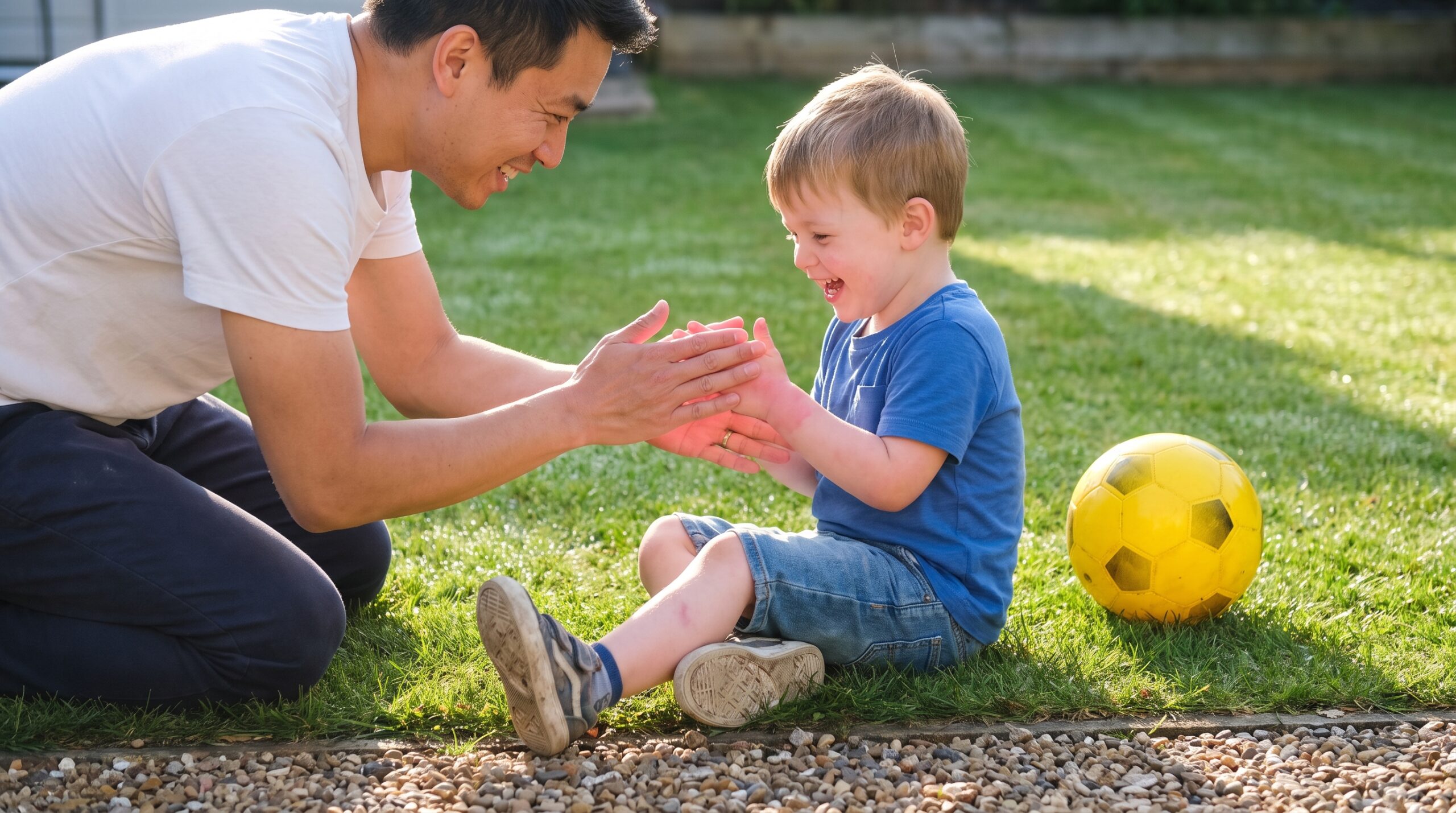
Friction for kids is the invisible grip you can feel on a warm morning. Try it now: rub your palms together and notice the warmth. It is a small force, but it matters a lot.
Friction for Kids: What it Is
Friction is a force that resists motion between two touching surfaces. It acts along the surface and points opposite the motion. Because surfaces are never perfectly smooth, tiny bumps touch and sometimes stick. That sticking and rubbing is what we call friction.
Everyday Examples and Why It Happens
We see friction everywhere. For example, rubbing palms warms you. A rolling ball slows on grass. Shoes grip the ground so walking works. Brakes help bikes and cars stop. Also, friction depends on how hard surfaces press together and the materials involved. If oil or water sits between surfaces, friction usually drops. In 2023, a study published in Applied Ergonomics assessed a friction prediction model based on tread outsole features of slip-resistant shoes, aiming to improve slip resistance in footwear.
Types of Friction
- Static friction holds things still before they move.
- Kinetic friction acts while surfaces slide past each other.
- Rolling friction is much smaller when wheels or balls roll.
- Fluid friction is the drag you feel in air or water.
Simple Experiments (with an adult)
These quick tests make friction feel real. Try them slowly and safely.
- Palms: Rub your hands for ten seconds and notice the heat.
- Slide a book across a table, carpet, and sandpaper. Which stops first?
- Ramp: Raise a board under a block until the block just starts to slide. Measure the angle. Older kids can use the tangent of that angle to estimate the static coefficient.
- Roll a toy car, then slide it on its side. Which goes farther?
Safety first. Supervise experiments. Avoid slippery floors, wipe spills, and do not ingest materials.
Why Friction Matters
Friction helps us walk, hold jars, and stop vehicles. It also converts motion into heat. That explains why brakes get hot after long use and why rubbing palms warms them. Engineers sometimes reduce friction with lubrication or bearings when they want less wear and less wasted energy. However, too little grip on icy steps can be dangerous.
A Tiny History and Fun Facts
People noticed friction long ago. Leonardo da Vinci described it. Later, Amontons and Coulomb wrote simple laws about it. Ice feels slippery because a thin melt layer lowers friction. Rubber on dry concrete is very grippy while ice is very low. Fun fact: engineers use a coefficient, a simple number, to describe how grippy two materials are. Research in a 2025 nanoindentation study found that the friction coefficient in hard materials like fused silica rises with lateral displacement and settles between 0.28 and 0.30, showcasing how material interactions can vary significantly.
Vocabulary and Quick FAQs
- Friction: a force that resists motion.
- Static friction: stops motion from starting.
- Kinetic friction: acts during sliding.
- Coefficient: a number comparing grippiness of surfaces.
Read or listen to a story about Friction now: For 3-5 year olds, For 6-8 year olds, For 8-10 year olds, and For 10-12 year olds.
Curious adults can explore more on Storypie and share a story with a child. Celebrate curiosity. A tiny but mighty force!