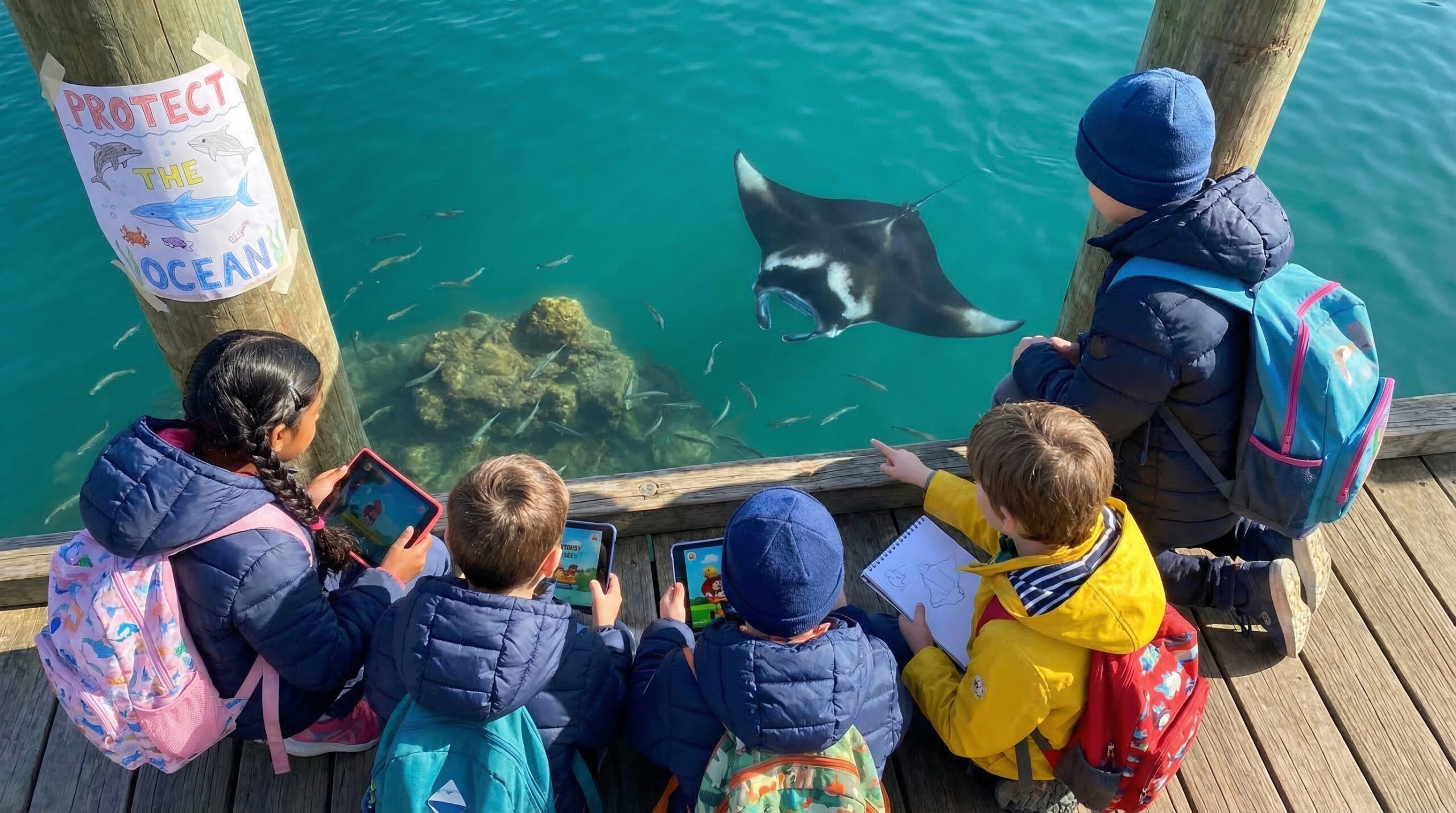
Giant manta ray facts introduce a peaceful ocean giant and a curious sea friend. These rays glide through warm seas with broad, winglike fins. Families and kids often call them ocean acrobats. The giant manta ray (Mobula birostris) is the world’s largest ray, with a wingspan reaching up to 29 feet (8.8 meters) and weights up to 5,300 pounds (2,404 kilograms), making them an intriguing subject for families and children.
Giant manta ray facts for families
Giant manta rays belong to the Mobulidae family. Scientists may use the names Mobula birostris or Manta birostris. They live in tropical and subtropical waters worldwide. For example, you can find them near the Maldives, Indonesia, Mexico, Hawaii, Mozambique, and the Galapagos. Interestingly, Ecuador is home to the largest known population of giant manta rays, with estimates exceeding 22,000 individuals, highlighting its ecological significance for these gentle giants.
Where they go and how they travel
Mantas visit reefs, seamounts, and cleaning stations. They also travel long distances on ocean currents. Often, they ride warm water like a kite surfer rides wind. Meanwhile, they may gather where plankton blooms appear.
How they feed and move
Mantas feed on plankton, tiny shrimp, and fish larvae. They swim with open mouths and filter water through gill rakers. Often, they perform barrel rolls, somersaults, and surface skim feeding. Sometimes they feed alone. Other times they feed in groups. They breach, spin, and chase shimmering plankton clouds. What a playful sight!
Unique belly spots and cleaning stations
Each giant manta ray has a unique belly spot pattern. Scientists use those spots like fingerprints to identify individuals. Also, mantas visit cleaning stations. There, cleaner fish pick off parasites and dead skin while the ray holds very still. It is patient, graceful, and awe inspiring.
Reproduction and young
Mantas are ovoviviparous. Female giant manta rays reach sexual maturity at around 8 to 10 years old and typically give birth once every two to three years, usually to one pup. Embryos grow inside eggs that hatch within the mother. Then a live pup is born after about a year of gestation. Mothers have few pups, so populations recover slowly. A pup’s first swim looks like a tiny, wondrous ballet as it learns currents and finds food.
Threats and conservation
Sadly, giant manta rays face many threats. Bycatch, targeted fishing for gill rakers, entanglement, and boat strikes all harm them. Fisheries pressure and trade are large-scale threats; industrial tuna purse-seine fisheries were estimated to catch roughly 13,000 mobulid rays per year, with severe population declines reported in some regions. In 2018, the giant manta ray was listed as threatened under the U.S. Endangered Species Act due to significant population declines from overfishing and bycatch. Pollution and changing plankton patterns from climate change also affect their food supply. However, protections such as CITES and marine protected areas help. Community based ecotourism, fishing limits, and photo ID research offer real hope. Photo ID and local reporting are simple, powerful science tools that families can support.
Simple ways families can help
- Reduce single use plastics and join beach cleanups.
- Choose sustainable seafood and reef safe sunscreen.
- Support manta research and local conservation groups.
Read or listen to a story about Giant Manta Ray now: For 3-5 year olds, For 3-5 year olds, For 6-8 year olds, For 8-10 year olds, and For 10-12 year olds.
After school activity and quick play
Try a five minute game. Show a photo of belly spots. Ask your child to spot two differences. Then play a short Storypie story and ask one question: How can we help mantas? Want a quick after school story? Play it now on Storypie and chat for five minutes about ocean care.
Final thought
Giant manta rays are ocean acrobats, curious and gentle. With steady protection and small family actions, these giants can keep dancing in our seas. Hope is real and so is our part. Thank you, little ocean heroes.
Visit Storypie for more stories and learning: Visit Storypie.