
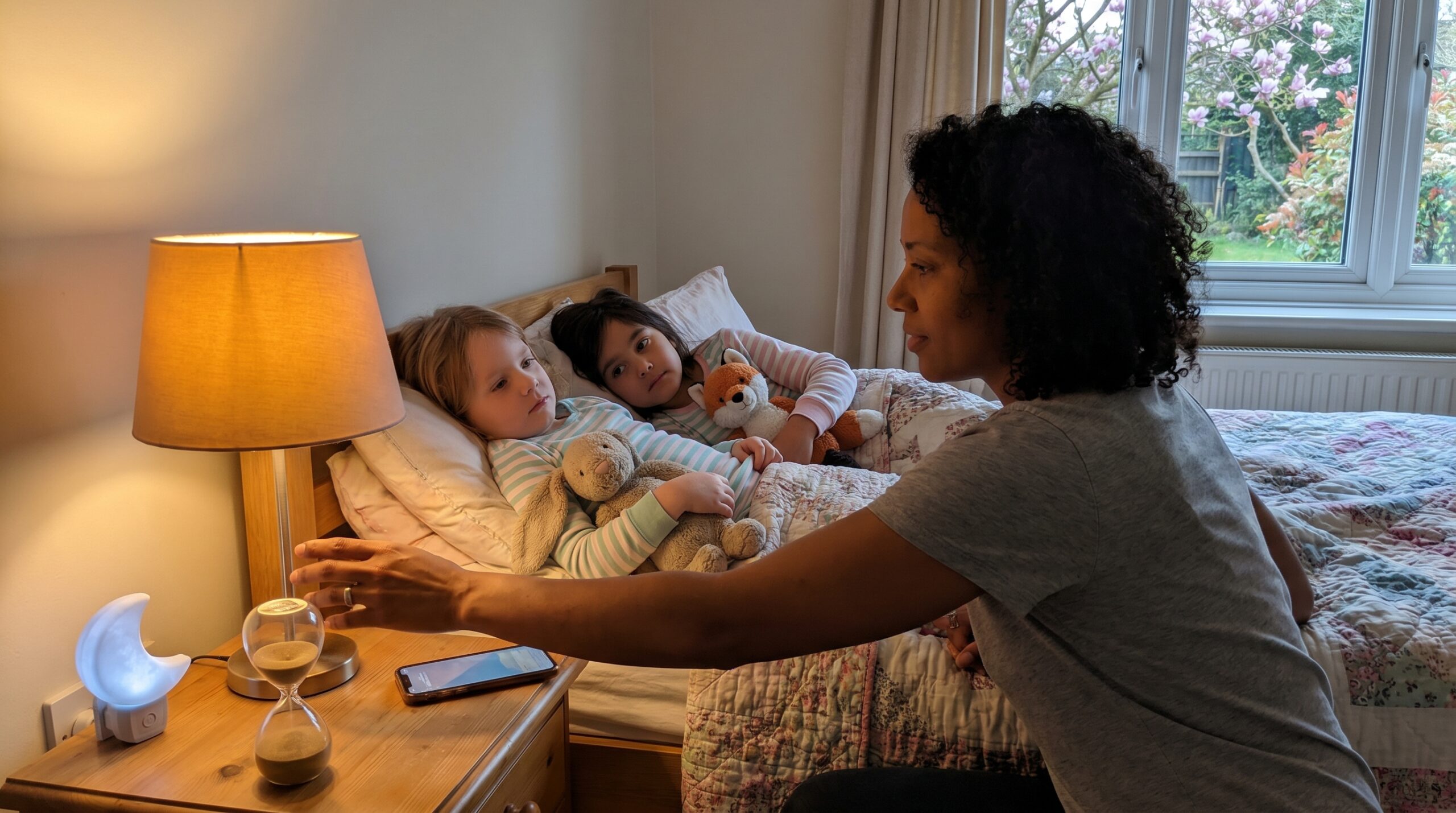
The mini story bedtime ritual is a short, predictable pause before sleep. Parents and teachers use this calm ritual to signal rest. It combines steady rhythm, gentle cues, and cozy objects to shape a nightly habit. In fact, according to the CDC, in 2024, 85.6% of U.S. children ages 2–17 had a regular bedtime “most days or every day,” highlighting the prevalence of bedtime routines among children.
What the ritual is
The mini story bedtime ritual centers on a brief shared story. Typically, it lasts minutes rather than long read-alouds. It offers a predictable rhythm that soothes and signals sleep time. In many homes, it becomes the sweetest part of the evening.
Origins and background
Rituals like this appear in many cultures. Historically, small nightly stories helped families pass on language and calm. Over time, caregivers developed compact versions to fit busy modern schedules. As a result, the mini story grew popular among parents and early educators.
Why people choose it
Caregivers pick the mini story bedtime ritual for clear reasons. First, it respects short attention spans. Second, it creates consistency across nights. Third, it supports emotional connection between child and caregiver. In a 2025 survey, 71% of parents agreed that storytelling helps their children wind down at bedtime, with 49% naming it their preferred method, underscoring the effectiveness of storytelling as a calming technique for bedtime. In short, it offers big benefits in a tiny package.
Key characteristics
Several features set this ritual apart. For one, stories stay short and steady. For another, routines repeat the same gentle cues. Also, sensory elements appear often. Examples include soft light, calm sound, and a familiar comfort object. Together, these traits form the ritual’s signature.
Age-friendly traits
The ritual adapts to different ages without losing its core. Younger children respond to predictable lines and touch. Older children appreciate a single, peaceful scene. Across ages, the ritual emphasizes calm rhythm and comfort.
Benefits and evidence
Research links consistent bedtime routines to faster sleep onset and fewer night wakings. A 2025 survey indicated that 90% of parents of 1–6-year-olds reported having a bedtime routine for their child, with 67% including reading bedtime stories. Moreover, mini rituals support language development and social bonding. Therefore, their value goes beyond sleep. They also help build empathy and secure attachments. Additionally, a 2024 randomized clinical trial showed that removing screen time in the hour before bed resulted in small-to-medium improvements in sleep efficiency and reductions in night awakenings, supporting the idea of creating a calming bedtime environment.
Common variations
Families craft versions that match their lives. Some keep only a few lines. Others pair the story with a specific comfort object. A few use audio versions from Storypie to keep hands free and voices calm. Whatever the choice, the ritual keeps its short, steady heart.
Signs it works
Look for subtle shifts over time. Sleep may come more quickly. Nights may feel calmer overall. In addition, children often show comfort with the repeated cues. These signs suggest the mini story bedtime ritual has become meaningful.
To explore audio options and gentle recordings, visit the Storypie audio player. For more on Storypie and family-friendly features, try the Storypie app.