
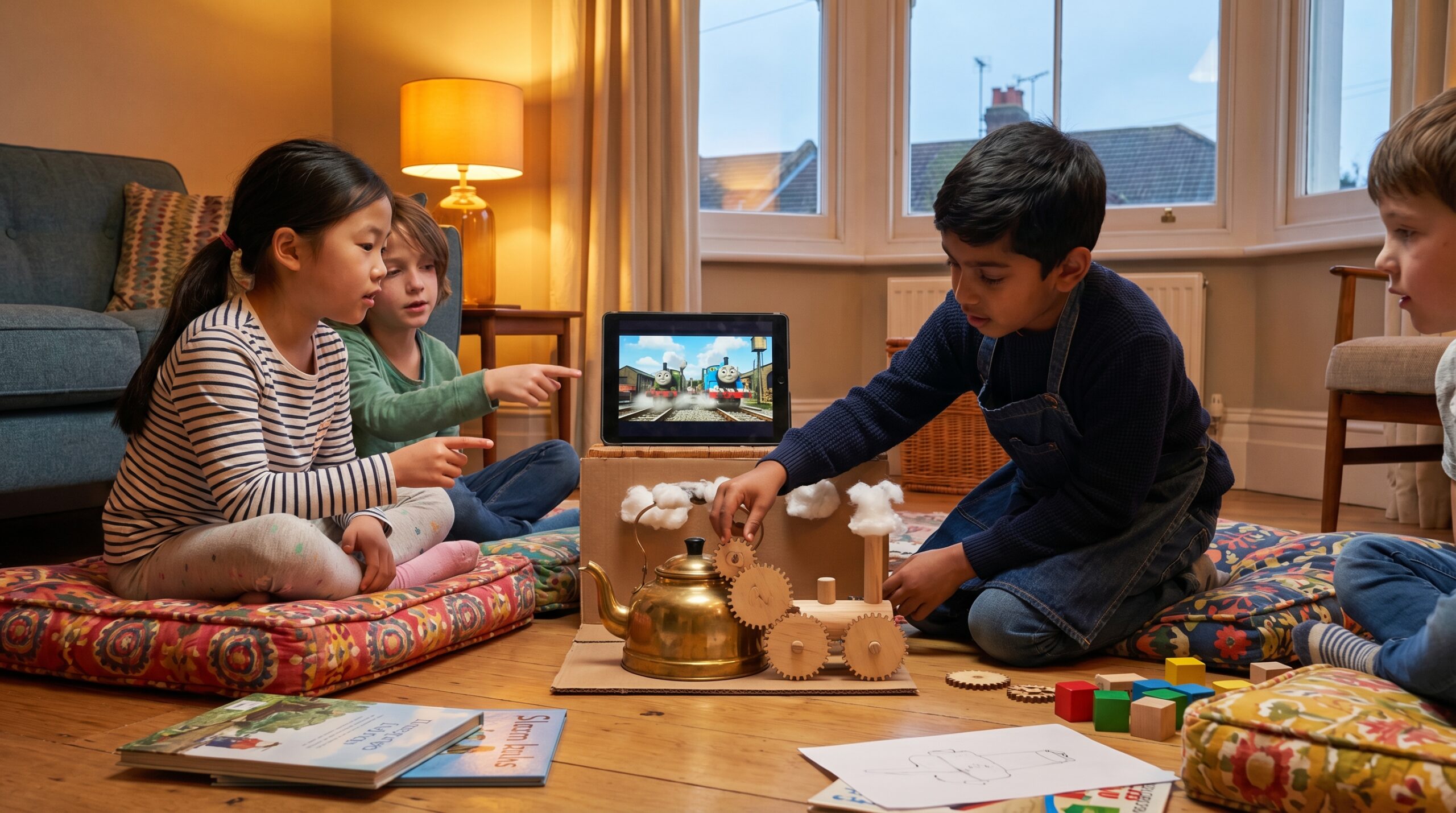
The Industrial Revolution for kids starts with small, vivid sounds. A kettle hisses. A mill bell rings. Curious minds lean in and ask, Why does this work? First, the Industrial Revolution was a major shift from hand work to machine power. This period is most commonly dated to around c.1760–1840, marking a significant shift in technology and economy.
Read or listen to a story about Industrial Revolution now: Read or listen to a story about Industrial Revolution now: For 3-5 year olds, For 6-8 year olds, For 8-10 year olds, and For 10-12 year olds.
What it was, simply
The Industrial Revolution for kids means factories, machines, and big change. It began mainly in Britain around 1760. Then it spread over decades through the 1800s. Small workshops gave way to noisy mills and long rows of windows. During this time, the population of England and Wales doubled from 8.3 million in 1801 to 17 million in 1850, reflecting rapid urbanization and industrial growth, which was essential for understanding its social impacts.
Key inventions and forces
Bright inventors and big resources pushed change. For example, James Watt improved the steam engine in 1769 by adding a separate condenser. By 1800, an estimated 10,000 horsepower was being supplied by steam engines in Britain, growing to 210,000 horsepower by 1815, emphasizing the technological advancements in steam power vital for industrial machinery and transportation. Also, machines like the spinning jenny and the power loom sped up cloth making. Coal, iron, money, and trade all helped the boom. In fact, between 1700 and 1830, Britain’s coal production surged from 2.7 million tons to 30 million tons, fueling industrial expansion.
- Steam engines that moved pistons and machines
- Spinning jenny, water frame, and spinning mule for yarn
- Power looms that mechanised weaving
Textiles and towns
Textiles led the way. Cities like Manchester grew into cotton centers. Factories needed many workers, so families moved to towns. That change created new energy and new problems, too.
Work, life, and reform
Work moved into factories with long hours and risky machines. Child labour was common, sadly. However, people and lawmakers did not stand still. For example, the Factory Act of 1833 limited some child hours and created inspectors. Slowly, reform improved lives.
Transport, trade, and connections
Transport improved fast. Canals cut costs and moved coal and cloth. The Bridgewater Canal is one early example. Then railways appeared in the 1820s and 1830s. George Stephenson’s Rocket became famous in 1829. Also, the telegraph in the 1830s and 1840s sped long-distance messages. These changes made markets larger and news travel quicker. The value of British exports rose from £14.7 million in 1790 to £57.5 million in 1830, reflecting the surge in industrial output.
Everyday effects and the long view
Everyday life shifted in many ways. Clothes became cheaper. Trains and canals made travel easier. Toys, tools, and household goods flooded markets. But the air grew smoky and rivers suffered. Cities swelled and public health lagged. As a result, trade unions and new laws rose in the 19th century.
Finally, the Industrial Revolution set the stage for electricity, steel, cars, and computers. Its legacy touches the clothes we wear and how goods are made. It is wondrous and complicated. Curious minds notice both sparks of invention and the hard human costs.
Bring it gently to children
At home, show how boiling water makes steam in a kettle and explain how steam could move pistons in early engines. Also, visit a local industrial museum or a preserved mill when you can. Listen to short first-person stories about inventors and workers to make history feel human.
At Storypie, we bring James Watt’s kettle-to-steam journey to life in a gentle 10-minute after-school listen. Tip: play it to spark questions and tinkering. Learn more at Storypie.