The International Space Station for kids is a real, orbiting laboratory and home about 400 kilometers above Earth. It flies around Earth roughly 16 times each day. Also, it offers bright windows that look down on whole continents. Families and teachers love its mix of science and wonder.
What is the International Space Station for kids?
The International Space Station for kids began as a global team project. Partners from NASA, Roscosmos, ESA, JAXA, and CSA built and operate it together. The first module, Zarya, launched in November 1998. Then, the first long-term crew arrived in November 2000. Since then, the station has grown with modules like Destiny, Columbus, and Kibo. Also, the Cupola became a favorite window for Earth views. As of November 2025, the ISS has been continuously inhabited for 25 years, marking a quarter-century of human presence in space, which is a remarkable achievement in space exploration.
Quick facts about the station
Here are big facts in small bites. These make great conversation starters for curious kids.
- Size and mass: about 109 meters end to end and 925,335 pounds (419,725 kilograms).
- Pressurized volume: near 915 cubic meters (35,491 cubic feet), like a five-bedroom house.
- Speed and orbit: the ISS travels about 28,000 km per hour and circles Earth every 90 minutes.
- Power and robotics: large solar arrays make electrical power. Canadarm2 and Dextre help assemble and repair the station.
Everyday life on board the International Space Station for kids
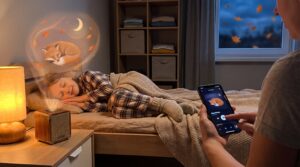
Astronauts sleep in sleeping bags tethered to a wall. They eat rehydrated and thermostabilized foods. Occasionally, fresh items arrive on resupply ships. Also, crew members exercise about two hours daily to fight muscle and bone loss. For hygiene, they use rinseless wipes and no-rinse shampoo.
Crew sizes often number six people. Visiting vehicles include Soyuz and SpaceX Crew Dragon. Cargo ships include Progress, Dragon cargo, Cygnus, and HTV.
Daily routines at a glance
- Sleep: secured sleeping bags on a wall.
- Meals: mix of packaged food and fresh deliveries.
- Exercise: two hours each day to stay healthy.
- Work: science experiments, maintenance, and outreach.
Science that matters
The station hosts biology, human physiology, materials science, and fluid physics experiments. For example, astronauts grow lettuce in microgravity. Also, water forms floating spheres that teach basic physics in a fun way. The Cold Atom Lab and particle detectors study fundamental physics. Kids often enjoy simple crystal experiments and plant growth projects. In 2025, the ISS hosted over 750 experiments, contributing to advancements in space exploration, medical research, and commercial opportunities.
Safety, operations, and outreach
Life-support systems recycle water and make oxygen. Crews perform debris avoidance maneuvers when needed. As of September 2023, the ISS has conducted 32 maneuvers since 1999 to ensure the safety of the station and its crew. Emergency return vehicles stay ready for quick departures. Regular maintenance helps keep the station safe and strong.
Partners share live streams and educational contacts for students. Families can track visible passes and plan viewings together. Spotting a bright point moving across the sky makes the station feel close and magical. On June 26, 2025, the ISS welcomed its first astronauts from India, Poland, and Hungary, expanding the station’s international collaboration, which is a vital aspect of its mission.
Hands-on ideas for families
Try these playful prompts to spark curiosity at home.
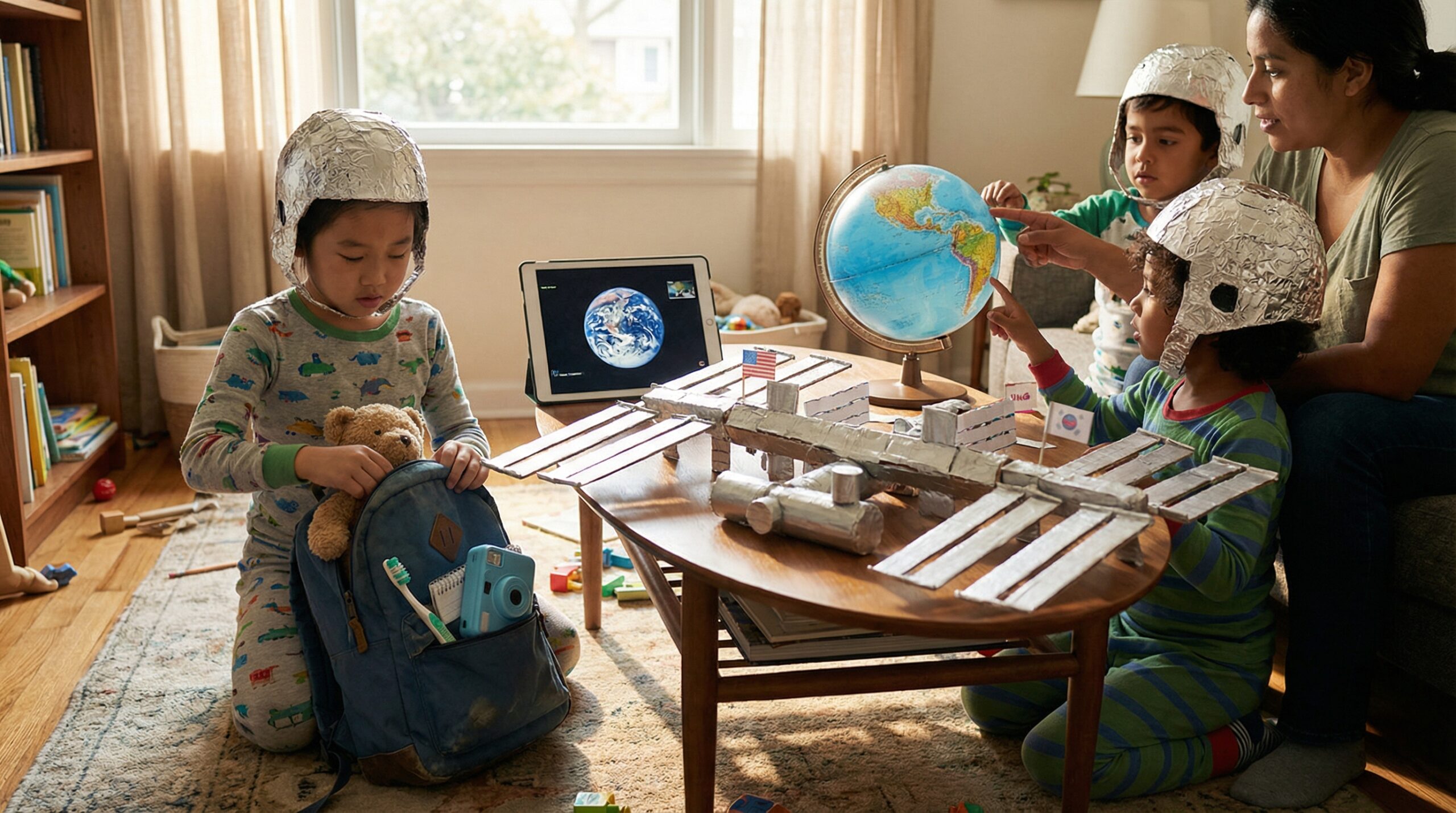
- Ask: What would you pack for a five-day trip to the ISS?
- Build: Make a paper model and label modules like Destiny and Columbus.
- Track: Use a visibility tool to find the next visible pass from your town.
- Draw: Sketch Earth as seen from the Cupola window.
For extra fun, assign tiny mission roles to your paper crew. Who will water the plants? Who will take Earth photos? Little extras like this spark big imaginations.
Read or listen to a story about International Space Station now: Read or listen to a story about International Space Station now: For 3-5 year olds, For 6-8 year olds, For 8-10 year olds, and For 10-12 year olds.
Explore more space stories on Storypie. Also, use these stories to make learning playful and bright.