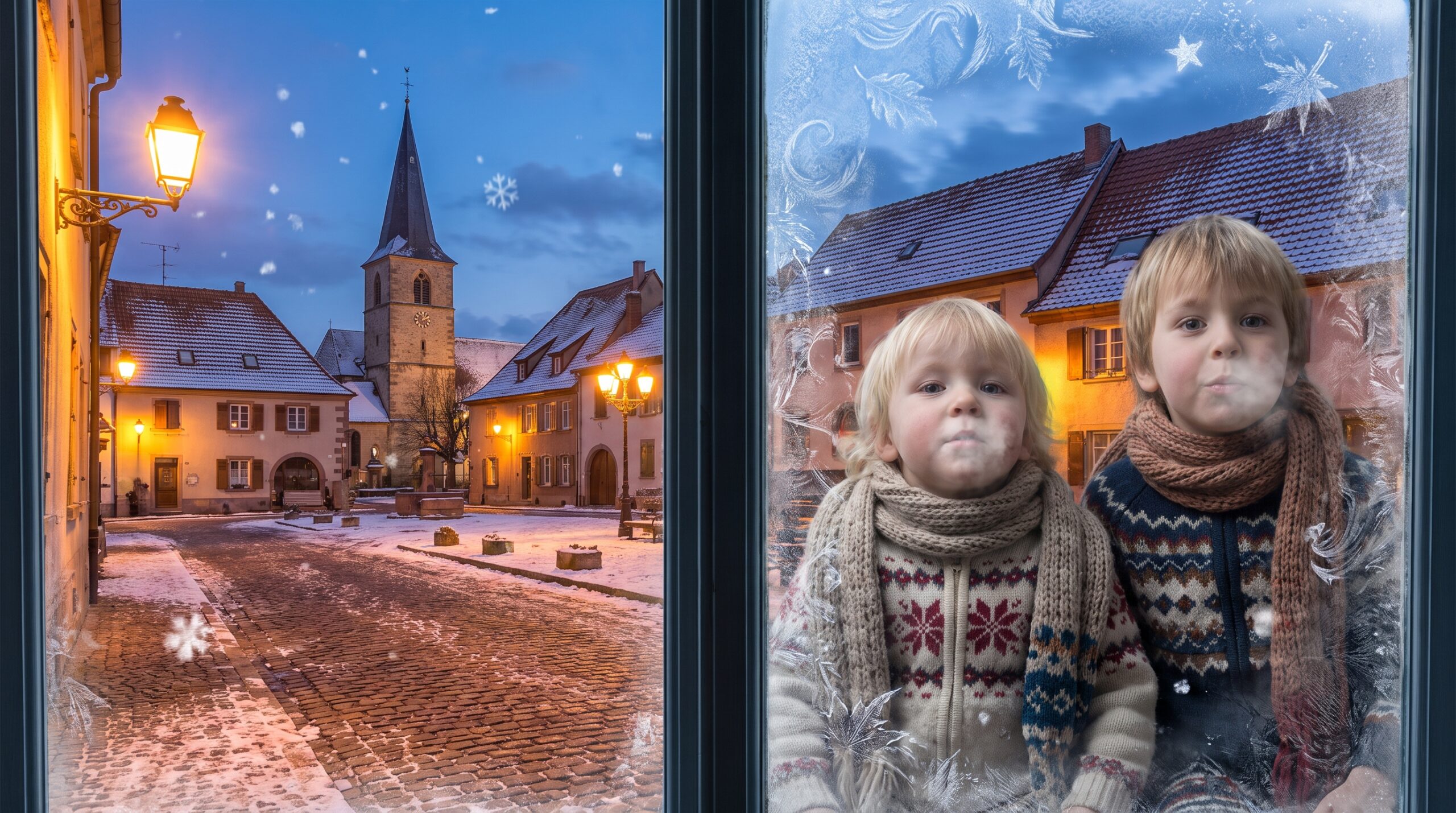
I wake to a world painted in tiny crystal ferns. I call that unseen painter Jack Frost European, a cheeky winter sprite who nips noses and decorates glass. Children love to imagine him as friendly, mischievous, or both. The name Jack Frost first appears in print in the early 18th century—specifically around 1730—in a short book titled Round About Our Coal‑Fire, or, Christmas Entertainments, which includes the line: ‘when Jack‑Frost commonly takes us by the Nose’ according to Word Origins.
Jack Frost European and folklore
Jack Frost European fits into a wide European family of winter characters. For example, Ded Moroz watches winter in Slavic tales. Old Man Winter appears in English sayings. Frau Holle shakes out snowy feathers in German stories. Interestingly, in Russian folklore, the equivalent of Jack Frost is ‘Morozko,’ a character who embodies winter and is often depicted as a smith who binds water and earth together with heavy chains, as noted in Monstropedia. The name Jack is a familiar English folk name. Adding Frost turns a mood into a playful person kids can picture and chat with.
Frost, rime, and the science that looks like magic
On calm mornings, glass can show fernlike patterns. Hoarfrost forms when water vapor changes from gas to solid on cold surfaces. Crystals grow like tiny trees because moisture lands on seed points such as dust or tiny scratches. Rime comes from supercooled droplets in fog that freeze on contact and make a grainy coating. Thus, the world can look like one sparkling painting. Over time, window frost—the frosty, fern-like ice patterns often personified as Jack Frost—has become far less prevalent in the modern world due to the widespread adoption of double-glazing insulation in windows, as mentioned on Wikipedia.
Why window patterns look like ferns
Glass has tiny nucleation points and temperature differences. Those guide the branches as crystals grow. Clear, calm nights with cold surfaces and the right humidity make the best fernlike patterns. I tell children to look for where a pattern starts. Those tiny spots are the seed points.
A tiny experiment to try tonight
Try a short, safe activity to notice Jack Frost European at work. Put a cold cup near a window on a calm night. Next morning, peek at the glass and photograph a frost fern. Then compare two mornings. One clear and calm, the other windy or cloudy. Notice the difference. The photos make a charming family record.
Safety and natural-history notes
Frost is beautiful but can feel harsh. Dress children in layers, with hats and mittens. Come inside if fingers go pale or numb. Watch for shivering, drowsiness, or pale skin. Those are signs to get warm. Never let children play on thin ice.
Tuck-in tip and gentle call to action
Tuck in with Jack Frost European, an unseen artist who paints the world with winter frost. Before lights out, ask your child to name one small wonder they noticed tonight. That short ritual turns a cold evening into a tiny adventure.
Read or listen to a story about Jack Frost – European now: For 3-5 year olds, For 6-8 year olds, For 8-10 year olds, and For 10-12 year olds.
To explore more, visit the Jack Frost collection on Storypie: Read or listen to a story about Jack Frost – European now. You can also get the app to enjoy bedtime stories together: Get the Storypie app.