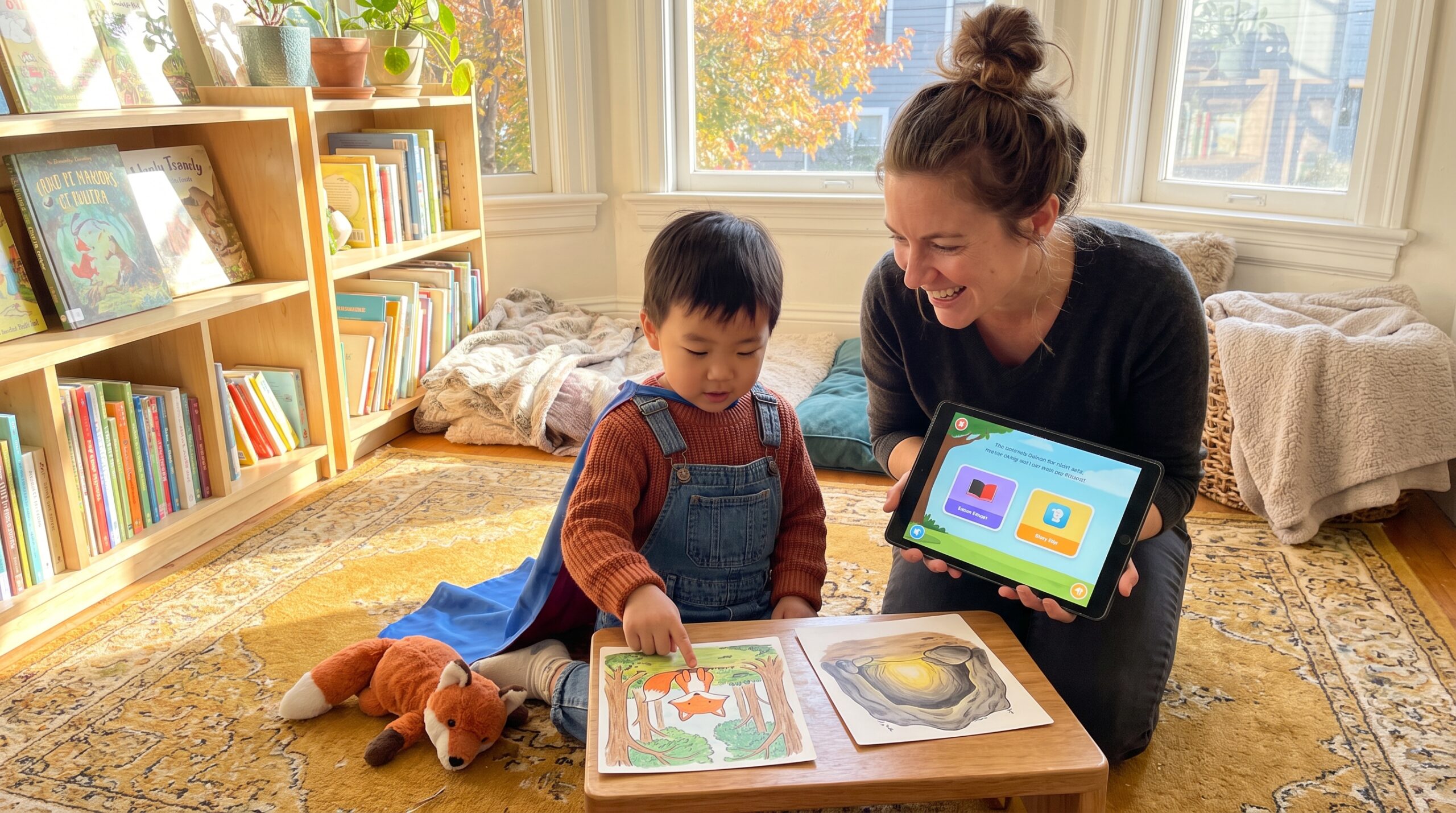
Kids become the hero in their own adventure when stories put them at the center. I say this after watching a four-year-old choose a door and solve a riddle. She picked the smaller door. The room lit up with pure delight.
What the idea means
The phrase describes stories that give a child the lead role. They make choices. They face results. Over time, they grow. This child-centered approach has roots in oral traditions. Call-and-response tales from many cultures let listeners shape the story. According to an October 2025 national poll by C.S. Mott Children’s Hospital, 68% of parents say their child engages in make-believe or pretend play on a typical day at home, reinforcing the idea that children actively create their own adventures.
History and evolution
In print, the Choose Your Own Adventure books made the idea mainstream in 1979. Later, digital media expanded the form. Today, apps and audio stories let children make active choices. Technology adds immediacy, but the core idea remains the same. A 2023 analysis of children’s books revealed that 79.4% of child heroes are under six years old, with the most common age being three years old at 18.7%. This underscores the prevalence of young heroes in literature, inspiring children to see themselves as protagonists in their own adventures.
Core features that define the concept
- Clear goal: the hero knows what to try to do.
- Meaningful choices: options matter, not busywork.
- Consequences: choices lead to visible outcomes.
- Obstacles: challenges help the child learn skills.
- Feedback: progress shows what changed.
Why it helps children
The child-as-hero idea supports agency and confidence. Research links autonomy to intrinsic motivation. Studies also show participation improves engagement and memory. In a 2026 study with 325 children aged 4–7, those who role-played as either a hardworking or brilliant scientist persisted significantly longer in a science game than those who did not role-play; the effect was particularly strong for girls. This illustrates how role-playing can enhance children’s engagement and perseverance, crucial for their development as heroes in their own stories. Furthermore, a 2026 survey by Talker Research found that 71% of children aged 4 to 12 identified their parents as their primary heroes, emphasizing the role of parental figures in shaping children’s perceptions of heroism.
Age and representation
Different ages need different complexity. Preschoolers want concrete goals and simple decisions. School-age children can handle richer plots and moral choices. Teens prefer subtle ambiguity and identity play. Also, representation matters. Children identify more with heroes who look or sound like them. A 2025 UK study commissioned by Disney On Ice found that 66% of respondents see heroic qualities in people they know, a number on par with the percentage who find heroes in film and television.
A small example
Once, a seven-year-old chose between a rickety bridge and a raft. She chose the raft. It failed at first. Then she tried again and fixed the mistake. By the end, she grinned. That grin showed learning made visible.
Practical considerations
Balance matters. For young children, co-play and quality materials help. Also, accessibility is key. Use audio narration or larger text when needed. Safety and inclusive representation deserve attention. Finally, small wins build big confidence over time.
Where it connects to Storypie
Storypie supports stories that let kids lead. The platform highlights child-centered narratives and diverse characters. For a gentle way to explore this idea, see the Storypie app and sample stories on the site: https://www.mystorypie.com/get-app
In the end, kids become the hero in their own adventure when stories hand them a role, a challenge, and a chance to try. The result is joy, learning, and a bright little spark of pride.