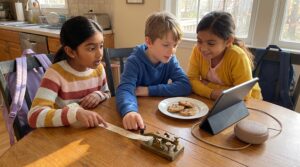

Mariners compass for kids: a tiny magnetic miracle
Mariners compass for kids begins as a tiny, magnetic miracle. It is a small needle that aligns with Earths magnetic field and points toward magnetic north. For parents and teachers, it remains a quiet hero that helped sailors become ocean travelers. Kids still find it delightfully simple and oddly magical.
History of the mariners compass for kids
People noticed lodestone long ago. The Chinese learned to magnetize needles. By the Song era sailors used floating needles at sea. Shen Kuo wrote about this in 1088. Later, European mariners used compasses by the 12th century. As a result, that tiny tool helped launch the Age of Exploration and linked distant shores.
How a compass works
A compass works because a magnetized needle lines up with Earths magnetic field. Needles point to the magnetic north pole, not geographic north. The angle between magnetic north and true north is declination. Declination changes by place and time. Also, magnetic inclination or dip is the vertical tilt of the field. That tilt explains why compasses are balanced for one hemisphere or another.
Common types and parts
Compasses come in several family-friendly types:
- Simple magnetic needles for quick demonstrations
- Dry card compasses with a rotating dial
- Liquid filled compasses for steadier readings
- Gyrocompasses that find true north on ships
- Electronic magnetometers inside phones
A typical hand compass has a needle, pivot, card, housing, lubber line and a bezel marked in degrees. Each part helps you read direction clearly and safely.
Reading and caring for a compass
Hold the compass flat and still. Let the needle settle. Then rotate the compass or yourself so the needle meets the N mark. Read the bearing at the lubber line moving clockwise from north. To go back along a route, take a back bearing by adding or subtracting 180 degrees.
Keep compasses away from metal, magnets, cars and power lines. Near the geographic poles needles may behave oddly. To care for a compass keep it dry and avoid strong magnets. Check it against a known reference once in a while.
Hands on experiment for kids
Try this simple, safe project under close supervision. Stroke a steel sewing needle 30 to 100 times in one direction with a magnet. Push the needle into a small cork or balance it on a tiny paper boat. Float it in a bowl of water and watch the needle turn north. Be careful. Small needles and magnets are choking hazards. Also, strong magnets can affect electronics and medical devices.
Teaching tips, places to visit, and a cozy listen
Try short walks where children call out bearings. Compare compass readings with a phone map and talk about declination. Visit a maritime or science museum to see historical compasses and Song era examples. For a cozy share, play a short narrated tale on a quiet drive.
Read or listen to a story about Compass now: For 3-5 year olds, For 6-8 year olds, For 8-10 year olds, and For 10-12 year olds.
Try a ten-minute tale on the Storypie app for a gentle introduction to the compass. Get the app.
Final thought
A compass is more than a tool. It is a guide, a tiny marvel and a simple way to spark wonder. Try one with children and listen as curiosity points the way.