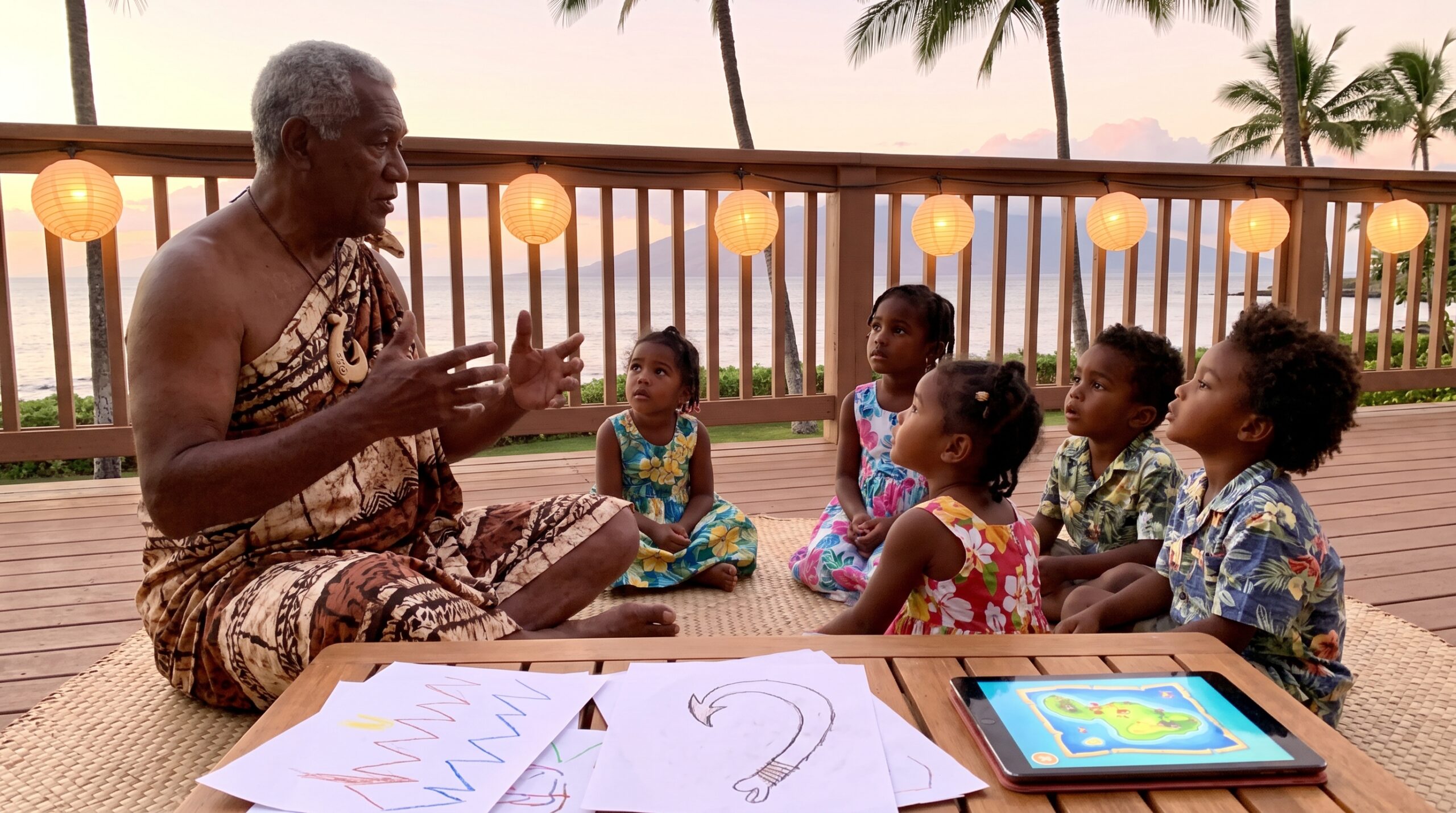
Maui and the Fish Hook – Polynesian is a bright, island-sized legend. I tell it to my kids on warm nights. The tale centers on a magical hook, Manaiakalani, and a daring deed that explains islands and shorelines.
Maui and the Fish Hook – Polynesian: origins and key characters
Māui appears across Polynesia as a culture hero, trickster, and demigod. Also, his stories show up in Māori, Hawaiian, Tahitian, and Samoan traditions. In many versions, he crafts or borrows a great fish hook. For instance, in Tongan mythology, the demigod Māui used a fish hook to pull up the islands of Tongatapu, Ha’apai, and Vava’u from the ocean, highlighting his role as a creator figure across different Polynesian cultures. That image links mountains and coastline in one unforgettable scene.
Hina, sometimes called Sina, appears often in these tales. For example, she is a mother, a sister, or a goddess in different islands. Because communities change the details, each version feels local and living. These differences matter. They reveal how people carry stories across time.
Regional variations and names
In Māori tradition, the North Island is Te Ika-a-Māui, the fish of Māui. The legend states that this island was created when Māui used a fish-hook made from his grandmother Murirangawhenua’s jaw-bone to pull up a giant fish. Also, Hawaiian tellings connect Māui to islands like Molokaʻi and Maui. Sometimes the hook is carved from an ancestor bone, and the Hawaiian fish hook, known as makau, has been crafted for over a thousand years, with designs varying in size and shape to suit different fishing needs. Therefore, each island group keeps its own cultural marks and meanings.
Manaiakalani is a common name for the hook in some Pacific islands. Also, the hook appears under different names and forms. For that reason, it shows how myths adapt while keeping a clear story core.
Symbols, objects, and cultural life
The fish hook motif appears in art and objects everywhere. Traditional hooks were bone, shell, or wood. Moreover, the hei matau pendant echoes the hook shape today. Also, carvings, tattoos, and jewelry use the motif to mean safe travel, ocean connection, and plenty. In Hawaiian culture, the fish hook symbolizes strength, prosperity, and a deep connection to the ocean, reflecting the importance of fishing in their way of life, as noted by Whaler’s Locker.
Museums and children’s books often show these treasures. At the archaeological site Nu‘alolo Kai on Kaua‘i, researchers studied 1,112 fish-hook-related artifacts; of these, 78% were whole or partial fish-hooks, demonstrating the historical prevalence and importance of fish hooks in Hawaiian culture, according to research from ResearchGate. However, it is best to seek versions rooted in place. Above all, prefer retellings and works by people from the islands where the story belongs.
Why the story still matters
The core scene of hauling the sea into land makes geography feel like magic. Also, children remember the image easily. The story teaches respect for the ocean and for ancestors. Finally, it keeps cultural ties alive across generations.
Read or listen to a story about Maui and the Fish Hook – Polynesian now: For 3-5 year olds, For 6-8 year olds, For 8-10 year olds, and For 10-12 year olds. For a full version visit our story page: Read or listen to a story about Maui and the Fish Hook – Polynesian now.
Enjoy the island wonder. Above all, celebrate local voices and living traditions.