
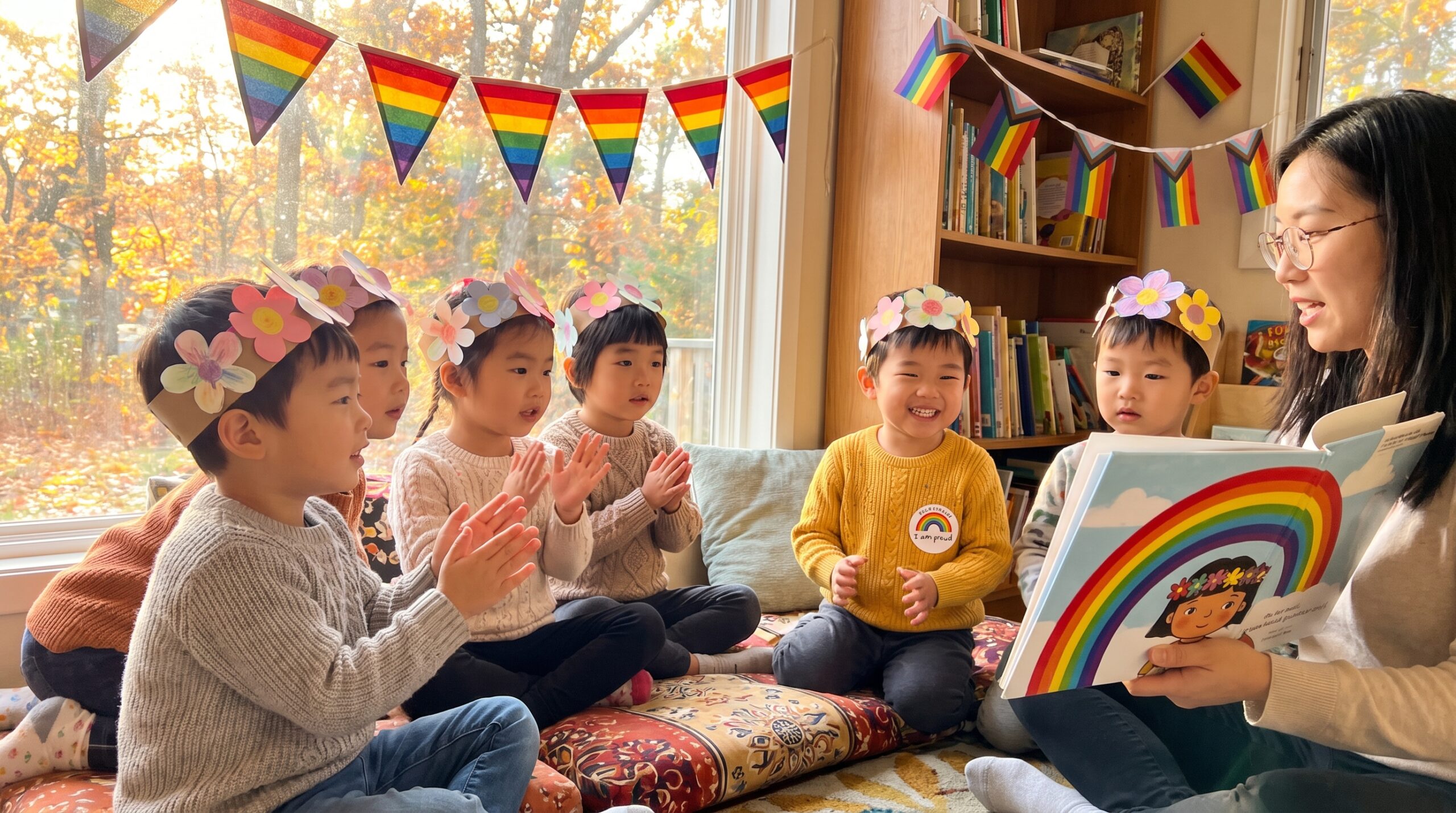
Pride for families begins with small moments and big meaning. First, it is the warm, proud feeling after a small win. Second, it is a movement that asks for respect and safety for people who love or live differently. Both matter. Both teach belonging. In fact, in 2024, nearly one in ten U.S. adults—about 9.3%—identified as LGBTQ, highlighting the growing visibility and acceptance of LGBTQ+ identities in the U.S. According to The Survey Center on American Life, this shift is important for fostering a sense of belonging in families.
Pride for families: a short, child-friendly history
In June 1969 a few brave people in New York stood up against unfair treatment. Their actions at the Stonewall Inn helped start the modern Pride movement. People like Marsha P. Johnson and Sylvia Rivera supported folks who were left out. Next, the first Pride marches happened in June 1970. Since then, communities around the world gather to celebrate and to ask for fair treatment. As of 2025, 63% of Americans supported same-sex marriage, up from 55% in 2015 and just 31% in 2004, showing a significant shift in public opinion regarding LGBTQ+ rights over the years, according to Pew Research Center.
Symbols and simple meanings
The rainbow flag is the clearest symbol of Pride for families. Gilbert Baker designed it in 1978. Each color once had a special meaning. Now the rainbow stands for many people living openly and proudly. Also, other flags represent specific identities. For example, a pink triangle was once used as a badge of shame. Today many people reclaim it with pride. Pride is both a party and a call for fairness. It can be loud and gentle at once. Events such as Atlanta Pride, the largest free Pride festival in the U.S., drew over 350,000 attendees in 2024, with its parade alone attracting more than 100,000 spectators, illustrating the scale and importance of Pride events in fostering community and visibility for LGBTQ+ individuals, as reported by the Atlanta Pride 2024 Impact Report.
How to celebrate at home
Keep celebrations simple and joyful. Read a short story at bedtime. Make a tiny rainbow collage from paper scraps. Also, try a two-minute pride pause after dinner. Say one kind thing about someone in your family. Small rituals feel mighty. A tiny clap can feel glorious. Research indicates that engaging in simple acts of kindness and recognition can significantly enhance emotional well-being, especially for children.
Age-appropriate words
Use language that fits your child. For toddlers, say: some people love other people and we are kind. For preschoolers, add: some people feel like a boy, a girl, or something else. For school-age kids, name words like lesbian, gay, bisexual, and transgender. For older children, talk about history and rights. Keep sentences short and honest.
Conversation prompts and safety
Ask gentle questions. For example:
- What made you feel proud today?
- How can we show kindness to someone different from us?
- What would you do if a friend felt left out?
Not every Pride event is the same. Therefore check listings for family-friendly activities. Bring water and pick a meeting spot. Also, talk about boundaries and noise. If an event seems crowded or political, choose a smaller community activity or a library story hour. In the 2023–24 Religious Landscape Study, 59% of religious Americans said homosexuality should be accepted by society—up from 55% in 2014 and 46% in 2007, indicating increasing acceptance of LGBTQ+ individuals within religious communities, which is crucial for societal change according to Pew Research Center.
A small ritual that matters
Light a small lamp and read a short Pride story. Then end with praise for effort. That tiny ritual builds pride in being yourself and in being kind. Try a rainbow snack plate. Also, turn compliments into “pride tickets” to hand out when someone shows kindness. Small rewards stick and help make good habits. Events like the Phoenix Pride Festival and Parade, which attracted over 30,000 attendees across two days in 2024, reflect the community’s strength and presence, showcasing the engagement and support for LGBTQ+ events, as noted on the Phoenix Pride history page.
Read or listen to a story about Pride now: For 3-5 year olds, For 6-8 year olds, For 8-10 year olds, and For 10-12 year olds.
Pride is celebration and a call for fairness. Teach the feeling and the history. For more resources, visit the Storypie app and explore stories that spark kindness and belonging. Enjoy a short story tonight. It matters.