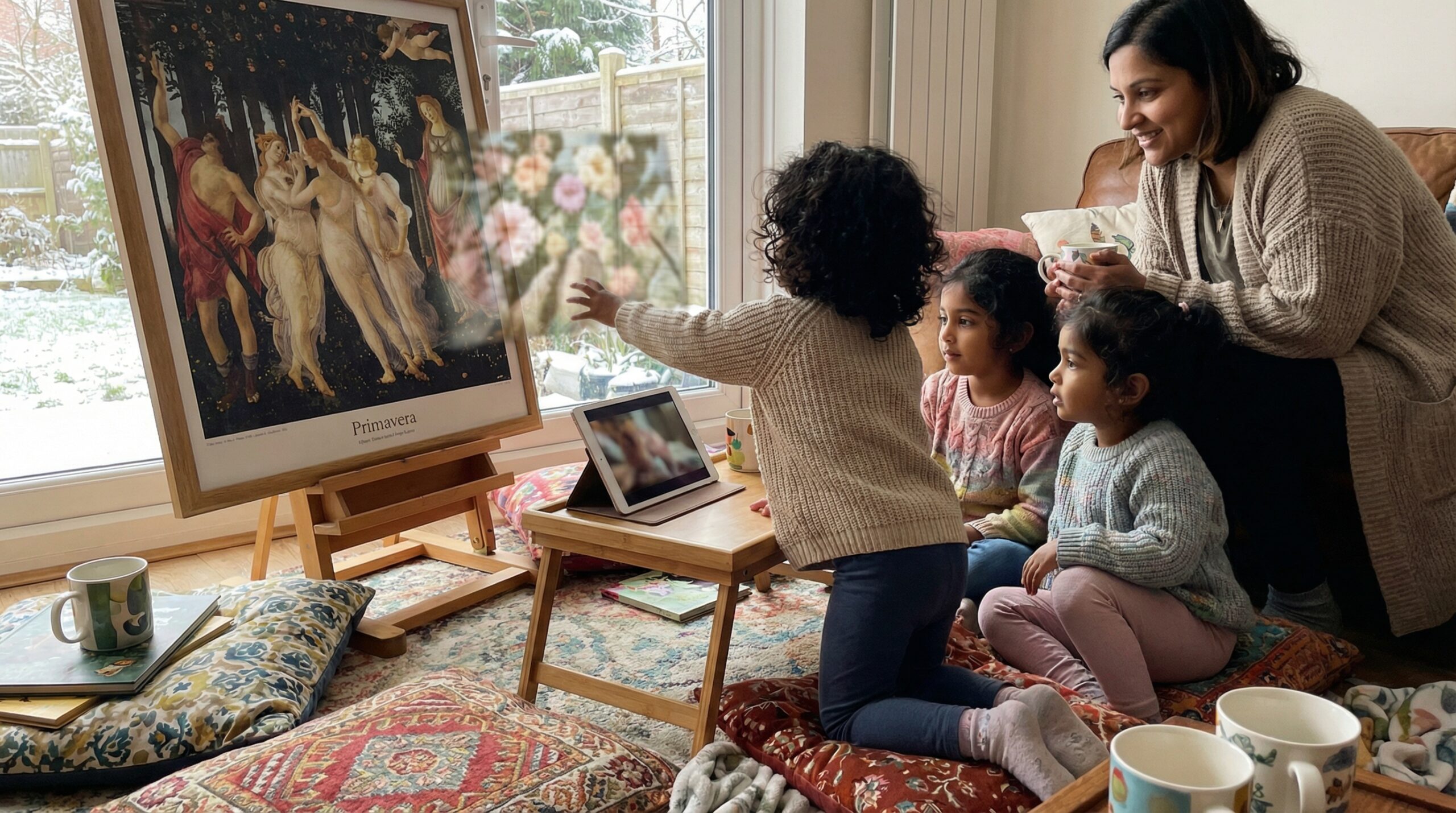
Primavera Botticelli for kids is a gentle way to meet Botticelli’s spring painting. It shows Venus, flowers, and playful gods. Painted in Florence in the 1480s, it feels jewel like and bright.
Look and point with Primavera Botticelli for kids
First, point to Venus in the center. Ask a child who they think she is. Then move left to Mercury, who tends the clouds. Next, find the Three Graces dancing together. Finally, look to the right at a tiny drama: Zephyrus chases Chloris. Chloris becomes Flora and scatters flowers.
- Start with Venus; kids notice faces quickly.
- Spot flowers; they are small treasures.
- Count the Graces; make it a tiny game.
The figures read left to right like a short story. Their long, elegant shapes and clear outlines help little eyes. Also, the line work makes faces easy to read. These bright patterns invite a second look.
Myth, season, and bright patterns
Primavera means Spring. Botticelli borrowed myths and Roman poems. The painting fills with laurel, myrtle, orange trees, and dozens of flowers. Each plant once had meaning for adults. For kids, these plants are fun to spot and name.
For slightly older children, ask what a laurel might mean. Or ask why orange trees appear behind the figures. These simple questions invite curiosity and conversation. They also keep visits short and sweet.
A tiny museum strategy
If you visit the Uffizi in Florence, pick a quiet morning. Stand back, then crouch so a child meets Venus at eye level. Give one tiny task: find a favorite flower or count the Graces. Short, repeated visits help build curiosity.
If you cannot go in person, use high resolution images on the museum site. Also, try one minute today and two minutes tomorrow. That small ritual grows interest, slowly and happily.
Listen with Storypie
We turned Botticelli’s Primavera into a short Storypie audio. It imagines a secret garden, playful gods, and a promise of forever spring. Tip: Play it on a winter afternoon and ask, “What’s one thing you’re looking forward to?”
Read or listen to a story about Primavera now: For 3-5 year olds, For 6-8 year olds, For 8-10 year olds, and For 10-12 year olds.
Or visit the main page: Read or listen to a story about Primavera now. Also consider the Storypie app for gentle listening sessions: Get the Storypie app.
Look and listen
Use story and sound to hold attention. Read short descriptions of the chase on the right. Let a child whisper what Flora might say while she scatters blossoms. Keep sentences short and repeat a favorite phrase.
- Read aloud in small bursts.
- Let children draw the Graces in a tiny sketchbook.
- Play the Storypie audio and ask one short question afterward.
The test is simple. If a child comes back to look, point, or play again, the painting has done its job. Primavera works as a bright picture and a device for questions about nature, myth, and time. Keep visits short. Let wonder do the rest.