
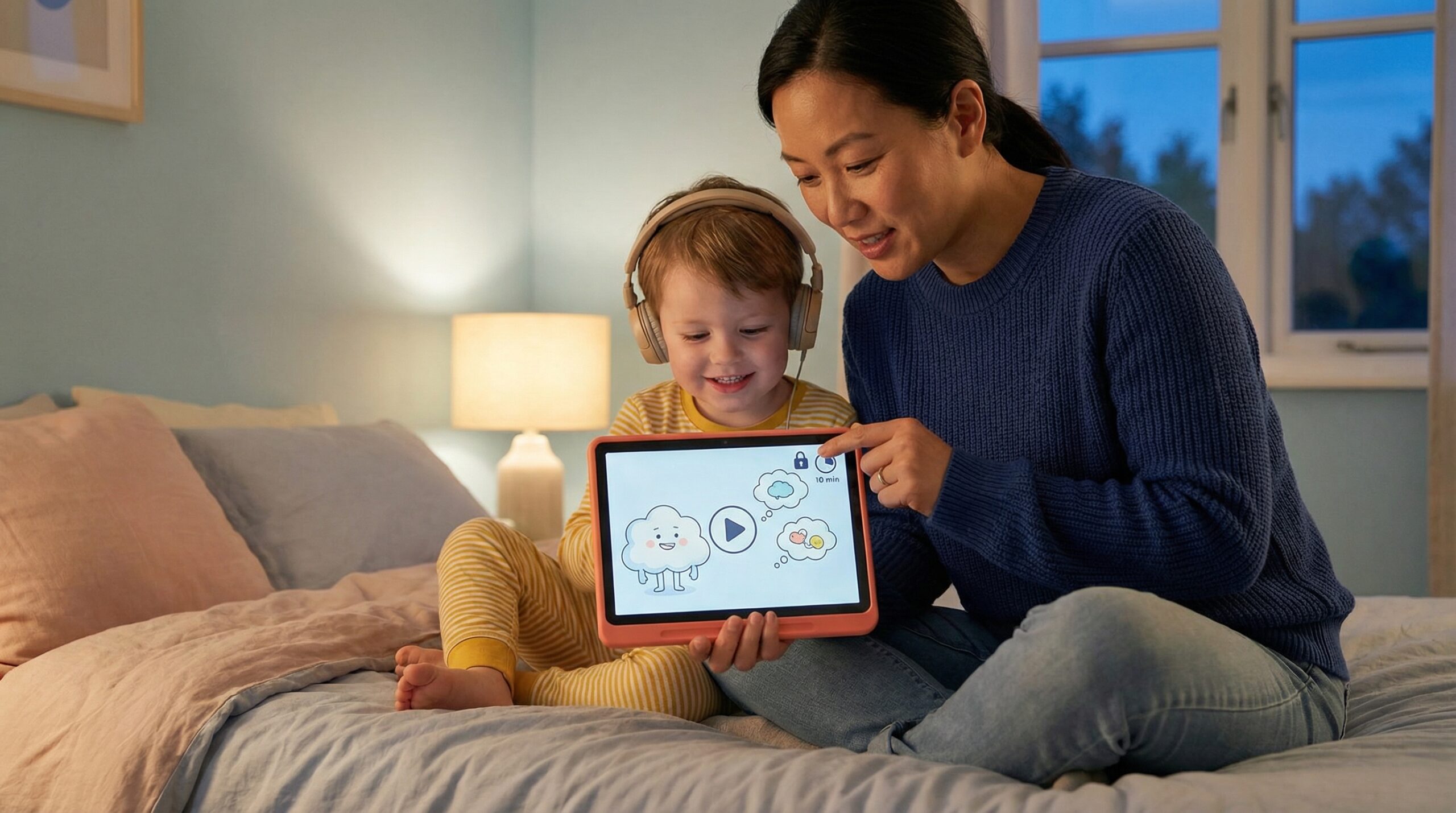
Is there a safe AI chatbot for kids? Short answer: not perfectly, but yes if you choose kid-first products and stay involved. In this post I explain what “safe AI chatbot for kids” means. I also list the features that matter most to parents.
Quick answer and what safety looks like
A truly safe AI chatbot for kids cuts risk in design. First, it uses age-appropriate language. Second, it limits freeform web searches. Third, it gives parents control. These choices make chat more predictable and gentler. Research shows that the prevalence of AI chatbots among teens is significant, with 75% of teens using AI for companionship, which emphasizes the necessity for safe measures.
Core safety features of a safe AI chatbot for kids
When you evaluate any child-facing chatbot, look for these features. Each item reduces surprises and hard edges.
- Age-appropriate content filters. The vocabulary and topics match the child’s age.
- Predictable or curated responses. Many child-first apps use templates or hand-crafted replies.
- Parental dashboards and controls. Time limits, transcripts, and filters belong here.
- Data minimization and clear privacy. Providers should state what they collect and why.
- Human moderation or human-in-the-loop. Automated filters are helpful. Human review catches odd failures.
- Regulatory compliance. For example, COPPA in the U.S. and GDPR rules in the EU should be followed.
- Independent audits. Third-party safety checks are rare but very valuable.
Why these features matter
First, filters reduce exposure to adult topics. Next, curated replies prevent bizarre or unsafe answers. Then, parental tools let you monitor and act quickly. Finally, audits and clear privacy statements build trust. A 2025 report by Internet Matters found that 64% of children aged 9-17 in the UK have used AI chatbots for various purposes, including homework assistance and emotional advice, highlighting the growing importance of safety features in these applications.
Real risks that remain
Even products built for children still face problems. Here are the biggest concerns I watch for.
- Hallucinations: models can invent facts. That can confuse kids.
- Privacy and data misuse: some apps store more than you expect.
- Emotional attachment: kids may treat chatbots like friends. That can be okay in small doses.
Furthermore, a November 2025 report by the eSafety Commissioner highlighted that by early 2025, there were more than 100 AI companion apps available, many lacking effective age restrictions and safety measures. This points to the potential risks children face when using AI chatbots that do not have adequate safety features.
Practical checks parents can run in ten minutes
You do not need technical skills. Instead, run a short ritual. Sit with your child. Ask a predictable prompt. Note whether the response stays on topic. If it jumps, the app needs more guardrails.
- Sit together for the first 10 minutes and model safe questions.
- Try a predictable prompt and watch how the app responds.
- Check whether you can delete conversations and export data.
- Look for clear answers about data retention and moderation.
Questions to ask vendors
When you call or read a privacy page, ask these items. They reveal whether the product is truly child-first.
- What data do you collect and how long do you keep it?
- How is content moderated and reviewed?
- What exact ages do you support?
- Can parents delete a child’s data on demand?
- Have you had an independent safety audit?
Alternatives and a gentle recommendation
Some apps avoid freeform chat entirely. For example, curated audio stories give predictable and safe experiences. Storypie focuses on child-first audio and gentle interactions. If you want the gentlest start, try a curated format and sit together for ten minutes tonight. Notably, in October 2025, Character.AI announced it would prohibit minors from using its chatbots due to mounting concerns over children’s safety and the psychological effects of AI interaction.
Finally, remember this: a safe AI chatbot for kids is as much about design as about supervision. Choose vendors that show safety, not just promise it. And if you want to explore kid-first audio, see Storypie for calm, predictable options.